


On the very first day, they follow you everywhere. Or perhaps the opposite happens — they choose the furthest corner of the room and watch you from a safe distance. After a few days, they begin to come closer, bring you a toy or fall asleep near the sofa. And that is when a question many new guardians ask themselves begins to appear: how long will it take for my dog to truly bond with me?
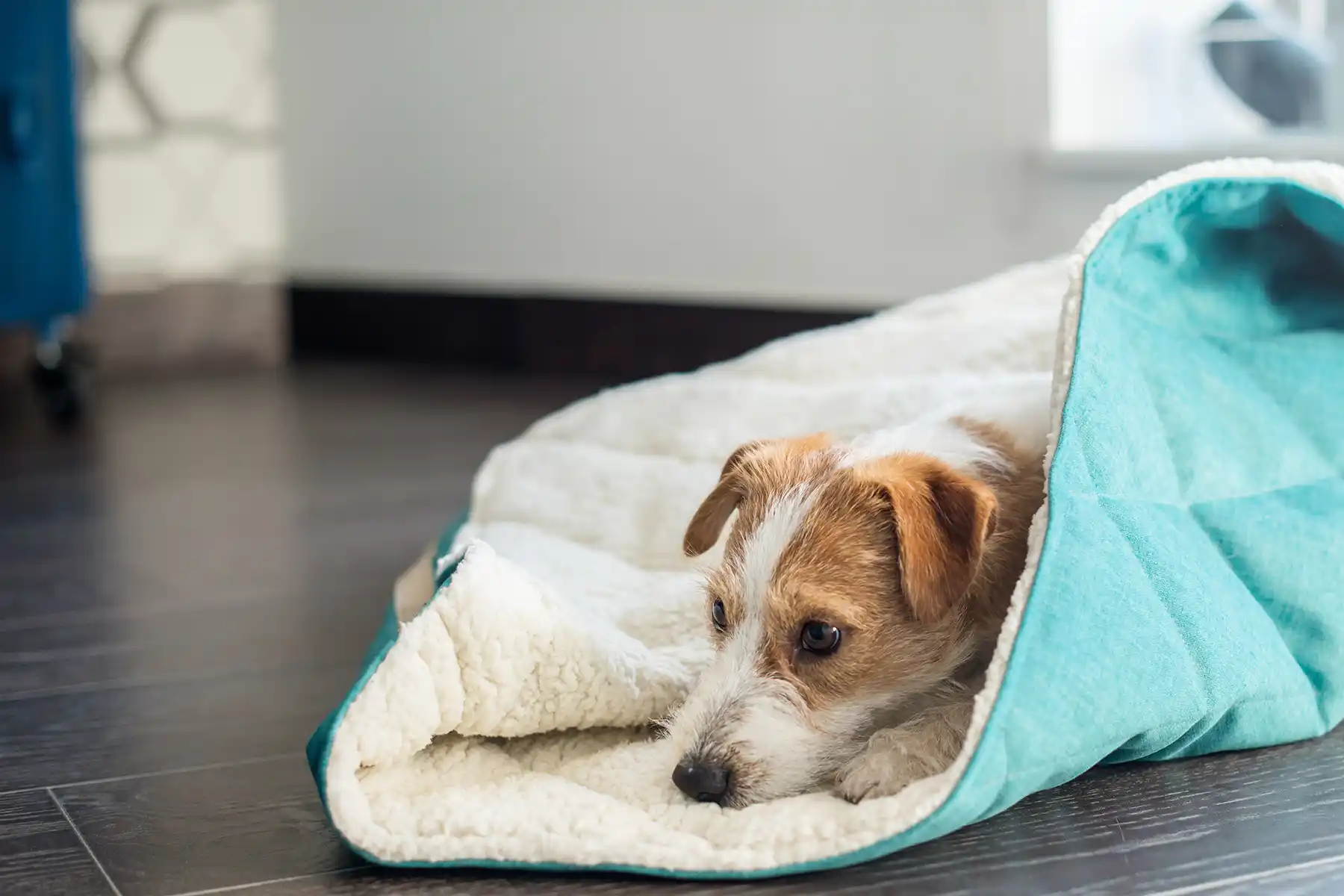
This question is particularly common among people who have just welcomed a puppy into their home, adopted an adult dog or become the new guardian of a dog who previously lived with another family. We would like to know whether it takes a week, a month or perhaps several months. But a dog’s bond does not follow one universal timetable.
A dog may begin forming a special relationship with a new person very quickly, but developing a full sense of security and a stable bond is usually a process. In one dog, the first signs may be visible after only a few days, while another may need weeks or months. Previous experiences, age, temperament, environment and, above all, the way a person responds to the dog’s needs can all play an important role. [1][3]
What will you learn from this article? From this guide, you will learn:
- how long it takes for a dog to bond with a new guardian,
- whether a dog can become attached after only a few days,
- how becoming accustomed to a new home differs from forming a genuine bond,
- what the first days, weeks and months together may look like,
- how to recognise that your dog is beginning to trust you,
- whether an adult dog can form a strong bond with a new owner,
- how bonding with a dog after adoption develops,
- whether a puppy bonds more quickly than an adult dog,
- how to gain a dog’s trust without forcing interaction,
- how walks, play, rest and daily routines influence your relationship,
- whether a dog can remember a previous guardian while also bonding with a new one.
How long does it take for a dog to bond with their guardian? The short answer
There is no single scientifically confirmed number of days after which we can say: “from today, this dog is attached to their guardian.” The first signs of preferring a particular person may appear very quickly, while a stable relationship based on trust and a sense of security may develop over weeks or months.
A particularly interesting study looked at adult dogs living in rescue centres. Some of them had previously had only three ten-minute interactions with a particular person. During a later test, the dogs behaved differently towards that person than towards a stranger — among other things, they sought contact with the familiar person more often. The researchers concluded that the dogs’ responses met operational criteria for attachment behaviour. [1]
This does not, of course, mean that a dog “falls in love with their new owner in 30 minutes”. The study shows something more subtle and far more interesting: dogs may begin distinguishing a socially significant person from a stranger very quickly and start forming the foundations of an individual relationship. Developing a full sense of security in a new home is something much broader.
Attachment, trust and becoming accustomed to a new home are not the same thing
This distinction is very important. Your dog may already recognise your voice, come when called and become excited at the sight of their lead while still not feeling completely comfortable in their new surroundings. They may also accept the home relatively quickly but need much longer before they begin looking to you for support in more difficult situations.
Adaptation means gradually becoming familiar with a new environment. Trust develops when the dog learns that a person’s behaviour is predictable and safe. Attachment is a broader relationship in which a particular guardian begins to have special significance for the dog.
Studies using a modified version of the Strange Situation Test have shown that dogs behave differently towards their guardians than towards unfamiliar people. Among other things, the guardian’s presence may serve as what is known as a secure base — a point of reference that allows the dog to explore their surroundings more freely. [2][3]
The first days with a new dog — security first, closeness later
For a person, bringing a new dog home is often a long-awaited event. For the dog, however, it may mean being faced with an enormous amount of new information at once: unfamiliar scents, sounds, people, doors, lifts, streets, different walking times and an entirely new place to rest. This is why your dog’s behaviour on the first day should not be treated as a prediction of your future relationship.
One dog may begin seeking contact almost immediately. Another may spend a long time sniffing. A third may lie underneath a table and fall asleep. Another may remain withdrawn for the first few days and appear far less interested in play or being stroked than their new guardian expected.
Dogs Trust recommends that, particularly with an adopted adult dog, you allow them to explore their new home at their own pace, avoid forcing interaction and provide a quiet space where they can retreat. A reasonably predictable daily routine is also important. [4]
Do not try to speed up the bond through constant stroking, carrying, cuddling or encouraging your dog to remain close to you. A good relationship is more likely to grow from hundreds of small, safe experiences than from one extremely intense day.
The first weeks — your dog begins to understand your shared everyday life
After some time, the environment stops feeling completely unpredictable. Your dog begins to know where the water is, where they rest, which door leads outside for a walk and which sounds mean that members of the household are coming home. They are also getting to know you better.
Everyday predictability can become one of the foundations of a sense of security. Dogs Trust points out that a consistent routine helps dogs anticipate events such as meals, walks, rest, play and sleep. [5]
From your dog’s perspective, you therefore begin to become more than simply another person living in the same home. You become someone associated with repeated and important experiences: opening the door before a walk, meals, play, calm evenings, rest and help when something becomes difficult. And that is precisely why a bond is not created by one “magical” activity. It is built through the repetition of positive experiences.
How can you tell that your dog is beginning to bond with you?
Not every dog will become a classic “velcro dog”. One may want to sleep right beside you, while another chooses a bed two metres away. One may bring you toys, while another simply begins resting more calmly when you are in the room.
It is worth observing whether your dog increasingly:
- voluntarily spends time near you,
- seeks contact with you while also being able to rest calmly on their own,
- responds to your voice and presence,
- comes to you in new or uncertain situations,
- sleeps and rests comfortably while you are nearby,
- initiates play or shared activities,
- watches you and checks your reaction,
- willingly takes part in everyday routines,
- greets you after a separation in their own characteristic way.
None of these behaviours should be treated as a single “test of love”. What matters is the overall picture of the relationship and how it changes over time. We describe more of these behaviours in our guide “How does a dog show trust in their guardian? 10 subtle signs”.
What determines how quickly a dog bonds with a new guardian?
Some dogs behave after only a few days as though they have lived with their new family forever. Others need considerably more time. This does not mean that one relationship will ultimately be stronger than another.
– previous experiences
A dog raised in a stable environment with positive experiences of people may respond differently to changing homes than an animal whose past is unknown. Dogs who have moved between environments several times or learnt to be particularly cautious around people may need more patience.
However, avoid automatically creating a story to explain every behaviour. The fact that your dog does not initially want to be stroked does not necessarily mean that someone treated them badly in the past.
– personality and temperament
Just as dogs differ in their need for exercise or play, they also differ in how they form social relationships. Some approach unfamiliar people spontaneously, while others prefer to observe for a long time first.
This is why comparing your own dog with a friend’s dog rarely makes sense. “That dog was sleeping on their owner’s lap after two days” is not a standard against which your own relationship should be measured.
– the guardian’s predictability
When similar situations lead to similar outcomes, the world becomes easier for a dog to understand. A calm routine, clear rules and consistent responses are usually far more helpful than constantly changing expectations.
A dog does not need a “dominant leader”. They need a person whose behaviour they can understand and around whom they can feel safe.
– the quality of the time you spend together
It is not simply about the number of hours you spend in the same room. Shared walks, exploring the world, short reward-based training sessions, play, rest and simply spending quiet time together all matter.
Research also points to a particular role for social interaction and mutual gazing in the relationship between dogs and people. In one experiment, longer periods of mutual gazing were associated with changes in oxytocin levels in both dogs and their guardians, which the authors interpreted as one of the mechanisms that may support interspecies bonding. [6]
Can an adult dog bond with a new owner?
Yes. Adulthood does not prevent a dog from forming a strong bond with a new person. This is a particularly important point for anyone considering adopting an adult dog.
Studies involving dogs living in shelters have shown that they may begin directing particular attachment-related behaviours towards a specific person relatively quickly. [1] Another study involving dogs who had previously lived in shelters before moving into family homes found that their new guardians could act as a secure base. A history of living in a shelter did not prevent the formation of an individual bond. [3]
It is therefore worth avoiding the assumption that an adult dog “already has their person and will never accept another”. Their previous relationships may remain an important part of their history, but they do not prevent another meaningful bond from developing.
Does a puppy bond more quickly than an adult dog?
A puppy is at a particularly important stage of development and is intensively learning about both the world and people. They may therefore begin focusing on members of the household and learning everyday routines very quickly. This does not mean, however, that every puppy will automatically form a bond faster than every adult dog.
Previous socialisation, environment, temperament and the way the puppy is introduced to their new home all matter. Dogs Trust emphasises the importance of calmly exploring the new environment, having a dedicated place to rest and creating a predictable routine from the very first days. [7]
A puppy can also feel overwhelmed. Their new family may be fascinating, but at the same time they have just left the environment they previously knew. Here too, rushing the process does not help.
How can you build a bond with a new dog?
A better starting point is to stop asking: “what can I do to make my dog love me more quickly?” A far more practical question is: “what can I do to help them feel safe with me and know what to expect?”
Keep walks regular and allow your dog to explore their surroundings calmly. Introduce short, simple reward-based training sessions. Play when your companion is interested in interaction, but respect just as strongly the moments when they need peace and quiet.
– their own resting place can become an important part of the new home
A dog should have the option of moving to a place where nobody will disturb them. Dogs Trust recommends preparing a quiet area with comfortable bedding, particularly during the first days after adoption. [4]
At Bowl&Bone Republic, you will find a complete collection of comfortable dog beds that can give your companion their own comfortable space to rest. It is not that the bed itself creates the bond — rather, it provides your dog with a place where they can relax peacefully and observe their new everyday life at their own pace.
A good example is the HARMONY calming dog bed, created with a strong focus on softness, resting comfort and quality craftsmanship. For your dog, this means a comfortable place to recover and relax; for the guardian, it is a durable, refined part of the home that does not need to be hidden away when guests arrive.

– playing together gives your dog the opportunity for voluntary interaction
Play can be a wonderful way of creating shared positive experiences, particularly when the dog is allowed to have some say in how the interaction develops. Not every companion will start fetching or playing tug from the very first day — and there is no need to encourage them before they are ready.
In the Bowl&Bone Republic dog toy collection, you will find soft toys designed for enjoyable time together. One example is the REX dog toy, which your dog can pick up and carry while you can use it during short shared activities.
– walks quickly become one of your shared everyday rituals
A walk is not simply an opportunity for your dog to relieve themselves. For them, it means sniffing, exploring, observing the environment and absorbing an enormous amount of information. For a new guardian, it is also one of the best opportunities to learn how to read their dog’s behaviour.
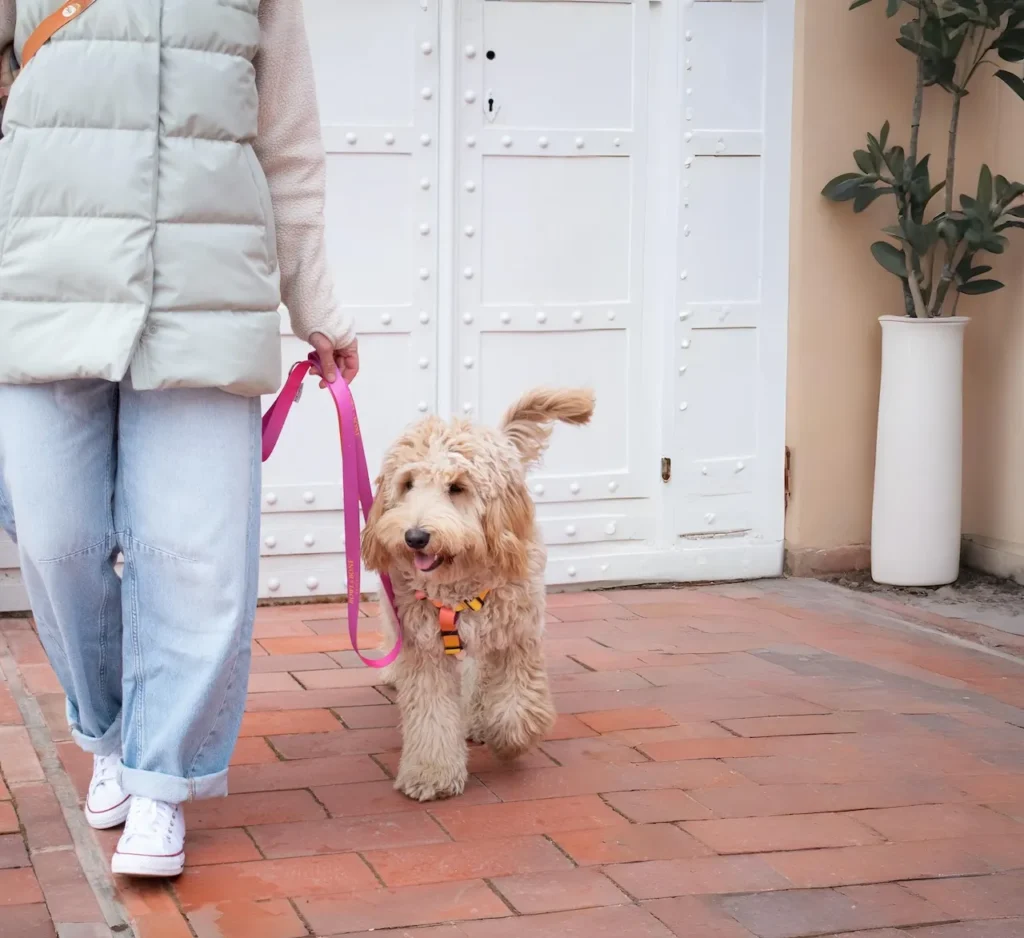
A comfortable dog harness and a properly selected dog lead can help make this repeated daily ritual comfortable for both the dog and the person holding the lead. For active walks, one example is the comfortable GRADIENT GUARD-type dog harness, whose four-point adjustment and soft construction allow it to be fitted comfortably to your dog’s body.
What should you avoid when trying to gain your dog’s trust?
One of the most common mistakes is rushing because we have good intentions. We want to show the dog how much we like them, so we stroke them, call them over, invite guests and try to play with them for half the day. But for an animal whose entire world has just changed, this can simply mean yet another flood of stimulation.
Do not force physical contact. Do not take your dog out of their resting place simply because you would like to stroke them. Do not punish them for being cautious or interpret withdrawal as a “lack of gratitude”.
Dogs Trust recommends allowing newly adopted dogs to initiate contact themselves at first and avoiding imposing physical affection if the dog does not appear interested in it. [4] Trust can be invited, but it is difficult to rush.
Can a dog remember a previous owner and still bond with a new one?
Yes — the two things are not mutually exclusive. A dog may retain memories of a familiar person and at the same time form a strong relationship with someone new. Previous and current guardians should not be treated as competitors fighting for a single place in the dog’s world.
We explore this subject in more detail in the article “Does a dog remember their previous guardian? How long can a dog remember a person?”. Studies involving dogs with a history of living in shelters suggest that previous experiences do not necessarily prevent them from building an individual relationship with a person in their new home. [3]
For a new guardian, this can be particularly important when a dog initially seems to be searching for someone, responds to particular sounds or simply needs more time to find their place in their new everyday life. You do not need to make your dog forget their previous life. You need to create conditions in which their next experiences can feel safe.
Does a dog choose one particular person?
Dogs can show particular preferences towards certain people, but this does not mean that they are capable of forming meaningful relationships with only one person. In a household with several people, different family members may have slightly different roles: the dog may prefer walking with one person, resting beside another and inviting someone else to play most often.
For this reason, asking “have they chosen me yet?” may be less useful than observing how your everyday relationship develops. We discuss this subject in more detail in the article “How does dog choose his guardian?”.
This article should receive a short link pointing to the new article once it has been published, helping Google clearly understand the difference between the two topics.
Does the popular 3–3–3 rule tell us when a dog will bond?
Online, you will often encounter the so-called 3–3–3 rule, according to which a dog needs around three days to begin settling into the situation, three weeks to become familiar with a routine and three months to feel more fully at home. It can be a useful way of reminding guardians that adaptation takes time, but the 3–3–3 rule should not be treated as a scientific clock counting down to the moment a bond forms.
Research into attachment shows considerable flexibility in dogs, but also significant individual differences. At the same time, organisations working in canine welfare recommend observing changes not only over the first few days but throughout the following weeks and months. Dogs Trust even suggests keeping a diary during the first three months after adoption to make it easier to notice how a dog’s behaviour and preferences change over time. [4]
So do not worry if, after 21 or 90 days, your dog does not behave exactly as an online graphic suggests they should. Every bond develops at its own pace.
Does a strong bond mean your dog should stay beside you all the time?
No. A healthy relationship with a guardian does not mean that you need to be together every minute of the day. A dog should gradually learn to rest independently as well as cope with short periods when their person is not present.
From the beginning, it is therefore worth creating a balance between shared activity and peaceful rest. Your routine may include walks, play and training, but also naps and periods when each of you is doing your own thing. Dogs Trust highlights the importance of including both time together and opportunities for rest in a dog’s daily routine. [5]
A dog who can fall asleep peacefully in their own bed while you work a few metres away is not necessarily less attached than a dog who spends the entire day lying beside your feet.
When is it worth asking a specialist for help?
Slowly developing trust is not a problem in itself. However, if your dog remains extremely stressed for a prolonged period, is unable to rest, reacts with panic to ordinary situations, shows aggressive behaviour or struggles greatly with even brief separation from their guardian, it is worth investigating the reason.
The first step may be a consultation with a veterinary surgeon, because behavioural changes can sometimes have a medical cause. When behavioural difficulties are involved, support from an appropriately qualified professional who uses methods that take the dog’s welfare into account can be helpful.
Do not judge the quality of your bond solely by how much time has passed. A dog who needs three months is not building a “worse” relationship than one who is sleeping beside their new guardian after three days.
A bond with a dog is built from small things
At Bowl&Bone Republic, we have been designing PREMIUM dog accessories for more than 10 years, and during that time we have received feedback from thousands of dog guardians who use our products. One thing that becomes particularly clear in these stories is just how different relationships between people and dogs can be. There is no single correct way for a dog to show trust and no particular deadline by which every dog should feel “at home”.
A bond often develops almost unnoticed. Through the same morning footsteps towards the door. Through walks along familiar routes. Through a few minutes of shared play. Through being able to fall asleep peacefully in their own place. Through discovering that when something worries them, their person does not force them to act but gives them time.
One day, you notice that your dog is no longer watching every movement you make with uncertainty. They recognise the sound of your keys. They know when you are getting ready for a walk. They settle down calmly while you work. Sometimes they simply come a little closer and lean against your leg for a moment.
There is no exact moment when you can draw a line and say: “this is when the bond was formed.” A dog bonds through repeated experiences that teach them that, with you, life is safe, predictable and good. And that is precisely why it is worth giving the relationship as much time as your individual dog needs.
For more advice about canine behaviour, everyday needs and conscious dog guardianship, visit the Bowl&Bone Republic blog. You can also discover our dog accessories, designed with your dog’s exceptional comfort, durability and everyday convenience for their guardian in mind.
– the Bowl&Bone Republic team
Frequently Asked Questions (FAQ), meaning the most frequently asked questions about the article –
How long does it take for a dog to bond with their guardian?
How long does it take for a dog to bond with a new owner?
There is no single number of days that applies to every dog. The first signs of particular interest in and preference for a new person may appear very quickly, while a fuller sense of security and a stable relationship often develop over the following weeks or months. [1][3]
How long does a dog need to get used to a new owner?
Adapting to a new home and forming an attachment to a person are two different processes. A dog may become familiar with their everyday routine relatively quickly while still needing more time to develop full trust. The pace depends on factors including previous experiences, temperament and the conditions in the new home.
How can you tell that a dog has bonded with you?
Your dog may increasingly choose to remain near you, seek contact, rest calmly in your presence, respond to your voice, initiate shared activities or turn to you in new situations. The overall pattern of behaviour should be considered rather than any single signal.
Can a dog bond with a person in just a few days?
The first behaviours indicating a preference for a particular person can appear very quickly. Research involving shelter dogs has shown that they may distinguish a familiar person from a stranger even after only a small number of brief interactions. This does not mean, however, that every dog develops a complete and stable bond within a few days. [1]
Can an adult dog bond with a new owner?
Yes. Research shows that adult dogs, including dogs living in shelters, are capable of forming individual attachment relationships with new guardians. Adulthood does not mean that a dog is unable to create another strong bond. [1][3]
Can a rescue dog form a strong bond with a new guardian?
Yes. In research, dogs with a history of living in shelters clearly distinguished between their current guardian and an unfamiliar person. The findings suggest that changing homes does not necessarily prevent a dog from developing a secure bond with someone new. [3]
How can you gain a dog’s trust after adoption?
Provide a quiet place, a predictable routine, regular walks, opportunities to rest and the freedom to initiate contact themselves. Do not force the dog to be stroked or to play. Trust is best built through many calm and positive experiences. [4][5]
Can a dog miss their previous owner and still love a new one?
A dog may remember a previous guardian while also forming a strong relationship with somebody new. The two are not mutually exclusive. A new bond does not require earlier experiences to be “erased”.
Does a puppy bond with a new owner more quickly than an adult dog?
There is no rule that applies to every dog. Puppies are highly receptive to learning about social relationships, but the pace at which a bond develops depends on socialisation, temperament, previous experiences and how the puppy is introduced to their new home.
Does a dog choose only one owner?
Not necessarily. A dog may show a particular preference for one person while also forming important relationships with several members of the household. These relationships may differ — one person may be associated more strongly with walks, another with rest and another with shared play.
Does the 3–3–3 adoption rule always work?
It should not be treated as an exact timetable. It can help remind us that adaptation happens in stages, but every dog needs a different amount of time. The behaviour of the individual dog matters more than any particular number of days or weeks.
Sources and inspiration used to create the article
How long does it take for a dog to bond with their guardian? How does a bond form with a new owner?
- Gácsi M., Topál J., Miklósi Á., Dóka A., Csányi V. – “Attachment behavior of adult dogs (Canis familiaris) living at rescue centers: forming new bonds”, Journal of Comparative Psychology – a study examining how quickly adult dogs living in rescue centres may begin displaying attachment-related behaviours.
PubMed – full study description
DOI: 10.1037/0735-7036.115.4.423 - Topál J., Miklósi Á., Csányi V., Dóka A. – “Attachment behavior in dogs (Canis familiaris): a new application of Ainsworth’s Strange Situation Test”, Journal of Comparative Psychology – a study examining dogs’ attachment behaviour towards their guardians.
PubMed – full study description
DOI: 10.1037/0735-7036.112.3.219 - Cimarelli G., Schindlbauer J., Pegger T., Wesian V., Virányi Z. – “Secure base effect in former shelter dogs and other family dogs: Strangers do not provide security in a problem-solving task”, PLOS ONE – a study examining the secure-base effect and the bond between adopted dogs and their current guardians.
PLOS ONE – full study
DOI: 10.1371/journal.pone.0261790 - Dogs Trust – “How to help a rescue dog get settled into your home” – guidance covering a rescue dog’s first days and months, creating a calm space and avoiding forced interaction.
Dogs Trust – settling a rescue dog - Dogs Trust – “How to get your dog into a routine” – information about the importance of predictable routines, rest, walks, play and time spent with a guardian.
Dogs Trust – creating a routine - Nagasawa M., Mitsui S., En S. et al. – “Oxytocin-gaze positive loop and the coevolution of human-dog bonds”, Science – a study investigating mutual gazing, oxytocin and mechanisms associated with the human–dog relationship.
PubMed – full study description
DOI: 10.1126/science.1261022 - Dogs Trust – “How to help your puppy get settled into your home” – recommendations for calmly introducing a puppy to a new environment, creating a routine and resting place, and supporting gradual adaptation.
Dogs Trust – new puppy at home - Bowl&Bone Republic – “Does a dog remember their previous guardian? How long can a dog remember a person?” – an article about canine memory and a dog’s ability to form a new bond after changing homes.
Bowl&Bone Republic – does a dog remember their previous guardian? - Bowl&Bone Republic – “How does dog choose his guardian?” – an article about dogs’ preferences for particular people and their relationship with their primary guardian.
Bowl&Bone Republic – how does dog choose his guardian?











 or CANADA
 PLEASE join us at