


A well-fitting dog harness is, above all, about your dog’s comfort and wellbeing. Choosing the right design and size will allow your dog to enjoy walks together and outdoor play. There is a very wide range of dog harnesses available. Which one you should choose depends largely on your dog’s size and their everyday level of physical activity.

It is worth remembering, however, that the size label alone – S, M or L – is not enough to determine whether a particular harness will be suitable. Two dogs of the same breed can have very different body proportions, while individual harness models may have different constructions and size charts. That is why one of the most important steps before buying is measuring your dog correctly, comparing the measurements with the size chart for the specific model and checking the fit once the harness has been put on.
What will you learn from this article?
- Dog harnesses are available in several different types.
- The type of harness should be suited to your dog’s needs.
- You should also pay attention to the material and size of the dog harness.
- You will learn how to measure your dog for a harness and choose the right size.
- We will explain how to recognise a harness that is too small or too large.
- You will find out which dog harnesses are better avoided.
- You will learn how to assess the fit of a harness while your dog is moving.
As dog guardians, we now choose harnesses almost as often as collars for our pets. The range of models, materials and colours available on the market is truly impressive. When choosing a particular type of harness, focus above all on your dog’s comfort, wellbeing and complete freedom of movement.
The most important thing is to choose the harness specifically for your dog so that they genuinely feel comfortable wearing it. So let us explain how to choose a dog harness that will be comfortable for your pet.
How to choose a dog harness? A quick answer
If you are looking for a quick answer, choosing the right harness can be reduced to four basic steps:
- choose a design suited to how the harness will be used and to your dog’s build,
- measure your dog according to the measuring guide for the specific model,
- compare the measurements with the manufacturer’s size chart,
- once the harness is on, check its position and how it behaves while your dog is moving.
A good dog harness should remain stable, should not rub around the armpits, cause excessive pressure or move around the torso with every movement your dog makes. The size chart is therefore the starting point, but the final test is always the individual dog.
Why choose a dog harness and when is it worth considering?
Dog guardians often face the dilemma of what will be more suitable for their beloved pet – a collar or a comfortable dog harness. Both solutions have their supporters and opponents. When making the decision, it is therefore worth considering the individual dog’s needs, body shape, movement and behaviour on the lead.
There is no single solution that will be universally best for every dog. The decision should be based on your dog’s individual preferences and needs. In the case of health concerns or doubts relating to the musculoskeletal system, it is also worth discussing suitable walking equipment with a vet or a professional specialising in animal physiotherapy.
For some dogs, due to the shape of their neck or their individual needs, a harness may prove more comfortable than a traditional collar. Equipment should not, however, be chosen solely on the basis of breed – fitting it to the individual dog is always more important.
How should you choose a dog harness and when is it particularly popular? Harnesses are often chosen for dogs with a sporty spirit. They can work very well during many forms of physical activity together, such as running or hiking, provided that you select a design intended for that particular activity.
There are many types of harnesses on the market created with the comfort of dogs who love sport and an active lifestyle in mind. One example is the ACTIVE dog harness by Bowl&Bone Republic.
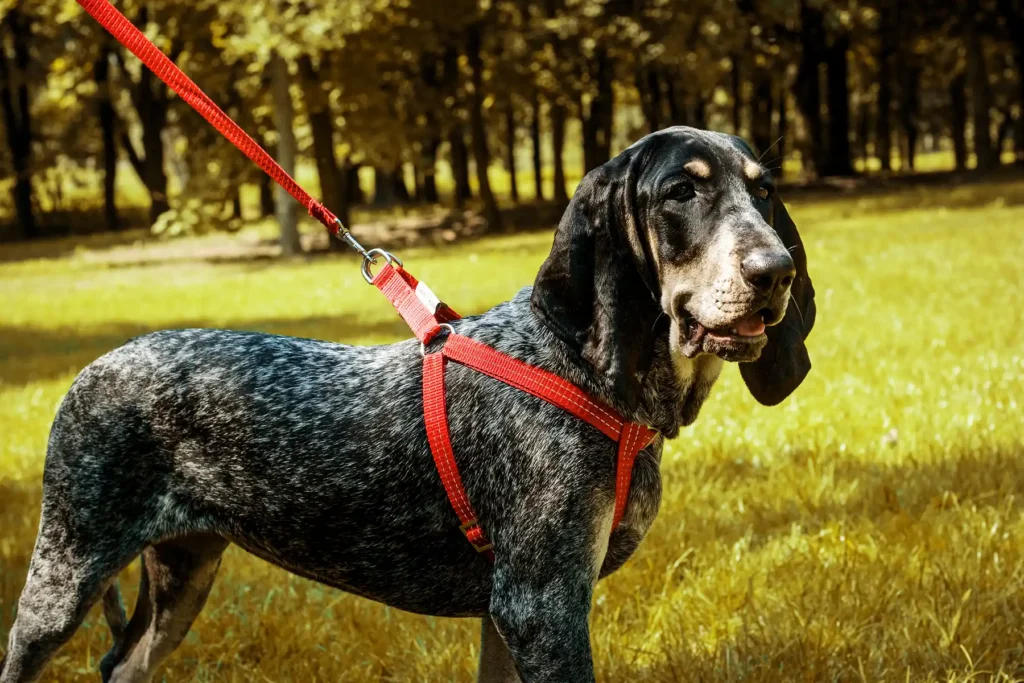
When you have a particularly lively and active dog for whom walking on a lead feels like an unpleasant duty, a properly fitted harness can be a good solution. Correct fit and teaching the dog to walk calmly on the lead are particularly important.
Comfortable dog harnesses: what types are available?
If you want to know how to choose a dog harness, it is worth first becoming familiar with the different designs. There are several types available, suited to different levels of canine activity. So how do you choose the right dog harness and which types can you choose from? Here is the answer.
In this article, however, we discuss the different types of harness mainly as an introduction to fitting them correctly. A detailed comparison of individual designs is better considered separately, so that the question “which harness should I choose?” is not confused with “how should I choose the right size?”.
– sports harnesses
These are designed for exceptionally active dogs for whom sport is an important part of everyday life. They can also work well for dogs who are only just beginning their sporting adventure.
Sports harness designs are tailored to specific activities such as running, cycling or pulling sports. Each type of activity requires a slightly different design to make the best use of the dog’s abilities while allowing comfortable movement.
If you are unsure which harness to choose for an active dog, pay particular attention to the intended purpose of the specific model. Equipment used for specialist activities should be designed for that activity.
– walking harnesses
This is one of the most common types of dog harness. Its main purpose is everyday use. This type of harness works particularly well during walks with your dog, trips to the park or shorter hikes.
Walking harnesses are a direct alternative to collars. When chosen correctly, they can work very well as part of everyday life with your dog.
If, however, you are planning running, canicross, trekking with your dog or another specialised activity, check whether the model you choose has actually been designed for that purpose.
– specialist harnesses
Among the many types of comfortable dog harnesses, there are also those designed with a specific purpose in mind.
Examples include designs intended for travelling by car, working with a dog, tracking or different canine sports. These harnesses tend to be more specialised and are intended for professional or specific applications.
In these cases, it is even more important to use the equipment in accordance with the manufacturer’s intended purpose.
– guard-style harnesses
Guard-style harnesses can work well for many dogs. Why is this type worth considering when looking at different dog harness designs? A construction made up of several connected straps provides relatively precise adjustment to the dog’s body, particularly when the model offers several adjustment points.
At this point, it is worth correcting one statement from the older version of this article. We cannot assume as a universal rule that a harness described as a guard harness automatically “does not restrict the shoulder blades”. Research into canine biomechanics shows that the effect of harnesses on range of movement is more complex and depends, among other things, on the design, fit and individual dog [1][2].
Regardless of the name of the harness, its performance should therefore be assessed once it has been fitted to the individual dog and while the dog is moving naturally.

In the Bowl&Bone Republic range, you will find guard-style harnesses including the GRADIENT collection, BLOOM and BREEZE. Guard harnesses with a wide range of adjustment are also available.
How to choose a dog harness?
If you want your dog to enjoy long walks together, make sure their harness is fitted correctly. The dog’s size matters, but so do their body shape and level of physical activity.
A poorly fitted harness can cause discomfort during movement and, with prolonged use, may contribute to rubbing of the skin or coat.
If you are wondering how to choose a dog harness, pay particular attention to the design, size, adjustability, material and the way the product behaves on the dog’s body while they move.
– a harness design suited to your dog
Harnesses used for everyday walks can differ in design. Although they serve the same basic function, differences in construction can affect your dog’s comfort.
Among the options available are models made from straps or webbing – for example, the ACTIVE harness. This design allows the harness to be adjusted to the dog’s body using dedicated adjustment elements.
Another popular type of comfortable dog harness consists of two main sections: an underbody section and a chest panel. One of the greatest advantages of this design is how easy it can be to put on. It also has a larger contact area with the dog’s body. With this type of harness, there is another decision to make.
A comfortable dog harness can be put on over the dog’s head, as with the CANDY model. Harnesses with an underbody section can also be put on “through the legs”, as with the DENIM or insulated YETI models.

Choosing the right design depends largely on your dog’s temperament. Your dog may feel uncomfortable wearing a particular construction. On the other hand, if your dog strongly resists every attempt to put a harness on, a design made entirely from straps may make the process even more difficult.
It is therefore worth considering not only how the harness looks once it is on, but also how your dog reacts to the process of putting it on and taking it off.
How to measure a dog for a harness
This is one of the most important new sections in this guide. Google Search Console data for this article show that users search, among other things, for phrases relating to measuring dogs, harness fit and harness sizing.
It is best to use a soft measuring tape. Your dog should be standing naturally on all four paws. Avoid taking measurements while your dog is sitting, lying down or strongly flexing their body.
The most important rule is: always measure your dog according to the instructions for the specific harness model. Not every type of harness requires exactly the same measurements.
– chest or body circumference
For many harness models, the most important measurement is the circumference of the chest or torso. The exact measuring point may, however, differ depending on the design.
For example, with current ACTIVE harnesses by Bowl&Bone Republic, the principal measurement is the body circumference measured at its widest point with a small amount of allowance. With the CANDY model, the size chart takes both neck and body circumference into account.
This is a good example of why you should not transfer the measuring method used for one harness to every other model.
– neck circumference
If a particular model requires a neck measurement, take it precisely at the point shown in the product’s measuring diagram. Do not assume that it will always be the same place where you would measure for a traditional collar. Depending on the harness design, the front section may sit lower.
– additional measurements
Some harness models may require additional measurements in order to choose the correct size. Manufacturers generally provide a detailed measuring diagram to help guardians select the right size of dog harness.
For this reason, the size chart and measuring instructions for the individual model should always take priority over general advice about measuring a dog.
Choosing the right dog harness size
When selecting the right size of comfortable dog harness, the most important factor is the dog’s actual body measurements. In the older version of this article, we presented three measurements as a universal rule: neck circumference, chest circumference and back length. Today, that would be too much of a simplification because the way a dog should be measured depends on the harness design.
For some models, body circumference is the main measurement required, while others also require a neck measurement or other dimensions. Current instructions for individual Bowl&Bone Republic models clearly specify which measurements are required.
Do not choose the size based solely on breed. Two Yorkshire Terriers, Poodles or French Bulldogs can have different body proportions and may therefore require different sizes. Information about which breeds typically fit a particular size should be treated as a helpful indication, not as a substitute for measuring your dog.
It is also worth measuring your dog again even if you have previously bought a harness from the same brand. The sizing of a particular model may differ, and your dog may have gained or lost weight or changed in body proportions. Current Bowl&Bone Republic product pages also remind customers not to rely solely on previous purchases.
How tight should a dog harness be?
The harness should be adjusted securely enough that it does not rotate freely around the torso, while at the same time it must not squeeze the body excessively. There is no single universal number of centimetres of allowance that will suit every design. If the manufacturer of a particular model specifies how the harness should be adjusted or how much allowance should be left, follow those recommendations. Once the harness is on, check:
- whether the straps dig deeply into the body,
- whether the material becomes tight with every step,
- whether the harness moves noticeably to one side,
- whether elements close to the front legs rub against the armpits,
- whether your dog can stand, walk and sniff naturally.
Do not assess the fit only while your dog is standing still. A harness is used while the dog is moving, so its final fit should also be assessed during movement.
How can you tell if a dog harness is too small?
A harness that is too small is not always immediately obvious. Sometimes it may simply appear to fit very closely. Look out for whether:
- the straps dig deeply into the body,
- the material remains constantly under tension,
- the adjuster is almost at the very end of its range,
- there is rubbing under the armpits,
- clear pressure marks remain after removing the harness,
- your dog behaves differently after the harness is put on.
If your dog suddenly becomes reluctant to move, tries to scratch at the product or their movement is noticeably different from normal, check both the size and adjustment.
If changes in movement or signs of pain also occur when the dog is not wearing the harness, consult your vet.
How can you tell if a dog harness is too large?
A harness that is too loose does not mean greater comfort either. The product may be too large if it:
- rotates around the torso,
- clearly hangs down,
- moves towards the armpits,
- shifts to one side when the dog changes direction,
- allows the dog to back out and escape from the harness easily.
The first step should of course be to adjust the harness properly. If, however, the harness still does not remain stable even after using the available adjustment range, you will probably need a different size or design.
How to check whether a dog harness fits correctly
After putting the harness on for the first time, let your dog walk a few metres. Then check the product again. A useful test is a short walk during which your dog:
- walks at a relaxed pace,
- turns in both directions,
- lowers their head to sniff,
- speeds up briefly,
- changes direction.
Watch whether the harness remains in a similar position on the body. After the first longer walk, it is also worth checking the skin and coat where the product has been in contact with the dog. This can help you quickly notice any rubbing that may not have been visible during the initial fitting at home.
Which dog harnesses should you avoid?
This is a particularly interesting search phrase identified in Google Search Console data. The article is already appearing in Google for queries equivalent to “which harnesses should you avoid?” and “which dog harnesses should you avoid?”, so it is worth answering the question directly.
This does not mean creating a list of particular harness constructions that are always bad. Above all, do not buy a harness that cannot be fitted correctly to your dog. Avoid a particular model if, despite correct adjustment, it:
- regularly moves into the armpit area,
- causes rubbing or strong localised pressure,
- constantly rotates around the torso,
- allows the dog to escape from it easily,
- has fastening or finishing elements that raise concerns,
- is not suited to the activity for which you intend to use it.
It is also not worth choosing a harness simply because you like its colour, price or size label. The most important factor is how the product actually fits your dog.
Can a harness restrict a dog’s movement?
This issue is more complex than it was often presented in dog harness guides just a few years ago. Research by Lafuente, Provis and Schmalz involving two different harness constructions found changes in shoulder extension compared with dogs moving without a harness. The findings did not support the simple assumption that one popular harness construction automatically allows greater freedom of movement than another [1].
A more recent 2025 review also indicates that there is not enough evidence to identify one walking restraint device as the best option for every dog. Factors such as the design, how the equipment is used and the characteristics of the individual dog all matter [2]. In practice, this means that it is better not to rely solely on marketing descriptions such as “non-restrictive”. Correct fit and observing the dog while walking are much more important.
Which harness should you choose for a puppy and how should you choose the size?
Puppies grow very quickly, so a harness that fits well today may become too small after some time. This does not mean, however, that buying a much larger harness “for the future” is a good solution. The product should fit the dog at the time when they are actually going to use it.
During periods of rapid growth, regularly check:
- chest circumference,
- the remaining adjustment range,
- the distance between the harness and the armpits,
- how the product behaves during movement,
- whether the puppy can slip out of the harness.
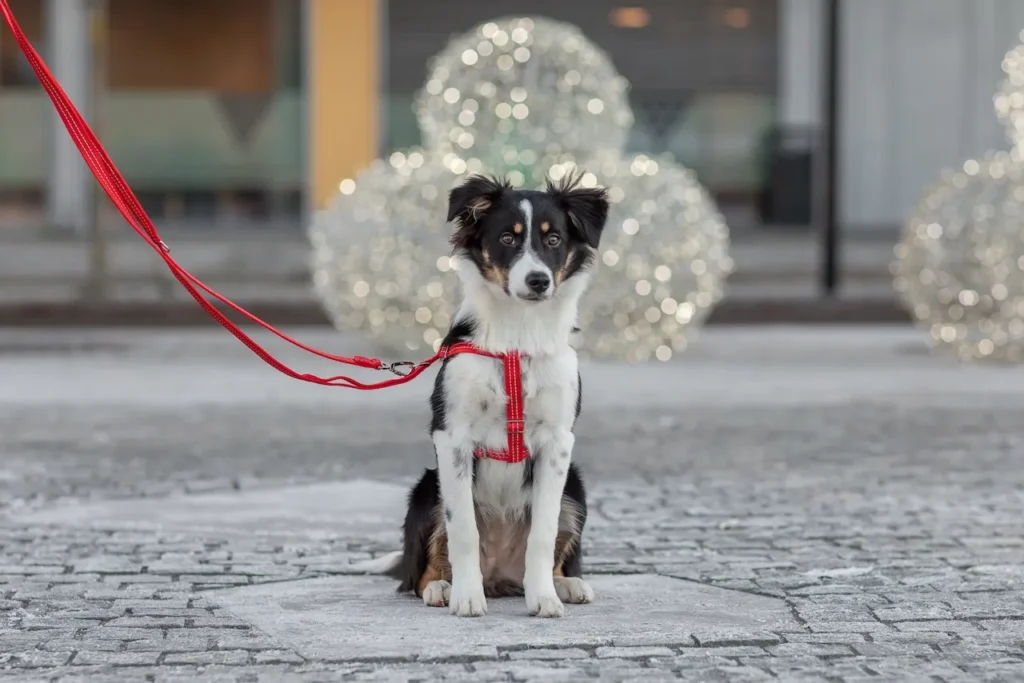
If your puppy is growing particularly quickly, checking the harness size should become a regular part of using it.
What should you do if your dog is between two sizes?
Do not automatically choose the larger size simply because it seems like the safer option.
First compare all the required measurements with the size chart and check the adjustment range for both sizes. With harnesses that have several adjustment points, it is often possible to tailor the position of the straps more precisely to the dog’s proportions.
If none of the standard sizes fits correctly, an individually made harness may be the answer.
For selected models, Bowl&Bone Republic offers the possibility of having a harness made to measure. Current product pages also encourage customers who are unsure to provide the dog’s breed, sex and actual measurements so that we can additionally check the selected size before the order is made.
When is a made-to-measure dog harness worth considering?
Standard size charts work well for most dogs, but not every dog’s proportions fit within typical size ranges. Sometimes the neck circumference corresponds to one size while the chest circumference falls into the next. A dog may also have a relatively broad chest, narrow neck, longer torso or simply unusual proportions resulting from their individual body shape.
In these cases, a made-to-measure dog harness can be a good solution. Instead of trying to make the dog fit a ready-made size chart, the product is prepared using their individual measurements. This option is particularly worth considering when your dog’s measurements fall between standard sizes or when, despite correct adjustment, a ready-made harness does not sit on their body as it should.
Made-to-measure harnesses can be particularly useful for dogs with unusual builds. Breed alone cannot always predict an individual animal’s proportions – even two dogs of the same breed may differ noticeably in neck circumference, chest width or torso length. Being able to prepare the product using the dog’s actual measurements can therefore allow for much more precise fitting than simply choosing between S, M and L.
At Bowl&Bone Republic, we offer, among other options, made-to-measure SOHO dog harnesses. Before the harness is made, precise measurements are required: neck circumference, chest circumference and torso length. When taking the measurements, the tape should be positioned according to the product instructions, leaving the specified allowance. The harness is then individually prepared using the measurements provided. The current production time is approximately 7 working days.
When choosing a made-to-measure harness, it is particularly important to take accurate measurements. In this case, you are not selecting a ready-made size that can simply be exchanged for another option from the chart; instead, the product is prepared according to the dimensions provided. Measure your dog calmly while they are standing naturally on all four paws and, for peace of mind, check each measurement a second time.
Made-to-measure harnesses are not necessary for every dog. If your pet comfortably fits within the standard size chart and the available adjustment range allows the harness to be fitted correctly, a ready-made size will be an appropriate solution. The made-to-measure option becomes particularly valuable when the standard sizing does not allow you to achieve the correct fit.
This is also important for everyday walking comfort. Instead of selecting a larger size simply to accommodate the chest, or over-adjusting a smaller model because of the neck, the harness can be made to correspond to the dog’s actual proportions.
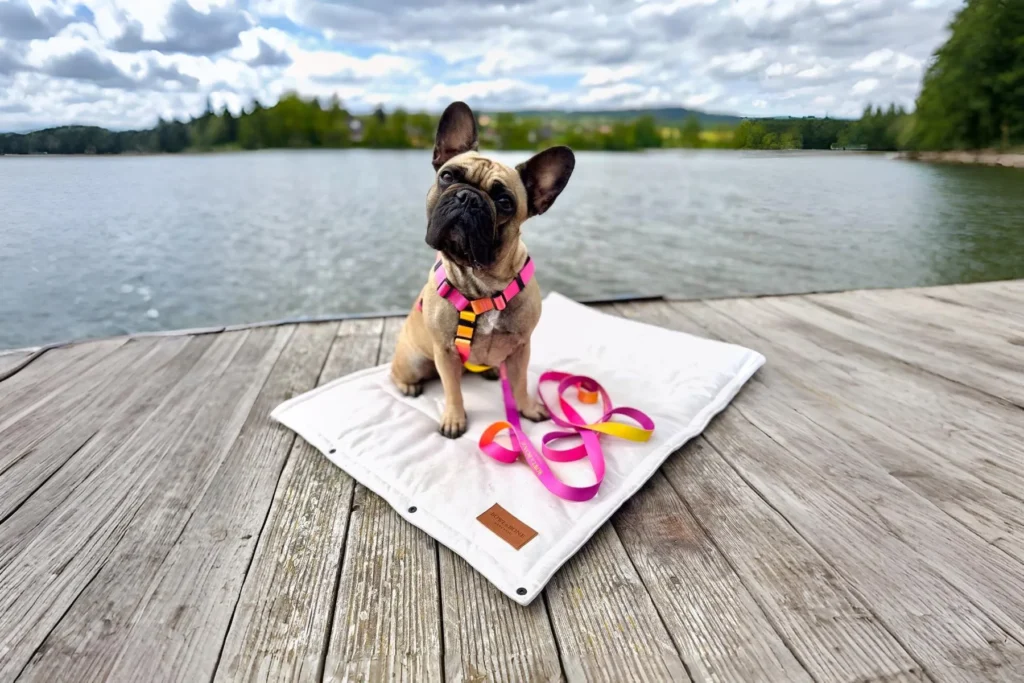
If your dog falls between sizes or their proportions differ significantly from the standard size chart, consider the made-to-measure SOHO dog harness and carefully check the measuring instructions before placing your order.
Dog harness colour and material
A harness is in frequent and prolonged contact with your dog’s body. When choosing a product, pay attention to the quality of its materials and workmanship.
The finish of surfaces that come into contact with the dog’s body is particularly important. Elements should not create rough points or irritate the skin while the dog is moving.
In some Bowl&Bone Republic models, the inner part of the straps is additionally finished with a fabric that is pleasant to the touch. It is also worth following the product care instructions so that the material maintains its properties during everyday use.
The colour and design of your dog’s harness matter too. When considering how to choose a dog harness, there is no reason why your pet cannot feel comfortable while also looking fashionable and stylish.
A comfortable dog harness: an essential part of every walk together
Your dog wears a harness every day, both during everyday walks and on trips together. That is why it is so important for it to be properly fitted and allow your dog to move freely. Many models come in a broad range of sizes and also feature adjustment that allows changes to the width or length of the harness. Adjustment does not, however, replace choosing the correct size – its role is primarily to fine-tune a product that is already within the appropriate size range.
The most important thing is that your dog feels comfortable wearing the harness during play or adventures together.
A properly fitted harness should therefore combine the right design, the correct size, suitable adjustability and a material appropriate for how it will be used. Do not stop at reading the letter on the size chart – once the harness is on, always check how your dog actually moves while wearing it.
If you are looking for a new model, explore the full Bowl&Bone Republic dog harness collection. If you have any doubts about the size, you can send us your dog’s measurements and we will help you check your choice.
Which type of dog harness works best for your dog? Let me know in the comments below. If you have any questions or would like me to cover a particular topic in a future article, make sure you share it with me in the comments section.
Measure your dog before buying a harness
The most important rule is simple: do not choose a harness by eye. Measure your dog according to the diagram for the specific model, compare the result with the size chart and, once the harness is on, check it while your dog is moving. A few minutes spent measuring can determine whether the harness will genuinely become a comfortable part of your everyday walks.
For more inspiration on making informed choices about dog accessories, explore the other Bowl&Bone Republic guides. You will find practical advice to help you choose products suited to your dog’s needs and lifestyle.
– the Bowl&Bone Republic team
FAQ – frequently asked questions about the article
How to choose a dog harness so it doesn’t chafe or restrict movement?
How do you choose a dog harness?
First choose a design suited to your dog’s needs, then measure your pet according to the instructions for the specific model. Compare the measurements with the manufacturer’s size chart, adjust the straps and check the position of the harness while your dog is walking.
How do you measure a dog for a harness?
It is best to measure your dog using a soft measuring tape while they are standing naturally on all four paws. Depending on the design, you may need the circumference of the torso, chest or neck, as well as any additional measurements specified in the size chart for the particular model.
How do you choose the right dog harness size?
Do not select a size solely on the basis of breed or body weight. Measure your dog and compare the result with the size chart for the specific product. A size S in one model does not necessarily correspond to a size S in another design.
How tight should a dog harness be?
It should sit securely but must not place excessive pressure on the body. The correct amount of allowance depends on the construction and manufacturer’s recommendations, so one universal rule should not automatically be applied to every harness.
How can you tell if a dog harness is too small?
It may dig deeply into the body, rub around the armpits, leave pressure marks or remain tight even when the adjusters have been extended to their maximum range. It is also worth looking for any change in the way your dog moves.
How can you tell if a dog harness is too large?
A harness that is too large may rotate around the torso, move into the armpit area or allow the dog to back out of the construction. If correct adjustment does not make it stable, consider a smaller size or a different model.
Which dog harnesses should you avoid?
Avoid models that cannot be fitted correctly to your dog’s body. Warning signs include constant movement of the harness, rubbing, strong pressure, the possibility of the dog escaping easily or a construction that is unsuitable for its intended use.
When is a made-to-measure dog harness worth considering?
A made-to-measure harness is worth considering particularly when your dog does not fit correctly within a standard size chart, individual measurements correspond to different sizes, or your dog has unusual body proportions. A product prepared according to individual measurements can allow for more precise fitting than choosing between standard sizes.
Can you choose a dog harness based on breed?
Breed can provide an additional indication, but it should not replace measuring the dog. Dogs of the same breed can have different proportions around the chest, neck and torso.
What should you do if your dog is between two harness sizes?
Check all the required measurements and the adjustment range of both sizes. Do not automatically assume that the larger size will be better. With unusual body proportions, it is worth checking the measurements with the manufacturer or considering a made-to-measure model.
How often should you measure a puppy for a harness?
Regularly during periods of rapid growth. Monitor both the dog’s body measurements and the position of the harness. If the adjustment is approaching the end of its range or the harness begins to feel tight, you should choose the size again.
Should a properly fitted harness move?
A small amount of natural movement in the material is normal, but the product should not noticeably rotate around the torso or move towards the front legs with every step.
Can a harness restrict a dog’s movement?
Harness construction can affect canine biomechanics, but research does not support reducing the issue to one harness type that is always good and another that is always bad. The construction, correct fit and observation of the individual dog while moving are therefore all important.
Should you measure your dog again if they have previously worn a harness from the same brand?
Yes. A dog’s weight or body proportions may change, and different harness constructions can have different size charts. Before every purchase, it is worth checking the current size chart for the specific product.
Sources and inspiration used to write the article
How to choose a dog harness so it doesn’t chafe or restrict movement?
- Cavalli & Protopopova, 2025 – “Review of Collars, Harnesses, and Head Collars for Walking Dogs”
PubMed Central (PMC) - Lafuente, Provis & Schmalz, 2019 – “Effects of restrictive and non-restrictive harnesses on shoulder extension…”
British Veterinary Association - Williams, Hunton, Boyd & Carter – “Effect of harness design on the biomechanics of domestic dogs”
PubMed - Peham, Limbeck, Galla & Bockstahler, 2013 – “Pressure distribution under three different types of harnesses used for guide dogs”
PubMed - Weissenbacher et al., 2022 – the effect of two types of harness on ground reaction forces and stride length in guide dogs
PubMed Central (PMC) - “Health implications of dog-worn equipment: a review of known and alleged physical risks” – 2026
PubMed Central (PMC) - Bowl&Bone Republic, GRADIENT harness size chart and measuring instructions.
GRADIENT dog harness









 or CANADA
 PLEASE join us at