


Your dog comes up to you, looks at you for a moment, then turns around and sits with their back to you. At another time, they do exactly the same thing while being stroked, or settle down right beside you in the evening but point their muzzle in the opposite direction. From a human perspective, it is easy to interpret such a gesture as a lack of interest, ignoring you or even a sign of displeasure. Canine communication works differently, however, which is why turning their back should always be interpreted within a wider context.
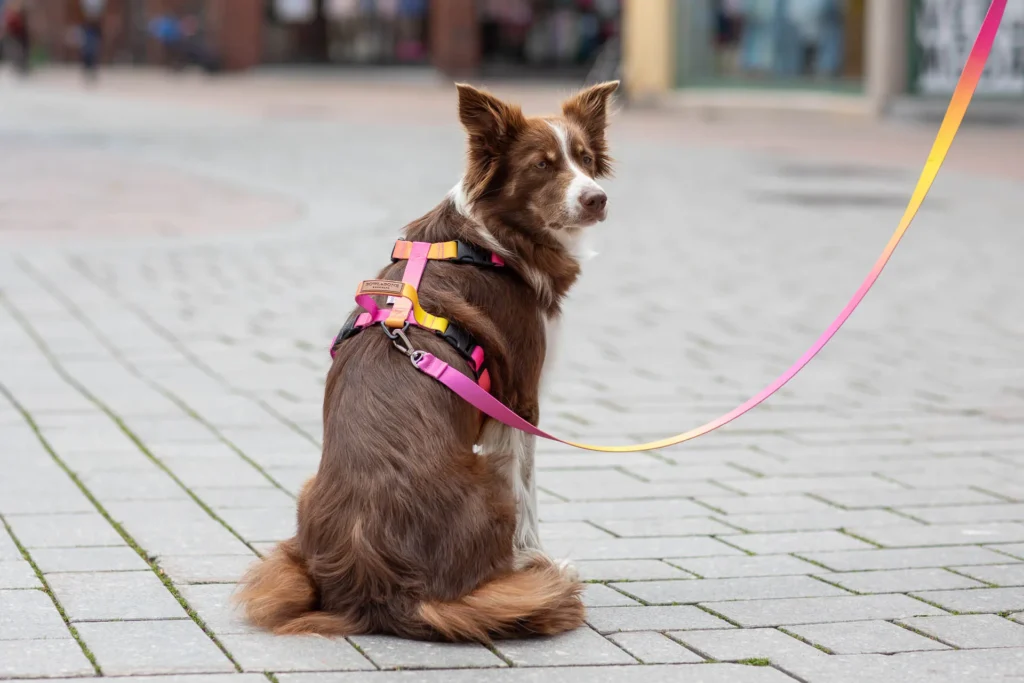
A dog turning their back on their guardian does not necessarily mean they are upset or deliberately ignoring them. They may simply be getting comfortable, feel safe beside you or be directing their attention towards something happening in front of them. In other circumstances, however, turning the head or the entire body may indicate that a dog wants to reduce the intensity of an interaction or needs more space [1][2][3]. This is why a single gesture, without considering the situation in which it occurs, is not enough to interpret your dog’s emotions accurately.
What will you learn from this article? In this guide, you will discover:
- why a dog turns their back on their guardian,
- whether sitting with their back to you can indicate trust,
- when turning away may be a request for space,
- why a dog turns their head away while being stroked,
- what it means when a dog lies with their back to a person,
- why a dog sometimes ‘shows their bottom’ to their guardian,
- how to distinguish relaxed behaviour from signs of discomfort,
- how to respond when your dog turns away,
- when a sudden change in behaviour may require a consultation with a veterinary surgeon.
Why does a dog turn their back on their guardian?
The most important thing to understand is that turning their back does not have one universal meaning. People’s Dispensary for Sick Animals (PDSA) explains that looking away, turning the head and then turning the whole body may be among the ways a dog communicates a desire to end an uncomfortable situation or increase distance [1]. Dogs Trust also emphasises that body language should be interpreted as a whole, because a single signal without knowledge of the surrounding circumstances can lead to the wrong conclusion [2].
Now imagine a completely different situation. In the evening, your dog comes over to you of their own accord, sits by your feet, turns their back after a moment and calmly lies down. Their body remains relaxed, their tail rests naturally and, after a few minutes, they fall asleep without attempting to increase the distance between you. In this situation, simply lying with their back to you is not sufficient reason to assume that the dog is stressed or wants to end the interaction.
We look at similar behaviours in more detail in the Bowl&Bone Republic guide Dog body language – calming signals. It is worth treating it as a companion article to this guide, as it considers not only turning away but also other subtle signals dogs use to communicate.
Does a dog turn their back because they trust their guardian?
It can happen, but we need to be careful with the popular online simplification that ‘a dog shows you their back because they trust you’. If your dog has chosen to remain very close to you, has a relaxed body and is resting calmly, their behaviour is consistent with a sense of comfort and security. This does not mean, however, that body position alone is a scientifically proven ‘test of trust’.
The fact that a dog sits or lies with their back to you is not, by itself, clear proof of trust. The entire sequence of behaviour tells us much more: whether the dog approached of their own accord, whether they remain relaxed, whether they are free to move away and how they react to your movements. If they fall asleep in your presence, regularly choose to remain nearby and show no signs of tension, we can say that the behaviour is taking place within a calm and secure situation. Even then, it is best not to attribute too much meaning to one body position alone.
We describe more behaviours connected with security and bonding in our article How does a dog show trust in their guardian? 10 subtle signs. Trust is best assessed through a range of recurring behaviours rather than a single gesture.
When does turning away mean that a dog needs space?
Context changes everything. If a dog turns away immediately after someone leans over them, hugs them, tries to touch their head or continues stroking them even though the dog has begun avoiding contact, turning away may be an attempt to reduce tension. PDSA includes looking away and turning the whole body among the behaviours a dog may use to communicate that an interaction is uncomfortable [1].
The Royal Society for the Prevention of Cruelty to Animals (RSPCA) points out that a worried dog may avoid eye contact, turn their head away, lick their lips, hold their ears back or change their body posture [3]. If several of these signals appear at the same time, it is worth treating them as an indication that the dog needs more distance. Ignoring subtle signals may result in the dog having to communicate their discomfort in a much more obvious way [1][2].
This is why turning away should not automatically be something we try to ‘correct’. If a dog uses this gesture to end an interaction, the best response from their guardian is to allow them to do so. A dog who knows they can move away without being held back or forced to continue an interaction has greater control over the situation.
Why does a dog turn their head away while being stroked?
This is a very common situation in which a guardian should pay attention to the dog’s overall body language. A dog may initially accept being touched and then, after a while, turn their head away, move slightly further back or angle their body in the opposite direction. If this is accompanied by tension, lip licking, backing away or an attempt to leave, it is worth pausing [2][3][4].
Dogs Trust recommends observing a dog’s reactions when getting them accustomed to being handled and stopping when signs of discomfort appear [5]. You can simply move your hand away and do nothing for a moment. If your dog moves closer again, leans against you or initiates further contact in another way, you can calmly resume stroking them. If they use the pause to move away, respect their decision.
Not every dog enjoys being touched in the same places either. One may love gentle strokes across the chest but move their head away when a hand appears above their face. Another may happily lie beside a person without wanting to be touched at that particular moment. For a dog, wanting to be close and wanting to be stroked are not always the same thing.
Why does a dog sit or lie with their back to their guardian?
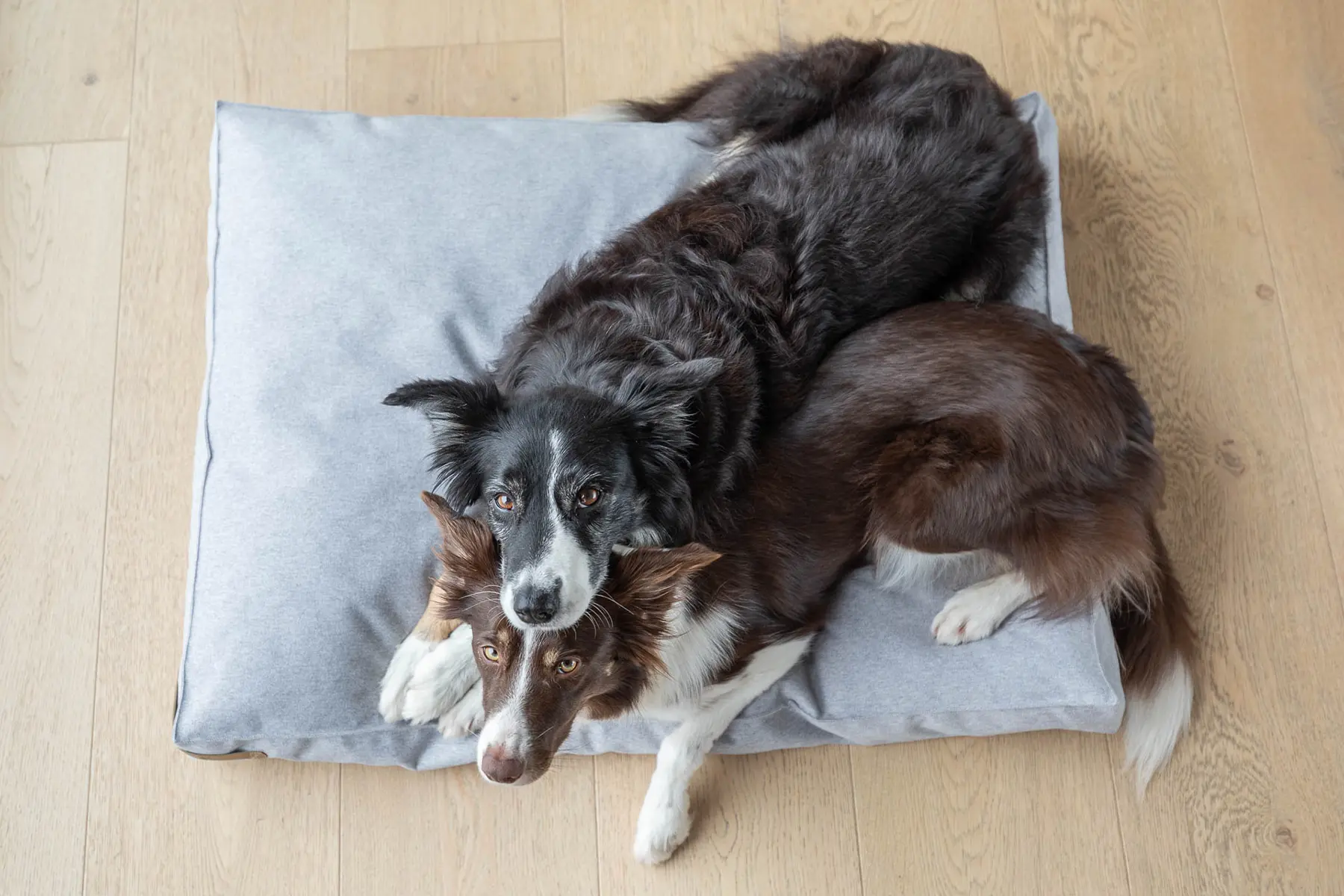
During peaceful rest, the answer can be very simple: that position is simply comfortable. A dog may want to watch the door, a window, another room or somewhere an interesting sound is coming from. If they voluntarily remain beside you at the same time, their body is relaxed and they soon fall calmly asleep, there is no need to interpret their back being turned towards you negatively.
It is also worth remembering that dogs should be able to choose both where and how they rest. Their own, properly sized dog bed gives them a space where they can relax without constantly having to respond to the activity of other household members. For the guardian, high-quality materials, removable covers and easier cleaning also mean greater comfort in everyday use.
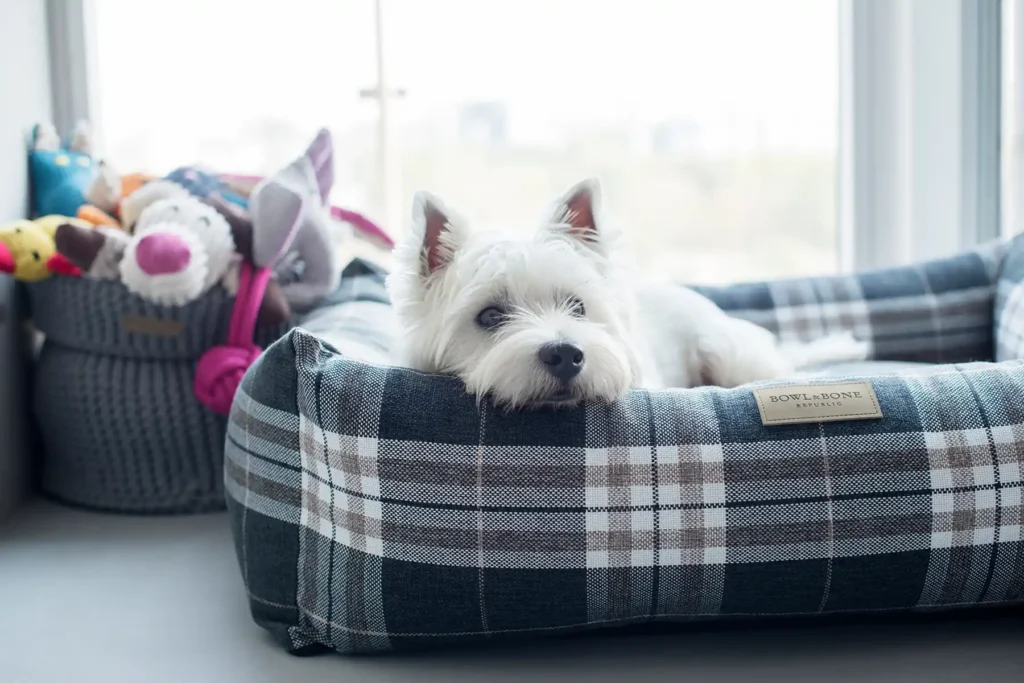
One example of such a space is the SCOTT blue dog bed. Its soft filling and pleasant fabric create a comfortable place to rest, while the removable covers and option to wash them make it easier to keep the bed in good condition. What matters most, however, is allowing your dog to decide whether they want to rest there, beside their guardian or, for a while, somewhere a little further away.
Why does a dog show their bottom to their guardian?
The question may sound amusing, but it comes up surprisingly often when people describe this behaviour. A dog may approach a person, turn around and position their bottom or side right beside the person’s legs. The behaviour alone still does not tell us whether the dog is asking to be stroked, simply wants to remain nearby or has merely found a comfortable position.
Some dogs genuinely learn that placing a particular part of their body close to a person results in pleasant scratching or stroking. If the dog actively moves closer, remains relaxed and initiates contact again after the touch stops, this may form part of a familiar routine. If, however, they turn away after an intense interaction and make no attempt to restart it, we should not assume that they are ‘presenting themselves to be stroked’. Once again, context matters most.
How can you tell whether a dog is relaxed or turning away because of stress?
A relaxed dog will usually have a natural, loose posture, with no obvious muscular tension and with their ears and tail held in a position that is normal for that particular dog. They move freely, may stretch, lie down or fall asleep and do not immediately try to increase the distance between themselves and another person. It is important to observe the whole dog because body shape, tail length and ear shape mean that a ‘neutral’ posture can look different from one dog to another [2][3].
The situation may look very different if turning away is accompanied by a stiff body, ears pulled back, lip licking, yawning unrelated to tiredness, avoiding eye contact, a lowered tail or an attempt to leave. Veterinary Centers of America (VCA) also describes turning the head and avoiding direct eye contact as possible behaviours associated with attempts to reduce tension in a social situation [4]. A single signal is still not enough to draw a definite conclusion, but several occurring together should encourage the guardian to reduce pressure.
The most useful question is therefore not: ‘What does it mean that my dog showed me their back?’ A better question is: ‘What happened just before this, what does the rest of my dog’s body look like and what did they do afterwards?’ Looking at behaviour in this way reflects the genuine complexity of canine communication much more accurately.
My dog turns away when I put their harness on – does it mean anything?
Turning the head or body can also appear during everyday routines such as wiping paws, grooming or putting on a harness. A single glance to the side does not mean that your dog dislikes a particular accessory. If, however, every time you take out the harness your dog turns away, backs up, becomes stiff or tries to avoid having it put on, it is worth looking more closely at the whole situation.
First, check the fit, how the harness is put on and the areas where the material comes into contact with your dog’s body. A properly fitted dog harness should allow your dog to move freely without causing unnecessary pressure. It is equally important to introduce the entire process calmly, particularly if your dog dislikes being touched on certain areas of the body.
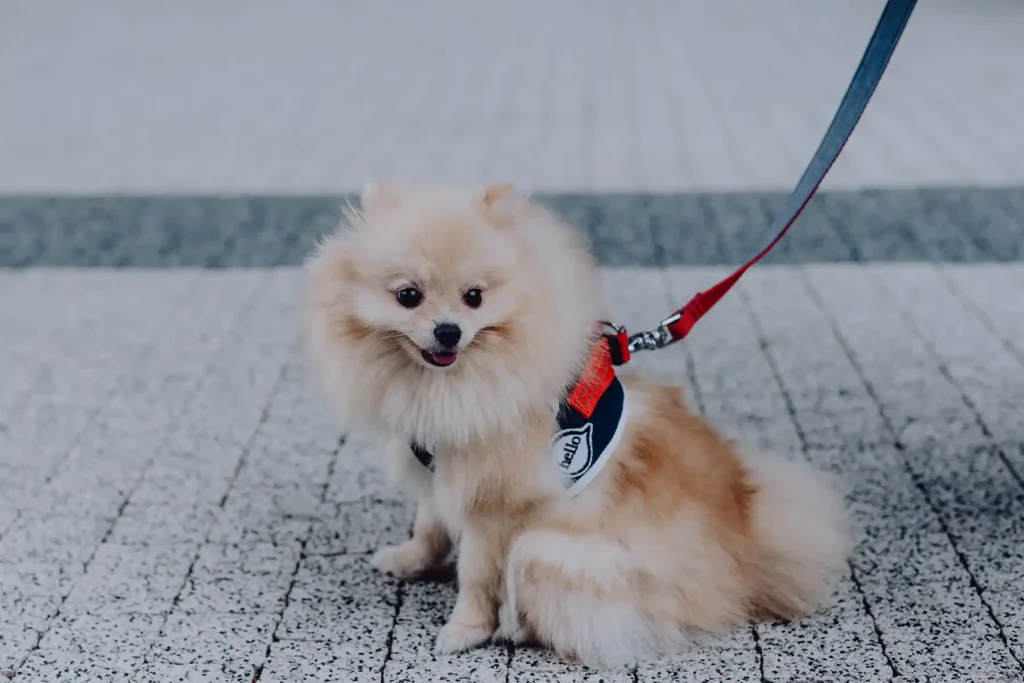
One example is the DENIM navy dog harness, which is lined with lightweight mesh and made from material selected with everyday comfort in mind. Being washable makes it easier for the guardian to keep the harness clean, while choosing the right size helps create a comfortable set for everyday walks. Regardless of the model you choose, however, it is always worth observing the individual dog’s response and never ignoring repeated signs of discomfort.
Does a dog turn their back because they are sulking?
Interpreting a dog as ‘sulking’ is a very human way of looking at the situation. A dog may, of course, change their behaviour after play ends, a toy is taken away or further interaction is refused, but we should not automatically assume that they are turning away in order to deliberately punish a person. It is much more useful to consider what function the behaviour may have within the wider situation.
The dog may simply begin another activity, want to rest or try to bring an intense interaction to an end. They may also turn their body as part of behaviour that helps reduce tension [1][4]. Instead of asking ‘Is my dog upset with me?’, try asking: ‘What do they need at this moment?’ This perspective makes an appropriate response much easier.
Can suddenly turning away from touch indicate pain?
A sudden change in behaviour should not be ignored. If a dog has happily allowed their back, neck or another part of the body to be touched for many months but has now started turning away, moving aside or becoming tense specifically during that contact, physical discomfort is one possible explanation. Dogs Trust points out that pain or health problems can reduce a dog’s tolerance of touch and affect the way they respond to being handled [2][5].
Pay particular attention to behaviour that appears suddenly and is accompanied by other changes, such as reluctance to move, difficulty getting up, lameness, whimpering or obvious avoidance of a particular type of touch. Do not repeatedly press the same area simply to test your dog’s reaction. In this situation, the appropriate next step is to consult a veterinary surgeon.
How should you respond when your dog turns away from you?
Observe first rather than immediately trying to regain your dog’s attention. If they turn away while being stroked, stop touching them for a moment and see what they do next. If they approach you again after a while, you can respond to their initiative; if they move away or maintain their distance, allow them to rest.
Do not forcibly turn your dog back towards you or hold them in place simply to continue stroking them. Dogs often communicate discomfort very subtly at first, and having the option to move away can help prevent them from needing to use more obvious signals [1][2]. It is particularly important to teach children that a dog may not want contact and should always have the opportunity to move away calmly.

Over time, you will begin to notice small differences. A dog who turns around and then calmly leans their back against your leg looks very different from one who turns their head away, stiffens their body and tries to leave. The better you understand your individual dog’s way of communicating, the less you need simple online rules claiming that ‘this gesture always means the same thing’.
Experience teaches us that every dog communicates a little differently
At Bowl&Bone Republic, we have been designing high-quality PREMIUM dog accessories for more than 10 years, observing along the way just how much the needs of individual dogs can vary. An important part of this experience also comes from the opinions and feedback we have received over the years from thousands of happy customers using our products with their dogs. Time and again, this has shown us that a solution that is perfect for one dog may not suit another at all.
One dog loves curling up against the soft sides of their bed, while another prefers to stretch out across its entire surface. One seeks physical contact for much of the day, while another feels happiest resting calmly a metre away from their guardian. These differences do not indicate a stronger or weaker bond; instead, they remind us that a dog’s comfort should be assessed above all through their own individual behaviour.
The same philosophy guides us when designing Bowl&Bone Republic dog accessories. High-quality materials, carefully refined details and everyday comfort matter both to dogs and their guardians, but even the best-designed product should be properly suited to the individual dog. Observing their response is therefore always just as important as choosing the accessory itself.
Why does a dog turn their back on their guardian? Context matters most
Turning one’s back can occur in many different situations, which is precisely why it should never be interpreted according to one simple rule. A dog may be resting peacefully, choosing a more comfortable position or remaining close to someone with whom they feel safe. At another moment, exactly the same movement may be a subtle attempt to end contact or increase distance.
The most important thing is therefore not simply that your dog has turned away, but everything happening around that behaviour. Observe muscle tension, the position of the ears and tail, what happened before the gesture and what your dog does a moment later. Over time, these small details begin to form a much clearer picture of your dog’s emotions and needs.
If your dog is instead one of those who loves following their guardian from one room to another, have a look at our guide Why does your dog follow you everywhere? What does this behaviour mean?. Learning to recognise these everyday behaviours helps us understand our dogs more deeply, and a calm, conscious relationship begins with that understanding.
For more advice about canine behaviour, rest and everyday comfort, visit www.bowlandbone.com. Discover our dog beds, harnesses and other accessories too, designed and made in Poland with your dog’s comfort, exceptionally high-quality craftsmanship and their guardian’s everyday convenience in mind.
– Bowl&Bone Republic team
FAQ – the most frequently asked questions about the article –
Why does a dog turn their back on their guardian?
Why does a dog sit with their back to their owner?
A dog may simply be choosing a comfortable position or directing their attention towards something in front of them. If they voluntarily remain close to the person, their body is relaxed and they are resting calmly, the behaviour does not necessarily indicate anything concerning. If, however, the dog turns away immediately after being touched, becomes tense and tries to leave, they may need more space [1][2].
Does a dog turn their back because they trust me?
This behaviour can occur in a dog who feels calm and secure around their guardian. Turning their back alone is not, however, sufficient evidence of trust. Voluntarily remaining close, relaxed body language and the dog’s behaviour across a variety of everyday situations tell us much more.
Why does my dog lie with their back to me?
It may simply be a comfortable resting position. A dog may also want to watch the door, a window or another part of the room while still remaining close to their guardian. If they are relaxed and fall peacefully asleep, lying with their back to you is not in itself a cause for concern.
Why does my dog turn their head away when I stroke them?
Turning the head away can be one of the signals that a dog wants to reduce the intensity of an interaction. Pause for a moment and see whether your dog chooses to initiate contact again. If they walk away or continue to turn away, it is best to allow them to end the interaction [1][3][5].
Why does my dog show me their bottom?
A dog may simply be settling into a comfortable position or remaining close to a person without needing eye contact. Some dogs also learn to move their rear closer when they enjoy being stroked or scratched in a particular place. The gesture alone does not tell us exactly what the dog wants, so always observe what they do next.
Can a dog sulk and turn their back on you?
It is best not to interpret canine behaviour in exactly the same way as a human ‘sulk’. A dog may be frustrated, tired or simply not want any further interaction, but turning away does not automatically mean they are deliberately showing that they are offended. It is more useful to consider what happened immediately beforehand and what the rest of the dog’s body language is telling you.
Can turning their back be a sign of stress?
Yes, particularly when it occurs alongside other signs of tension. Turning away may then be accompanied by avoiding eye contact, lip licking, ears held back, a stiff body, yawning or attempts to move away [1][2][3]. The more of these signals that appear together, the more important it becomes to reduce pressure and allow the dog to create more distance.
What should I do when my dog turns away and leaves?
Allow them to move away, provided the situation is safe. Do not immediately follow simply to continue stroking or another interaction. If your dog wants to restart contact, they can return of their own accord.
Can a dog avoid touch because of pain?
Yes, particularly when the behaviour appears suddenly even though the dog previously tolerated being touched in that area. Pain and other health problems can reduce a dog’s tolerance of handling and change their behaviour [2][5]. If you also notice difficulty moving, lameness, whimpering or another clear behavioural change, it is worth consulting a veterinary surgeon.
Should I turn my dog back towards me?
There is no need to do so. If your dog has chosen to change their body position, they should be allowed to remain in the position they have selected. Forcing interaction may increase discomfort, particularly if turning away was an attempt to end the interaction.
Sources and inspiration used to write the article “Why Does a Dog Turn Their Back on Their Guardian?”
- People’s Dispensary for Sick Animals (PDSA) – ‘Canine ladder of communication’ – material concerning the escalation of canine communication signals, including looking away, turning the whole body and the need to increase distance.
https://www.pdsa.org.uk/pet-help-and-advice/looking-after-your-pet/puppies-dogs/canine-ladder-of-communication - Dogs Trust – ‘How to Understand Your Dog’s Body Language’ – material concerning the interpretation of a dog’s overall posture, signs of tension, avoidance of interaction, the influence of pain and the need to increase distance.
https://www.dogstrust.org.uk/dog-advice/understanding-your-dog/body-language - Royal Society for the Prevention of Cruelty to Animals (RSPCA) – ‘Understanding a dog’s body language’ – a guide to recognising the behaviour of relaxed dogs, worried dogs and dogs that need more space.
https://www.rspca.org.uk/adviceandwelfare/pets/dogs/behaviour/understanding - VCA Animal Hospitals – ‘Canine Communication – Interpreting Dog Language’ – material concerning non-verbal canine communication, avoiding direct eye contact, turning the head and behaviours associated with reducing tension.
https://vcahospitals.com/know-your-pet/canine-communication—interpreting-dog-language - Dogs Trust – ‘How to Handle your Dog’ – material concerning responses to a dog’s discomfort during touch, gradual familiarisation with handling and the possible effect of pain on tolerance of physical contact.
https://www.dogstrust.org.uk/dog-advice/health-wellbeing/at-home/how-to-handle-your-dog










 or CANADA
 PLEASE join us at