


Dogs sleep for more hours throughout the day than people. In addition to sleeping at night, they take several shorter or longer naps, which can sometimes give us the impression that our companion sleeps almost continuously. Young puppies, senior dogs and dogs recovering after an active day may need more rest than healthy adult dogs with a calm, established daily routine. A large amount of sleep does not necessarily indicate a problem.
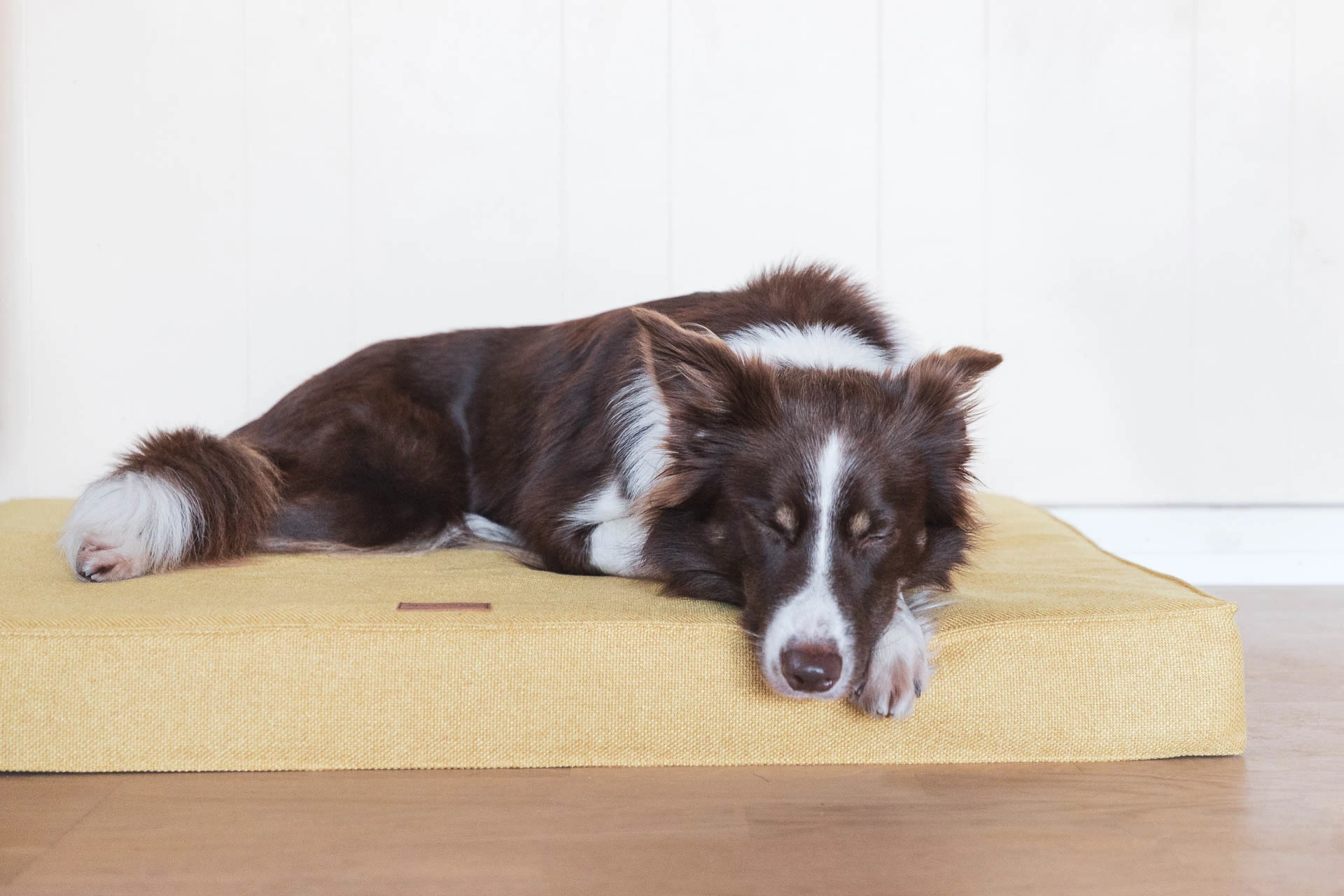
On the other hand, a sudden increase in the need for sleep may be one of the signs of pain, infection, weakness or another change in health. What matters most is whether the dog is sleeping more than usual and how they behave after waking up. If we were to describe the perfect day for many four-legged companions, it would certainly include a walk, shared play, a bowl of favourite food and a long nap in a peaceful place. There is no denying that dogs sleep considerably longer than we do.
Does your dog sleep a great deal, and are you wondering whether this should be a cause for concern? In this article, we explain how much sleep a dog may need, what affects the length of their rest and how to recognise when excessive sleepiness requires a consultation with a veterinary surgeon.
What will you learn from this article?
• why dogs sleep more than people,
• how many hours a dog may sleep during a twenty-four-hour period,
• whether it is normal for a dog to sleep all day,
• why puppies sleep so much,
• how much rest an adult dog needs,
• why an older dog may sleep constantly,
• what affects the length of a dog’s sleep,
• how to distinguish normal sleep from lethargy and listlessness,
• which signs may accompany illness,
• what to do when a dog eats very little and sleeps a lot,
• whether a dog should sleep throughout the night,
• how to recognise peaceful, restorative sleep,
• when you should contact a veterinary practice urgently,
• how to provide your dog with suitable conditions for rest.
My dog sleeps a great deal – is this normal?
A great deal depends on the situation, age, level of activity and health of your four-legged companion. These factors directly affect whether a dog is genuinely sleeping for too much of the day. We cannot use one universal number of hours that will be appropriate for every dog. The needs of each companion should be assessed individually.
It is completely normal for dogs to sleep and rest for a large part of the day. Sleep is a natural element of their daily rhythm, and its duration may vary depending on:
• age,
• health,
• temperament,
• level of activity,
• conditions in the home,
• the number of stimuli they experience,
• the time of day,
• recent events,
• medication they are taking.
If your dog sleeps a lot but, after waking up, remains interested in walks, food, contact with their guardian and the surrounding environment, there is usually no reason for concern. Greater attention should be paid to behaviour that appears suddenly or differs clearly from your companion’s previous habits.
How many hours does a dog sleep during the day?
There is no single correct number of sleeping hours for every dog. Available studies show that results vary depending on age, environment, the observation method and the animal’s individual characteristics. In a large study based on observations made by guardians, sixteen-week-old puppies slept for an average of approximately 11.2 hours per twenty-four-hour period. When the same dogs reached twelve months of age, they slept for an average of approximately 10.8 hours. [1]
In another study, dogs observed throughout a complete twenty-four-hour period slept for an average of approximately 11 hours. [2] Based on these findings, it can be assumed that many adult dogs sleep for approximately 10–12 hours during the day and night combined. This is not, however, a diagnostic threshold. Some healthy dogs sleep for less time, while others sleep for longer. The approximate duration should not be treated as a rigid rule:
| Dog | What is worth knowing about their sleep? |
|---|---|
| Puppy | may need frequent naps, and their daily rhythm changes as they mature |
| Adult dog | often sleeps for approximately 10–12 hours in total, but the individual rhythm matters |
| Active dog | may sleep more than usual after an intensive day |
| Senior dog | may nap more frequently during the day, although their night-time sleep may become more interrupted |
| Dog experiencing illness or pain | may sleep more, appear lethargic or have difficulty finding a comfortable position |
Remember to include daytime naps when considering the total amount of sleep, rather than counting only the hours spent in the dog bed at night.
What can cause a dog to sleep a lot?
Many factors can influence the length of a dog’s sleep. When they are natural and typical for the particular situation, there is usually no cause for concern. However, an increased need for rest can also be associated with a health problem. To respond appropriately, observe not only the number of hours your dog sleeps, but also the quality of their rest and their behaviour after waking up.
– your dog’s age affects how long they sleep
A dog’s age affects their rhythm of activity and rest. At different stages of life, the body may need different amounts of sleep to function properly.
– physical and mental activity
If your dog needs more sleep on days when you have been particularly active together, this is usually not concerning. Dogs, like people, need rest after physical effort and exposure to many stimuli. A trip, long walk, training session, meeting with other dogs or visit to an unfamiliar place may cause your companion to fall asleep sooner and sleep more deeply.
Research into canine sleep suggests that after a more active day, dogs may fall asleep earlier and spend more time in deeper sleep stages. [3] You can read more about this in the article “How to help your dog rest after an active day?”.
– boredom and a limited number of stimuli
A dog may lie down or doze not only because their body requires recovery. Sometimes very little is happening in their surroundings. If your companion spends long periods alone and has few calm walks, opportunities to sniff, interactions with their guardian or varied activities, they may spend most of their time inactive.
This does not mean that you should provide constant entertainment. Dogs also need peaceful rest. It is worth considering, however, whether your dog is curious about the world after waking up and willingly takes part in the activities available to them.
– temperature and season
During hot days, many dogs reduce their level of activity and choose a cool place to rest more frequently. In winter, particularly when walks are shorter and the household follows a calmer routine, a dog may also spend more time on their bed. If sleepiness during hot weather is accompanied by very intense panting, excessive salivation, weakness, coordination problems or loss of consciousness, immediate veterinary assistance is required.
– stress and strong emotions
A dog who has remained alert for a long period may need more rest once the stressful situation has passed. Travel, noise, visitors, moving home, staying in an unfamiliar place or a difficult encounter during a walk may affect the dog’s subsequent sleep.
Not every stressed dog will sleep more, however. Some animals have difficulty falling asleep, pace around the home, frequently change places or wake up at the slightest sound.
– health and medication
Increased sleepiness may accompany pain, infection, fever, metabolic disorders, hormonal conditions, heart disease or the effects of certain medicines.
It is impossible to determine the cause solely from the fact that a dog has begun sleeping for longer. Other signs must be considered, together with a veterinary examination and, in some cases, blood tests or further diagnostic investigations. Consult a veterinary surgeon whenever you have concerns about your dog’s health.
Why does a puppy sleep so much?
Puppies spend a large part of the day asleep or taking short naps. Their bodies are developing intensively, while everyday experiences — unfamiliar scents, sounds, people, walks and learning the rules of the home — require recovery. If a puppy:
• is active after waking up,
• has a normal appetite,
• willingly plays,
• drinks water,
• gains weight appropriately,
• does not have diarrhoea or vomiting,
• responds normally to the surroundings,
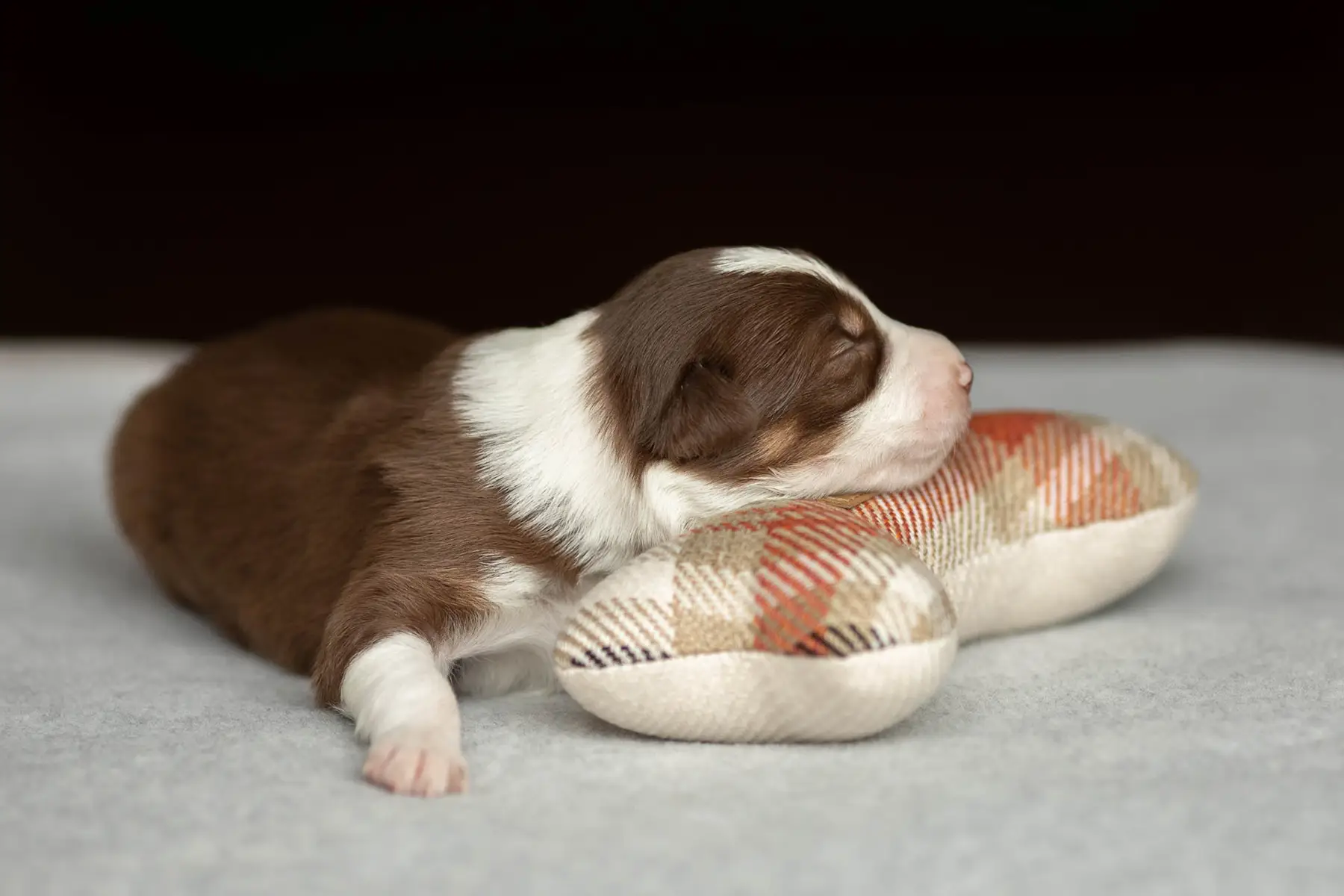
frequent naps are usually a natural part of their development. You should not, however, assume that every puppy who sleeps for most of the day is healthy. Young dogs can become dehydrated quickly and may cope less effectively with infections.
A puppy who is difficult to wake, refuses food or water, vomits, has diarrhoea, is very weak or behaves differently from usual requires prompt veterinary assessment.
Why does an older dog sleep all the time?
Senior dogs often spend more time resting than they did when they were younger. They may move more slowly, need longer to recover after a walk and choose a peaceful place more frequently. This does not mean, however, that every increase in sleepiness is simply a natural part of ageing.
Research into sleep in older dogs indicates that ageing may be accompanied by more daytime naps and more interrupted sleep at night. Changes in the sleep–wake rhythm may also be one of the features associated with canine cognitive dysfunction. [4][5]
It is worth consulting a veterinary surgeon if, in addition to sleeping more often, your senior dog:
• has difficulty standing up,
• has become less interested in walks,
• wakes up and wanders around the home at night,
• appears disorientated,
• has started toileting inside the home,
• has changed the way they interact with household members,
• is losing their appetite or body weight,
• drinks more and urinates more frequently,
• pants without an obvious reason.
Older dogs still need suitably adapted activity, contact with their guardian and opportunities to explore the world calmly. Walks should not be abandoned solely because the dog sleeps more frequently. A comfortable and easily accessible dog bed may make it easier for a senior dog to change position and rest peacefully. If your companion has joint or mobility problems, it may also be worth considering an orthopaedic dog bed and discussing their needs with a veterinary surgeon.
How can you distinguish sleep from lethargy and listlessness?
A dog who sleeps a lot is not necessarily lethargic. The most important difference is usually visible after they wake up. A dog who is resting normally will generally:
• respond to familiar sounds,
• get up for a walk,
• show interest in food,
• willingly interact with their guardian,
• move in their usual way,
• regain their normal energy after waking.
A lethargic or listless dog may:
• be reluctant to stand up,
• appear weak even after waking,
• show no response to favourite activities,
• refuse food,
• move more slowly or unsteadily,
• avoid contact,
• have no energy for a walk,
• lie down again very quickly.
Sleepiness describes the need to sleep. Lethargy and listlessness describe a clear reduction in energy and interest in the surroundings.
The difference may be difficult for a guardian to assess, so a sudden change is best discussed with a veterinary surgeon.
My dog sleeps constantly – which signs should cause concern?
An increased amount of sleep alone is not enough to diagnose an illness. Particular attention should be paid to symptoms occurring at the same time as the sleepiness. Contact a veterinary practice if your dog:
• sleeps noticeably more than usual for longer than a day or two,
• remains lethargic after waking,
• has a reduced appetite,
• drinks considerably more or less,
• vomits or has diarrhoea,
• loses body weight,
• limps or has difficulty standing up,
• pants without physical activity or hot weather,
• coughs,
• has pale gums,
• hides or avoids contact,
• reacts painfully to touch,
• has a fever,
• appears disorientated,
• has started taking a new medicine and has since become more sleepy.
Persistent lethargy can accompany pain or another health problem, so it is not worth waiting indefinitely for the condition to improve on its own. [6][7]
My dog eats very little and sleeps a lot – what should I do?
A combination of increased sleepiness and a loss of appetite requires careful observation. On a single occasion, a dog may be less interested in food after a stressful event, a hot day or a change in their daily routine. However, if your dog is sleeping considerably more and also:
• refuses several meals,
• does not want to drink,
• vomits,
• has diarrhoea,
• is weak,
• hides,
• has a tense or painful abdomen,
• breathes differently from usual,
contact a veterinary surgeon. Puppies, senior dogs, small dogs and animals with chronic health conditions may cope less well with a lack of food and fluids. They should therefore receive professional advice sooner.
How does a sick dog sleep?
There is no single sleeping position that is characteristic of an ill dog. Some animals sleep for longer, while others become restless and cannot find a comfortable place. Potentially concerning signs include:
• frequently changing position,
• standing up and lying down repeatedly,
• avoiding lying on one side,
• a tense or hunched posture,
• trembling,
• whimpering or whining,
• panting while resting,
• difficulty standing up,
• the head dropping and clear weakness,
• sleep from which the dog is difficult to wake.
A sleeping position cannot be used to diagnose an illness. It may, however, provide additional information, particularly when it has changed clearly compared with the dog’s previous habits. You can read more about common resting positions in the article “Dog’s sleeping positions”.
When does a dog’s sleepiness require urgent help?
Contact a veterinary practice immediately if your dog is extremely sleepy or weak and also:
• has difficulty breathing,
• loses consciousness,
• cannot stand up,
• has very pale or blue gums,
• has seizures,
• may have been poisoned,
• vomits repeatedly,
• has severe diarrhoea,
• has a visibly enlarged or painful abdomen,
• is overheated,
• does not respond normally to your voice or touch.
In these situations, do not wait until the following day and do not try to stimulate your dog with food, exercise or medicines intended for people.
Should a dog sleep throughout the night?
Many adult dogs can sleep through most of the night, particularly if their needs have been met beforehand and they have a peaceful place in which to rest. This does not mean that a dog remains in one position for eight hours. They may wake briefly, stretch, move to another place, drink water or check what is happening in the home.
A puppy may need to go outside during the night because they cannot always control their bladder for the entire period. A senior dog may wake more often because of pain, a need to urinate, deteriorating vision or hearing, or changes in cognitive function. If your dog has suddenly stopped sleeping at night, walks around the home, pants, whimpers or wakes household members, it is worth looking for the cause rather than assuming that it is solely a training problem.
Can a dog sleep too little?
Yes. A dog may have difficulty obtaining enough peaceful, restorative sleep. Possible causes include:
• noise,
• frequent disturbance,
• stress,
• pain,
• itching,
• an excessively high temperature,
• too much stimulation,
• no consistent resting place,
• anxiety associated with being alone,
• health problems.
A dog who does not rest sufficiently may become irritable, excessively aroused, less patient and have difficulty concentrating. Not every dog can settle independently after a day filled with stimulation. A calm routine, fewer evening activities and a place where nobody disturbs them may help.
How can you recognise good-quality sleep in a dog?
Good sleep can be assessed by looking for several characteristic signs. The dog sleeps peacefully, their body is relaxed and their breathing is regular. During sleep, your companion may:
• move their paws,
• change position,
• twitch gently,
• bark quietly,
• make soft sounds,
• sigh,
• move their eyes beneath closed eyelids.
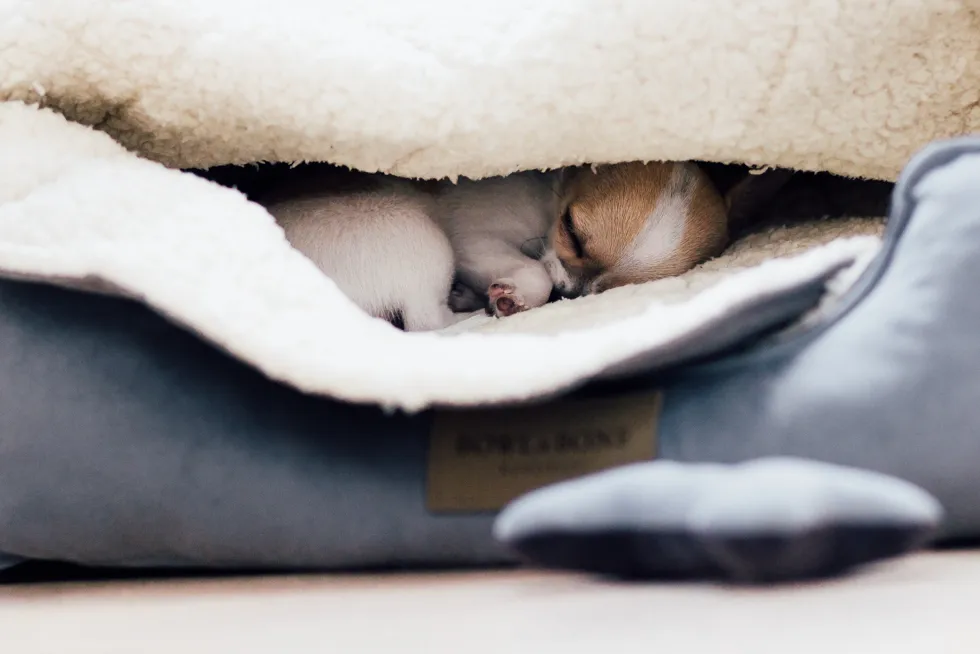
These behaviours often occur during normal sleep stages and do not necessarily indicate a problem. The quality of rest is also reflected in the dog’s behaviour after waking. A well-rested dog should gradually regain energy, respond to the surroundings and take part in their usual activities.
Regular difficulty falling asleep, waking suddenly, persistently pacing around the home, intense panting or continually changing position may indicate that the dog’s sleep is not sufficiently comfortable.
Do dogs prefer to sleep during the day or at night?
A dog’s sleep rhythm is more flexible than a person’s. Dogs often sleep for a large part of the night while also taking several naps during the day. Their rhythm may partially adapt to the everyday routine of the household. When the home is quiet, the dog may fall asleep. When guardians return, prepare food or go for a walk, the dog becomes active.
Research shows that dogs sleep more at night than during the day, although their sleep is not limited to one long session. [3] Puppies and senior dogs may nap more frequently during the day. In older dogs, an increase in daytime sleep can sometimes be associated with interrupted sleep at night.
How can you check whether your dog is genuinely sleeping more?
It can be difficult for a guardian to estimate the length of sleep accurately, particularly when the dog is left alone at home or rests in another room. For several days, it may be helpful to keep a simple diary and record:
• the hours of night-time sleep,
• the approximate length of naps,
• the level of activity after waking,
• appetite,
• the amount of water consumed,
• willingness to go for walks,
• medicines being taken,
• any concerning symptoms,
• important events such as travel, hot weather or intensive training.
This information can help determine whether a genuine change has occurred and make a conversation with a veterinary surgeon more informative.
How can you provide suitable conditions for your dog’s sleep?
A dog should be able to rest in a calm place where they are not regularly woken, touched or forced into interaction.
It is worth providing:
• a comfortable surface,
• a temperature suited to the dog’s needs,
• protection from draughts,
• limited noise,
• the option to move away from household members,
• a consistent daily routine,
• quiet time after intensive activity,
• regular walks and opportunities to sniff.
A well-chosen Bowl&Bone Republic dog bed can create a consistent place for rest. Removable covers make it easier to keep the bed clean, while different constructions allow you to match the model to your dog’s sleeping style and age. A bed alone will not, however, solve excessive sleepiness if the cause is pain, illness or the effect of medication.
Dogs love sleeping, but it is worth knowing their habits
There is no denying that dogs sleep for considerably more of the day than people. Not every long nap is a reason for concern. The most important thing is to understand the normal rhythm of your individual companion. One dog may sleep deeply for long periods and then run enthusiastically towards the door when it is time for a walk. Another may sleep for fewer hours but still appear tired and listless.
Pay particular attention to sudden changes, appetite, movement, breathing, interest in the surroundings and behaviour after waking. If your dog suddenly begins sleeping considerably more, refuses food, appears weak or develops other concerning symptoms, do not wait indefinitely for the problem to resolve on its own. A veterinary consultation will help determine whether your companion simply needs additional recovery or whether their body is signalling a problem.
For more inspiration, knowledge and thoughtfully designed dog accessories, visit www.bowlandbone.com — a place created for dog guardians who wish to combine their companion’s everyday comfort with timeless style.
the Bowl&Bone Republic team
FAQ, meaning the most frequently asked questions from the article –
Why does your dog sleep so much? How much sleep do dogs need and when should you act?
Why does my dog sleep so much?
Dogs naturally sleep and nap for longer than people. The duration of sleep is affected by age, health, activity, temperature, stress and the daily routine. What matters most is whether the dog is sleeping more than usual and how they behave after waking.
How many hours a day does a dog sleep?
In research, many dogs slept for an average of approximately 11 hours during a twenty-four-hour period. This is not a rigid rule, however. Some healthy dogs sleep for less time, while others sleep for longer.
Is it normal for a dog to sleep all day?
It can be normal if the dog wakes regularly, willingly eats, walks, plays and behaves in their usual way. If they are difficult to wake or remain listless after waking, it is worth contacting a veterinary surgeon.
Why does my dog sleep all the time?
The cause may be the dog’s natural daily rhythm, boredom, a particularly active previous day, hot weather, age or the need for recovery. A sudden change may also accompany pain, infection or another health problem.
Why does a puppy sleep so much?
A puppy is developing intensively and processing many new experiences each day. Frequent naps are natural provided that the young dog is active after waking, eats, drinks and develops normally.
Why does my older dog sleep all the time?
A senior dog may need more rest and nap more often during the day. Increased sleepiness may, however, also result from pain, chronic illness or changes in cognitive function.
Should a dog sleep throughout the night?
Many adult dogs sleep through most of the night, although they may wake briefly and change position. Puppies and older dogs may need to go outside or may wake more frequently.
How can you distinguish sleep from lethargy in a dog?
A sleeping dog regains interest in walks, food and the surroundings after waking. A lethargic dog remains weak, responds very little and does not take part in their usual activities.
What does it mean when a dog sleeps a lot and eats very little?
This may be a sign of stress or temporary weakness, but also of pain or illness. If the dog refuses several meals, appears weak, vomits or has diarrhoea, they should be examined by a veterinary surgeon.
How does a sick dog sleep?
A sick dog may sleep for longer, but they may also be restless, frequently change position, pant, tremble or have difficulty standing up. Sleeping position alone cannot be used to diagnose an illness.
Can a dog sleep for too long?
There is no single number of hours after which sleep becomes excessive. The greatest cause for concern is a sudden and persistent change compared with the dog’s previous habits.
Can a dog sleep too little?
Yes. Noise, stress, pain, itching, excessive stimulation and an unsuitable resting place can all make peaceful sleep more difficult.
Why does a dog sleep more after a long walk?
Physical activity, sniffing and unfamiliar stimuli increase the need for recovery. After such a day, a dog may fall asleep more quickly and sleep more deeply.
When should a dog’s sleepiness cause concern?
Veterinary advice is required when sleepiness is accompanied by a loss of appetite, weakness, breathing difficulties, vomiting, diarrhoea, lameness, pain, disorientation or a clear change in behaviour.
Does a dog bed affect the quality of a dog’s sleep?
A comfortable bed positioned in a peaceful place can make it easier for a dog to rest and change position. It does not replace diagnosis when excessive sleepiness has an underlying medical cause.
Sources and inspiration used to write the article
Why does your dog sleep so much? How much sleep do dogs need and when should you act?
- Kinsman R. et al., “Sleep Duration and Behaviours: A Descriptive Analysis of a Cohort of Dogs up to 12 Months of Age”, Animals, 2020. A study concerning sleep duration in puppies at sixteen weeks of age and dogs at twelve months of age.
- Owczarczak-Garstecka S.C., Burman O.H.P., “Can Sleep and Resting Behaviours Be Used as Indicators of Welfare in Shelter Dogs?”, PLOS ONE, 2016. A twenty-four-hour observation of activity, rest and sleep in dogs.
- Bunford N. et al., “Differences in pre-sleep activity and sleep location are associated with variability in daytime/nighttime sleep electrophysiology in the domestic dog”, Scientific Reports, 2018. A study concerning the effects of activity and time of day on canine sleep.
- Mondino A. et al., “Sleep and cognition in aging dogs. A polysomnographic study”, Frontiers in Veterinary Science, 2023. A study concerning sleep and cognitive function in senior dogs.
- Mondino A. et al., “Development and validation of a sleep questionnaire, SNoRE 3.0, to evaluate sleep in companion dogs”, Scientific Reports, 2023. A paper concerning the assessment of sleep quality, night-time restlessness and age-related changes.
- American Animal Hospital Association, “10 Pet Health Signs You Should Never Ignore”, 2024. Information concerning persistent lethargy and changes in appetite, mobility and behaviour.
- American Animal Hospital Association, “What’s Wrong? Common Pet Pain Signs”, 2024. Information concerning lethargy, fatigue, restlessness and changes in position as possible signs of pain.
This article is educational in nature and provides general information about sleep and sleepiness in dogs. It is not a substitute for an examination, diagnosis or recommendations prepared by a veterinary surgeon.









 or CANADA
  PLEASE join us at