


Two dogs enter an unfamiliar home. The first immediately moves forwards. They look into every room, inspect the bag left by the door and approach new people with interest. The second stops a few steps behind their guardian. They observe, sniff and need a moment before deciding to explore the surroundings.
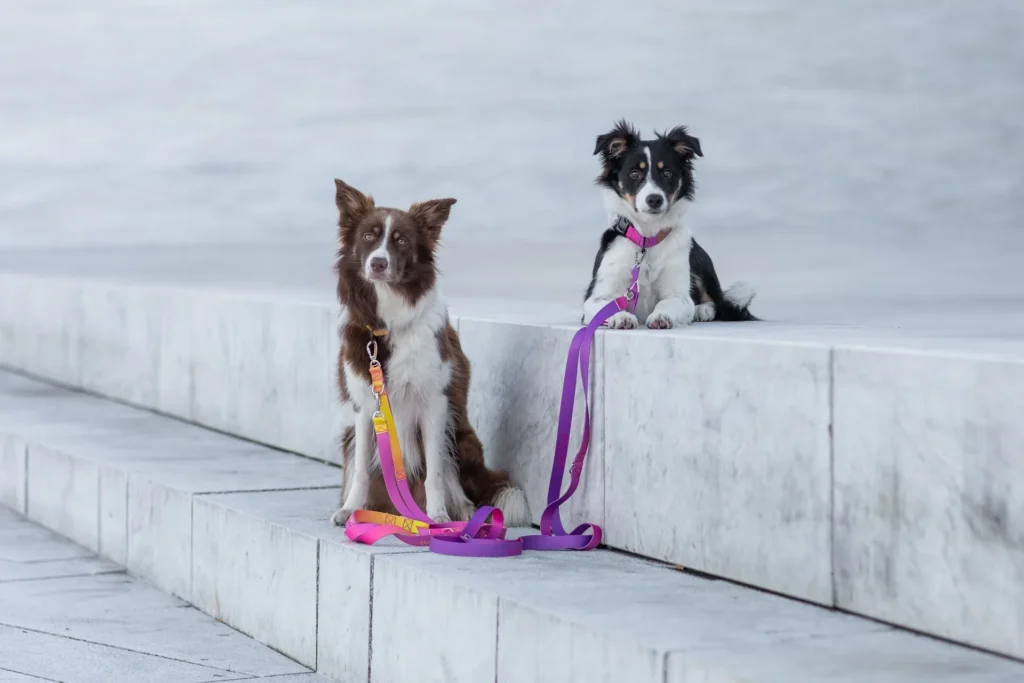
Neither dog is behaving better or worse. One makes decisions more quickly, while the other gathers information more cautiously. The first may love being at the centre of everything happening at home, while the second may feel most comfortable on their own bed, from where they can observe everything from a safe distance. We notice similar differences every day. One dog happily meets new people, while another chooses contact only with those closest to them. One brings a toy again and again, while another returns to rest after a short activity. Some dogs are patient, impulsive, sensitive, independent, persistent or curious, while others need plenty of time before they can trust a new situation.
Do dogs have personalities? Yes — research into canine behaviour shows that individual dogs differ in relatively consistent traits that influence how they respond to people, other dogs, new places and everyday events. A dog’s personality is not, however, a simple label that can be assigned once and remain unchanged for life. It develops through a complex combination of predispositions, experiences, age, environment and current wellbeing.
What will you learn from this article?
• whether dogs truly have personalities,
• how a dog’s temperament, character and personality differ,
• which personality traits can be observed in dogs,
• whether breed determines a dog’s character,
• how genes and experiences affect behaviour,
• whether a dog’s personality changes with age,
• why two dogs of the same breed can be completely different,
• whether a puppy immediately reveals their future character,
• whether a dog adopts traits from their guardian,
• how to understand your companion’s individual needs better,
• why permanent labels should not be attached to a dog,
• when a sudden behavioural change requires professional advice.
Do dogs have personalities?
In animal research, personality describes individual differences in behaviour that are, to some extent, repeated over time and across different situations. This does not mean that a dog always behaves in exactly the same way. A sociable companion may avoid contact when tired. A normally confident dog may become frightened by an unfamiliar sound. A calm dog may become extremely energetic when they see their favourite toy.
Personality is more like a general direction than a rigid script. One dog is more likely to approach new situations with curiosity, while another more often chooses caution. One usually works on a task for a long time, while another gives up more quickly and looks for something else to do. Analyses of multiple studies suggest that certain behavioural traits in dogs may remain relatively consistent, although their stability is generally greater in adult dogs than in puppies.
How do a dog’s temperament, character and personality differ?
In everyday conversation, these terms are often used interchangeably. We may say that a dog has a gentle character, an energetic temperament or an exceptionally sociable personality. In practice, there is no single distinction used in exactly the same way across all studies and publications. To make the concepts easier to understand, however, we can use the following division:
| Term | How can it be understood? |
|---|---|
| A dog’s temperament | early, partly inherited predispositions, such as activity level, sensitivity to stimuli or speed of response |
| A dog’s personality | a broader set of relatively consistent traits revealed through behaviour in different situations |
| A dog’s character | a less precise everyday term describing the dog’s overall behaviour and individual way of functioning |
| A dog’s current state | the temporary influence of tiredness, arousal, stress, pain, emotions and the immediate situation on behaviour |
This distinction helps us avoid a common mistake. One behaviour does not necessarily describe a dog’s entire personality. If a dog barks at a stranger, it does not automatically mean that they have a “bad character”. They may have been frightened, surprised, uncomfortable or too close to a stimulus they were unable to cope with.
Which personality traits can be observed in a dog?
Researchers use different questionnaires and behavioural tasks to describe individual differences between dogs. One large project distinguished traits including insecurity, energy, training focus, persistence and sociability towards people and other dogs. A guardian can observe similar areas in everyday life:
– sociability towards people
Some dogs approach new people easily and willingly initiate contact. Others prefer to observe first or feel comfortable only around familiar members of the household. A lower need for contact with strangers does not necessarily indicate a problem. A dog is not obliged to greet every person they meet.
– sociability towards other dogs
One dog may happily meet new canine companions, while another feels most comfortable among a small group of familiar dogs. Some dogs do not seek close contact with members of their own species at all. An adult dog does not need to play with every other dog in order to lead a fulfilling life.
– energy level
Some dogs move quickly from rest to activity and maintain a high level of energy for a long time. Others need shorter walks, more frequent breaks or calmer ways of spending time together. Energy level should always be considered in the context of the dog’s age, physical condition, health and previous habits.
– curiosity and caution
A dog may approach an unfamiliar object immediately or observe it from a distance for a long time. Both strategies can be natural. A cautious dog should not be forced into contact simply so that they “stop being afraid”. It is much safer to allow them to gather information at their own pace.
– persistence
One dog may spend a long time trying to remove a treat from a toy, while another asks their guardian for help or walks away after a moment. Persistence can depend on both individual predispositions and previous experiences. A dog who has often succeeded may be more willing to make further attempts.
– sensitivity to stimuli
Some dogs respond quickly to sounds, movement, touch or changes in their surroundings. Others need a much stronger stimulus before they interrupt their rest or become interested in what is happening. Sensitivity is not a flaw. It does, however, require suitable planning of walks, rest and social contact.
What influences a dog’s personality?
A dog’s personality does not have a single cause. It is not written entirely in their genes, but it is not created solely through upbringing either. Behaviour is influenced by factors including:
• genetic predispositions,
• breed and breeding line,
• developmental conditions before birth,
• the first weeks of life,
• social experiences,
• the way the dog is taught,
• the relationship with their guardian,
• the environment,
• health,
• age,
• current emotions.
It is most helpful to think of personality as the result of an ongoing interaction between biology and experience. A dog is born with certain predispositions, but the environment influences how and in which situations they will be expressed.
Do genes influence a dog’s character?
Yes, some behavioural traits have a genetic component. Studies have identified genetic differences associated with traits such as a tendency to retrieve and responses to loud sounds. At the same time, the level of heritability differed depending on the trait being analysed. There is no single “sociability gene”, “bravery gene” or “good character gene”. Behaviour is complex and usually results from the influence of many genes interacting with the environment.
A predisposition is not a final verdict either. A dog may be more sensitive to noise, but the way they respond will also depend on early experiences, the opportunity to move away, support from their guardian and gradual exposure to the environment.
Does breed determine a dog’s personality?
Breed can provide some information about working history, physical build, activity level and behaviours that were selectively encouraged over generations. It cannot, however, precisely predict the personality of an individual dog. In a large study involving pedigree dogs and mixed-breed dogs, breed explained an average of around 9% of the differences in the analysed behaviour of individual dogs. Some patterns linked to historical working roles were more predictable, but many traits commonly associated with a breed’s “character” varied considerably between individual dogs.
This means that knowledge of a breed can be a useful starting point, but it should never replace observation of the individual dog. A Golden Retriever may not enjoy retrieving. A representative of a breed considered energetic may need an exceptional amount of peaceful rest. A small dog may be braver and more persistent than a much larger companion. Every dog should be understood as an individual.
Why can two dogs of the same breed be completely different?
Two dogs may look similar, belong to the same breed and even come from the same litter, yet still respond to the world in different ways. Factors include:
• genetic differences,
• the course of pregnancy and the first weeks of life,
• individual experiences,
• the way they were socialised,
• relationships with people and dogs,
• the environment in which they grow up,
• health,
• the way they are taught,
• unexpected events.
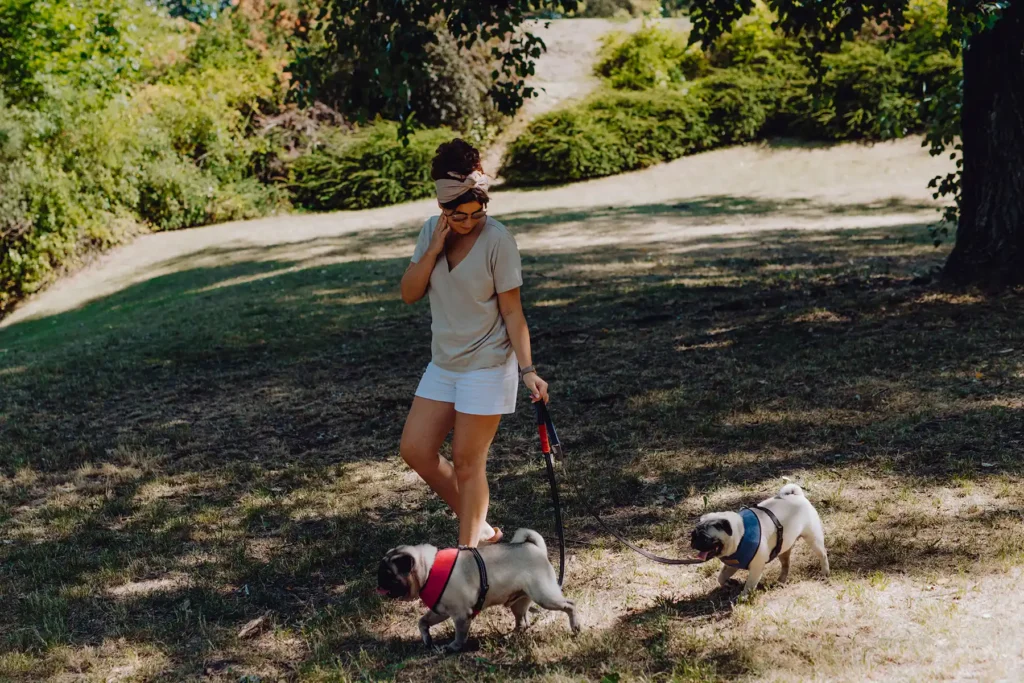
Even within the same home, dogs can have different experiences. One may be frightened by a loud noise during a walk while the other remains at home. One may meet calm people more often, while the other repeatedly experiences their personal space being invaded. Over time, small differences can become increasingly visible.
How do a puppy’s experiences influence their personality?
The first months of life have a significant influence on the way a dog responds to people, animals and their surroundings. In a large study, a higher level of positive social experiences during puppyhood was associated with lower insecurity and greater sociability towards people and other dogs. The study showed statistical associations rather than a simple guarantee of a particular character.
Good socialisation does not mean exposing a puppy to as many places, people and animals as possible in the shortest possible time. It is better to focus on experiences that are:
• calm,
• safe,
• adapted to the puppy’s response,
• arranged so that the puppy can move away,
• ended before the puppy becomes overwhelmed,
• balanced with an appropriate amount of sleep.
A puppy should not be forced to interact with every person or dog. The aim is to build a sense that new situations can be observed and explored without losing safety.
Can a puppy’s future character be predicted from their behaviour?
Only partly. Some early traits may remain relatively stable, but a young dog’s behaviour continues to develop intensively. A meta-analysis of studies found that some personality dimensions were less consistent in puppies than in adult dogs.
Research into puppy assessments also suggests that their ability to predict specific behaviour in adulthood is limited. A one-off test in an unfamiliar setting cannot therefore reliably determine what a dog will be like several years later. On a particular day, a puppy may be:
• tired,
• overstimulated,
• hungry,
• uncertain in a new place,
• overexcited,
• anxious after being separated from their littermates.
Their response provides important information about that particular moment, but it should not automatically become a permanent label. You can read more about developing a relationship with a young dog in the article “How does a puppy choose their guardian?”.
Does a dog’s character change with age?
Yes. Personality can maintain a degree of continuity, but it is not completely fixed. Studies indicate age-related differences in areas including energy level, activity, sociability, confidence and interest in the environment. Younger dogs generally received higher scores for traits associated with energy, excitability and active engagement.
– puppy
A young dog explores the world intensively, learns to predict consequences and develops ways of responding. Their behaviour can change very quickly.
– adolescent dog
During adolescence, a dog may become more independent, more sensitive to their surroundings or more difficult to focus. This does not necessarily indicate a permanent change in character or deliberate disobedience.
– adult dog
In an adult dog, some traits usually become more stable. They can still learn new ways of responding and change their behaviour through experience.
– senior dog
An older dog may become calmer and less interested in intense activity. Changes may also result from pain, declining senses or health problems, so not every new response should be explained by age alone.
Does a dog behave the same way everywhere?
No. Personality influences behaviour, but the situation is also extremely important. The same dog may be:
• confident at home,
• cautious on a busy street,
• sociable towards familiar people,
• reserved around strangers,
• energetic during a walk,
• calm in their resting place,
• eager to play in the morning,
• irritable after a tiring day.
This does not mean that the dog has several different personalities. They are simply adapting their responses to the conditions, their current wellbeing and their previous experiences. Behaviour is best evaluated by asking:
• what happened immediately beforehand,
• where the dog was,
• who was nearby,
• whether they had the option to move away,
• what their body language looked like,
• whether they were well rested,
• whether a similar response had appeared before.
Does stress change a dog’s character?
Stress can cause a dog to behave differently than they do in calm, familiar conditions. A normally sociable companion may avoid contact, while a calm dog may bark more often, pace around the home or respond intensely to sounds. This does not mean that their personality has suddenly changed. The behaviour may be a temporary response to a situation they are finding difficult to manage. Relevant factors may include:
• moving home,
• a change in the daily routine,
• prolonged noise,
• insufficient rest,
• too many new stimuli,
• tense interactions with other dogs,
• the arrival of a new member of the household,
• pain or feeling unwell.
A sensitive dog may need a calmer pace and more frequent breaks. A more confident companion can also experience stress, even if their signals are less obvious.
Does a dog adopt their guardian’s character?
Certain associations can be observed between a guardian’s traits, the way care is provided and the dog’s behaviour. This does not mean, however, that a dog simply copies a person’s personality. The relationship can operate in many ways. A person chooses a dog suited to their lifestyle. They arrange particular activities and respond to behaviour in a characteristic way. The dog, in turn, learns what to expect and which responses are effective.
Research into guardian personality and behavioural problems in dogs has found certain associations, but it does not establish a simple cause-and-effect relationship. A calm guardian therefore has no guarantee that their dog will always be calm. A highly active person may live with a companion who needs shorter walks and many hours of rest. What matters most is not similarity, but compatibility.
How can you understand your dog’s personality?
The greatest amount of information comes from calm observation across different situations and over a longer period. Pay attention to:
• how your dog responds to new places,
• whether they willingly meet unfamiliar people,
• how they behave around other dogs,
• how quickly they return to a calm state after becoming aroused,
• whether they work on a task for a long time,
• which activities they choose independently,
• whether they interrupt their rest easily,
• how they communicate a need for space,
• what they avoid,
• when their body becomes relaxed.
Do not observe only the most dramatic moments. A dog’s personality is also visible in small everyday decisions. They may choose a walk along a quieter street, rest in a particular place, seek contact with one familiar dog or prefer sniffing to walking quickly. You can read more about the important information a dog gathers during a walk in the article “How does the world smell to a dog?”.
How can daily life be adapted to a dog’s character?
Understanding your companion’s personality is not about placing them in a fixed category. It helps you adapt everyday conditions more effectively to their needs.
– adapt the type of walk
A sociable and curious dog may enjoy exploring new places. A sensitive companion may feel more comfortable on quiet routes where they can stop and observe.
Not every walk needs to be long and intense. For many dogs, a slower walk with opportunities to sniff freely will be highly valuable.
– choose suitable forms of play
One dog may love retrieving, another tugging, while a third prefers searching for hidden treats.
A lack of interest in a particular toy does not indicate laziness or a weak bond with the guardian. The activity being offered may simply not suit the dog’s preferences.
– adapt training
A persistent dog may happily complete several repetitions. A more sensitive or easily distracted companion may need very short exercises and more frequent breaks.
Training should help a dog succeed, not test how long they can cope with pressure.
– respect their need for contact
A sociable dog may frequently seek closeness. A more independent companion may choose to rest several metres away.
A dog does not need to lie on your lap to have a strong bond with you. What matters is that they can decide for themselves when they want contact.
– provide suitable rest
Dogs also differ in the way they rest. Some fall asleep in the centre of the living room, while others need a quiet corner where no one will disturb them.
A comfortable dog bed can create a permanent and clearly defined resting place. It is worth positioning it somewhere that suits the preferences of the individual dog rather than choosing the location solely according to the layout of the room.

You can find more practical guidance in the article “How to help your dog rest after an active day?”.
Why should you avoid attaching labels to a dog?
Labels are convenient because they allow us to describe behaviour quickly. They can, however, cause us to stop looking for its true cause. We say:
• “they are stubborn”,
• “they are dominant”,
• “they are lazy”,
• “they are jealous”,
• “they are naughty”,
• “that is simply their character”.
Yet a dog described as stubborn may not understand the instruction. A “lazy” companion may be tired or feeling unwell. A dog considered naughty may be overaroused and unable to cope with the situation. It is much more helpful to describe what we can actually see:
• the dog turned their head away,
• they moved away from an unfamiliar person,
• they did not respond to the cue,
• they lay down during the walk,
• they barked when someone leaned over them,
• they lost interest in the toy.
A precise description allows us to consider the cause. A label often ends the conversation before we have truly understood the dog.
Can a dog’s personality be changed?
We should not try to transform a dog into a completely different individual. A cautious companion does not need to become a dog who greets every passer-by. A calm dog does not need to fall in love with intense sports. We can, however, help them develop new skills and cope more effectively in particular situations.
A cautious dog may learn to observe strangers calmly from a safe distance. A companion who becomes aroused quickly can develop the ability to rest. A dog with limited persistence can gain confidence through easier tasks that end successfully. The aim is not to remove individuality. It is to expand the dog’s abilities without undermining their sense of security.
When does a behavioural change require consultation?
Personality may change gradually with age and experience. A sudden and pronounced change should not, however, automatically be explained as a matter of character. Consult a veterinary surgeon if your dog:
• suddenly avoids contact,
• has become noticeably irritable,
• has lost interest in favourite activities,
• is reluctant to move,
• has difficulty sleeping,
• has begun responding anxiously in familiar situations,
• appears disorientated,
• has experienced changes in appetite or thirst.
A behavioural change may be associated with pain, discomfort or a health problem. Only after medical causes have been ruled out should it be considered solely as a behavioural difficulty.
The most beautiful personality is your dog’s own
We may admire a dog who explores the world boldly. We can also appreciate one who first stops, observes and only then takes the next step. One companion fills the home with constant movement, toys and joyful chaos. Another reminds us how pleasant silence, peaceful presence and shared rest can be.
There is no single ideal canine personality. Not every dog needs to be exceptionally sociable, confident, active and always ready to cooperate. What matters most is that the guardian can recognise who their companion truly is — without comparing them with others and without expecting them to match assumptions based on breed, age or appearance.
Understanding a dog’s personality is a process. With every walk, you discover what arouses their curiosity. With every new situation, you understand more clearly when they need support. Over time, you begin to notice the small choices that were once easy to overlook. It is in those choices that your dog’s individuality becomes most visible. In the way they settle down to sleep. In the people they choose. In the routes they prefer to walk. In whether they run towards a new world with enthusiasm or first observe it calmly from beside you.
For more inspiration, knowledge and thoughtfully designed dog accessories, visit www.bowlandbone.com — a place created for dog guardians who wish to combine their companion’s everyday comfort with timeless style.
The Bowl&Bone Republic team
FAQ the most frequently asked questions from the article –
“Do dogs have personalities? What makes every dog different?”
Do dogs really have personalities?
Yes. Dogs differ in relatively consistent traits that influence their activity, sociability, caution, persistence and way of responding to their surroundings. Behaviour also depends on the particular situation.
How does a dog’s temperament differ from their character?
Temperament can be understood as partly inherited predispositions that are already visible at an early stage of life. Character is a broader everyday term describing the dog’s general way of behaving.
What influences a dog’s personality?
It is influenced by genes, early experiences, socialisation, environment, the way the dog is taught, social relationships, age, health and current emotions.
Does breed determine a dog’s character?
Breed may indicate certain general tendencies and behaviours associated with historical working roles. It does not, however, allow the personality of an individual dog to be predicted accurately.
Can two dogs of the same breed have completely different characters?
Yes. Even dogs from the same litter can differ in energy level, sociability, sensitivity, persistence and the way they respond to new situations.
Can you tell from a puppy what they will be like as an adult?
Some traits may be visible early, but a puppy’s behaviour is still developing intensively. A single test or observation cannot accurately predict their future personality.
Does a dog’s character change with age?
Yes. Energy, interest in the environment, responses and social needs can change with maturity and ageing. Some traits nevertheless remain relatively stable.
Does a dog adopt their guardian’s personality?
A dog does not simply copy a person’s personality. Their behaviour is, however, influenced by lifestyle, their guardian’s responses, shared activities and everyday experiences.
Is a calm dog happier than an energetic dog?
No. Energy level is not a measure of happiness. Both a calm and an active dog can function well when their needs are understood and appropriately met.
Does a cautious dog have a weak character?
No. Caution is one way of responding to uncertainty. Such a dog may need more time, greater distance and the opportunity to explore situations independently.
Can a dog’s character be changed?
You should not try to change your companion’s individuality completely. You can, however, help them gain confidence, develop new skills and cope better in particular situations.
What is the best way to understand a dog’s personality?
Observe them over a longer period and in different conditions. Pay attention to their choices, body language, way of resting and responses to people, dogs, new places and everyday activities.
Should every dog be sociable?
No. A dog does not need to want contact with every person or every other dog. What matters is that they can function in their environment without excessive stress.
Why has my dog’s character suddenly changed?
A sudden behavioural change may result from stress, pain, discomfort, an environmental change or a health problem. It is advisable to consult a veterinary surgeon first.
Sources and inspiration used to create the article –
“Do dogs have personalities? What makes every dog different?”
- Salonen M. et al., “Reliability and Validity of a Dog Personality and Unwanted Behavior Survey”, Animals, 2021, 11(5), 1234. A publication concerning the assessment of canine personality traits such as energy, insecurity, persistence and sociability.
- Fratkin J.L. et al., “Personality Consistency in Dogs: A Meta-Analysis”, PLOS ONE, 2013, 8(1), e54907. A meta-analysis concerning the stability of personality traits in dogs and differences between puppies and adult dogs.
- Morrill K. et al., “Ancestry-inclusive dog genomics challenges popular breed stereotypes”, Science, 2022, 376(6592), eabk0639. A study concerning the influence of breed and genetic ancestry on the behaviour of individual dogs.
- Ilska J. et al., “Genetic Characterization of Dog Personality Traits”, Genetics, 2017, 206(2), 1101–1111. A publication concerning the genetic basis of selected behavioural differences in dogs.
- Salonen M. et al., “Breed, age, and social environment are associated with personality traits in dogs”, iScience, 2023, 26(5), 106691. A study concerning the relationship between age, breed, social experiences and personality traits.
- Wallis L.J. et al., “Cross-Sectional Age Differences in Canine Personality Traits”, Frontiers in Veterinary Science, 2020, 6, 493. A publication concerning differences in canine personality and behaviour according to age.
- Riemer S. et al., “The Predictive Value of Early Behavioural Assessments in Pet Dogs – A Longitudinal Study from Neonates to Adults”, PLOS ONE, 2014, 9(7), e101237. A study indicating the limited ability of early behavioural assessments to predict specific adult behaviour.
- Dodman N.H. et al., “Associations between owner personality and psychological status and the prevalence of canine behavior problems”, PLOS ONE, 2018, 13(2), e0192846. A publication concerning associations between guardian traits, approaches to care and canine behaviour.
This article is educational in nature and provides general information about canine personality, temperament and behaviour. It is not a substitute for an individual consultation with a veterinary surgeon or an experienced canine behaviourist.










 or CANADA
  PLEASE join us at