


The evening slowly brings a sense of calm to the home. After the final walk of the day, your dog heads towards his favourite place, but he does not lie down immediately. He turns around several times, scratches at the cushion, presses it with his front paws, moves the fabric with his nose and rearranges the bed until everything is exactly where it should be.

To a dog guardian, this may look amusing or sometimes rather puzzling. After all, the bed is already soft and ready for rest. Why, then, does a dog behave as though he needs to prepare everything from the beginning?
Kneading the bed, scratching the surface and turning around before sleep are usually natural elements of canine behaviour. They combine inherited instincts, the need for comfort and individual habits. It is worth understanding what this ritual means, when to allow your dog to peacefully “make his bed”, and when the behaviour may require closer attention.
What Does It Actually Mean When a Dog Kneads His Bed?
The phrase “kneading the bed” can describe several similar behaviours. One dog may rhythmically press the cushion with his paws. Another may scratch the fabric as though trying to dig a shallow hollow. A different dog may move a blanket with his nose, turn around in circles and only settle down after several attempts.
Although these behaviours may look different, they usually serve a similar purpose: helping the dog prepare his resting place. It can be compared to a person adjusting their pillow or searching for a more comfortable sleeping position. A dog’s ritual, however, has much older, instinctive origins.
Behaviourists suggest that turning around, scratching and rearranging materials before sleep may be an inherited behavioural pattern. The ancestors of modern dogs, resting outdoors, needed to flatten vegetation, move twigs aside, inspect the ground and create a safe hollow in which to sleep. Today’s dog does not need to remove stones from a soft mattress, but the ritual itself may still appear before rest.
Why Does a Dog Knead His Bed Before Sleep?
– he is preparing a comfortable place
The simplest explanation is often the most accurate: the dog is trying to arrange his bed according to his own preferences. He may want to create a hollow beneath his hips, move part of the cushion underneath his head or position a blanket so that it gently surrounds his body.
What a person considers perfectly smooth and evenly arranged may not always be the most comfortable option for a dog. Some dogs prefer to sleep on a flat surface, while others look for soft support or enjoy pressing themselves against the side of the bed. Kneading allows the dog to adapt his resting place to his current position and individual needs.
– he is repeating an instinctive ritual
Scratching and turning around before lying down probably originate from behaviours displayed by the ancestors of modern dogs. Preparing a sleeping place may have helped them level the ground, remove uncomfortable objects and check their immediate surroundings.
This does not mean that a dog consciously “remembers” living in the wild. It is more likely to be an inherited behavioural pattern that appears as he begins to settle down. Digging and scratching are natural canine behaviours, which is why their gentler forms may also appear on a sofa, blanket or indoor dog bed.
– he is searching for the right temperature
Outdoors, a dog may scratch at the ground to reach a cooler layer of soil on a warm day or create a more sheltered resting place when the weather is cold. The effect is less noticeable indoors, but the need to find a comfortable temperature may still influence how he settles down to sleep.
When a dog pushes away a thick blanket, stretches out on the floor beside his bed or spends a long time searching for a cooler surface, he may be feeling too warm. When he wraps himself in fabric and curls into a tight ball, he may be looking for greater warmth and comfort.
The behaviour should always be considered alongside the temperature of the room, the season, the type of coat the dog has and the position in which he eventually falls asleep.
– he is creating his own calming ritual
Dogs tend to feel more secure when the events of the day are relatively predictable. An evening walk, fresh water, dimmed lights, the calm presence of a dog guardian and a familiar bed can form a sequence that signals it is time to rest.
Kneading the bed may be one part of this ritual. After an active day, a dog may not fall asleep immediately and might need a moment to lower his level of excitement.
When he settles down after several or several dozen seconds, relaxes his body and falls asleep, there is usually no need to interrupt him. However, when he repeatedly gets up, pants or whimpers, the cause may be something other than simply preparing his resting place.
Why Does a Dog Turn Around Before Lying Down?
Turning around often occurs together with kneading the bed. A dog may turn once or change direction several times before choosing a position.
One theory suggests that this is a remnant of behaviour that once helped dogs inspect their surroundings and flatten the place where they intended to sleep. The practical explanation may be equally important: by turning around, the dog can adjust his body position to the surface and temperature.
For many dogs, this is simply an established habit. However, it is worth paying attention when the behaviour changes.
When an older dog suddenly begins turning around for much longer than before, repeatedly attempts to lie down and immediately gets up again, he may be experiencing stiffness, pain or difficulty finding a comfortable position.
Does Kneading Mean That the Dog Bed Is Uncomfortable?
Not necessarily. A dog may knead even a very comfortable bed because the behaviour forms part of his natural resting ritual. However, the construction of the sleeping area can influence the frequency and intensity of the behaviour.
Take a closer look at the bed when your dog spends a long time trying to rearrange the cushion, slides off it, avoids the centre or increasingly chooses to sleep on the floor instead.
The problem may be caused by:
- a bed that is too small,
- unstable filling,
- a centre that has lost its shape,
- a mattress that moves around,
- fabric that retains too much heat,
- sides that make entering the bed difficult.
A good dog bed should allow him to sleep both curled up and comfortably stretched out. Raised sides can provide a sense of security and support his head, but they should not restrict his movement.
For senior dogs and dogs with reduced mobility, a lowered entrance and a stable mattress may be particularly helpful. In these situations, it may also be worth considering an orthopaedic dog bed that provides more even support for the body.
Should You Stop Your Dog from Scratching His Bed?
When the behaviour is brief, calm and does not cause injury or damage the material, there is usually no reason to interrupt it.
Shouting, moving the dog away or punishing him for performing a natural ritual may create tension and cause his resting place to stop feeling safe.
It is better to provide conditions in which he can perform the ritual safely. A durable bed, regularly trimmed and checked claws, a stable base and a cover without loose threads can all help.
When a dog enjoys rearranging materials, you can place a lightweight, safe blanket on the bed that is intended specifically for him.
When scratching becomes very intense, the first step should be to identify the underlying cause. Simply preventing the behaviour without understanding its function may redirect the dog’s tension towards other activities, such as chewing objects or persistent vocalisation.
When Should Kneading the Bed Be a Cause for Concern?
The most important thing to notice is a sudden change.
When a dog has always spent a few moments rearranging his bed before calmly falling asleep, this is usually an individual habit. More attention is required when the behaviour appears unexpectedly, becomes significantly longer or begins to prevent him from resting properly.
Consult a veterinary surgeon or an experienced canine behaviourist when your dog:
- scratches for a long time and cannot settle down,
- repeatedly lies down and gets up again,
- pants without an obvious reason,
- whimpers,
- reacts painfully to touch,
- damages his paw pads,
- suddenly begins destroying his bed.
Other changes are also important, including difficulty moving, disrupted sleep, reduced appetite or severe anxiety when he is left alone.
Excessive scratching may sometimes be associated with boredom, frustration, anxiety or compulsive behaviour. In older dogs, new repetitive activities may occur alongside other age-related changes.
However, a diagnosis should never be made on the basis of one symptom alone. The dog’s overall behaviour and physical health need to be properly assessed.
How Can You Help Your Dog Settle Down More Peacefully?
Begin by observing rather than immediately correcting the behaviour. Pay attention to when your dog kneads his bed, how long the ritual lasts, what happened beforehand and whether he falls asleep afterwards.
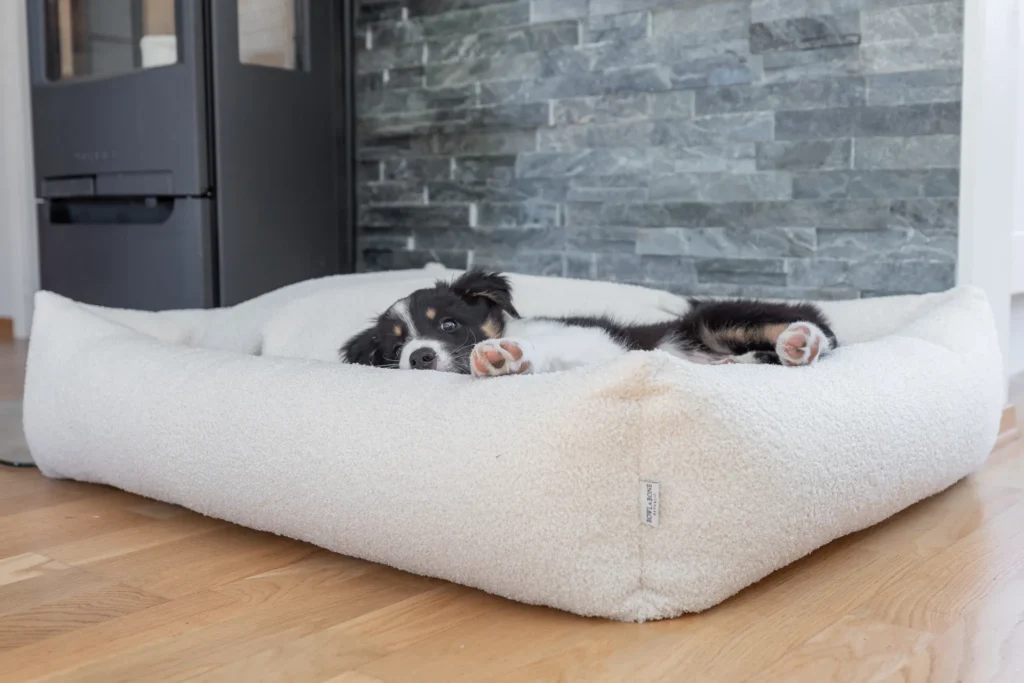
The context can help distinguish an ordinary bed-preparing ritual from behaviour caused by overstimulation or discomfort.
Place the bed in a peaceful part of the home, but not completely away from the family. Provide sufficient physical activity, opportunities to sniff and mental stimulation. After energetic play, introduce a calmer stage to the evening.
Regularly check whether the mattress or filling has become permanently misshapen.
For some dogs, a dog cushion or lightweight mat that can be moved closer to their guardian may be a useful addition to their permanent sleeping area. The aim is to create clear, safe resting zones wherever members of the household spend their time.
How Do You Choose a Bed for a Dog Who Kneads It Intensively?
A dog who frequently scratches his bed needs a design that can withstand everyday use.
The cover should be made from durable fabric, fit the bed properly and be removable. The seams should be carefully finished, while zips should be concealed or positioned so that they do not encourage chewing.
Filling that is too loose may move to one side, causing the dog to continually rearrange the surface. A soft dog cushion may suit a dog who enjoys being gently surrounded, while a senior dog, a larger breed or a dog who needs a more stable surface may rest more comfortably on a flat orthopaedic mattress.
The size of the bed should be selected not only according to the dog’s weight, but above all according to his preferred sleeping position.
Observe whether your dog curls into a ball, sleeps on his side or stretches his legs out fully. A well-chosen bed leaves enough room for him to change position while still creating the feeling of a private, secure place.
A Small Ritual That Says More Than You Might Think
Kneading the bed reminds us that even a dog living in a modern home continues to be guided by natural needs.
A soft bed does not remove his instinct to prepare a resting place. The surroundings may have changed, but the need to arrange the space in his own way and calmly transition into rest remains.
The next time your dog begins turning around, pressing the cushion with his paws and moving a blanket with his nose, take a moment simply to observe him.
Perhaps he is not fighting with the bed or trying to destroy it. Perhaps he is completing the final step of his evening ritual — preparing the place where he feels most comfortable and secure.
For more inspiration, expert knowledge and thoughtfully designed dog accessories, visit www.bowlandbone.com — a place created for dog guardians who want to combine their companion’s everyday comfort with timeless style.
the Bowl&Bone Republic team
FAQs — The Most Frequently Asked Questions
about dogs kneading their beds
Is it normal for a dog to scratch his bed before sleep?
Yes. Brief scratching, turning around and rearranging the material are usually natural parts of preparing a resting place. When the dog settles down peacefully after a short while, there is generally no reason for concern.
Why does a dog knead his bed with his front paws?
He may be adapting the surface to his body, creating a comfortable hollow or performing an established behavioural pattern that precedes sleep. The important thing is whether the behaviour remains calm and ends with the dog resting.
Does a dog knead his bed because he is stressed?
He can, but stress is not the most common explanation. Tension is more likely when prolonged, forceful scratching is accompanied by panting, whimpering, pacing around the home, destructive behaviour or an inability to fall asleep.
Can an uncomfortable dog bed cause intense scratching?
Yes. A dog may rearrange his bed more frequently when it is too small, too warm, unstable or has unevenly distributed filling.
At the same time, even a well-chosen and comfortable bed may be kneaded briefly for instinctive reasons.
Why does an older dog turn around for a long time before lying down?
An older dog may need more time to find a comfortable position. When the behaviour has suddenly intensified and is accompanied by stiffness, difficulty standing up, whimpering or frequent waking, it is worth consulting a veterinary surgeon.
Sources and Inspiration
- American Kennel Club — information about the natural causes of digging, scratching sleeping areas and turning around before rest.
- VCA Animal Hospitals — articles discussing turning rituals and the preparation of resting places.
- ASPCA — information about separation anxiety, compulsive behaviour and behavioural changes in older dogs.











 or CANADA
  PLEASE join us at