


Knowing whether your dog is cold is particularly important during autumn and winter walks. Observing behaviours such as shivering, curling up, lifting the paws or looking for warmer places may indicate that your dog is beginning to feel the cold. Not every dog responds in the same way, however, so it is worth learning to recognise the signals shown by your own four-legged companion [1][2].

Keeping your dog warm with appropriately chosen clothing, a soft blanket, a dry resting place and by limiting the time spent in freezing conditions can improve their comfort during the colder months. At the same time, it is important to remember that simply feeling cold and potentially dangerous hypothermia are not the same thing.
The easiest way to recognise that your dog is cold is to observe their overall behaviour. Shivering, a tucked tail, a hunched posture, lifting the paws, slowing down, reluctance to continue walking and attempts to head home are more important indicators than a cool nose, ears or paws alone. [1]
What will you learn from this article? In this guide, you will learn:
- how to tell whether your dog is cold,
- the most common signs that a dog is feeling cold,
- whether cold ears mean your dog is cold,
- why your dog may have cold paws,
- whether a dog can feel cold at home,
- at what temperature dogs begin to feel cold,
- which dogs are particularly sensitive to low temperatures,
- whether a German Shepherd can feel cold in winter,
- how to distinguish ordinary cold discomfort from hypothermia,
- what to do if your dog becomes very cold,
- how to protect your dog during a winter walk,
- whether your dog needs a sweater or jacket,
- how to provide your dog with a comfortable resting place during colder days.
Is my dog cold?
Many dog guardians wonder how to interpret the signs that indicate their companions are feeling cold. Just like us, dogs also need appropriate protection from low temperatures. Understanding how to recognise whether a dog is cold is essential for keeping them comfortable in different weather conditions.
In everyday life, particularly when temperatures begin to fall, we cannot predict in advance exactly when our dog will start to feel cold. Every dog is different in terms of body structure, breed, age, physical condition and tolerance of changing temperatures. Some dogs are much better adapted to cold conditions, whilst others need additional protection [1][2].
For this reason, a guardian should be aware of the signals their dog is sending and respond to their individual needs. In this article, I would like to focus on ways to identify whether your dog is cold and on practical solutions that can help keep them comfortable during colder days.
How can I tell if my dog is cold?
Dogs, like humans, feel the temperature of their surroundings. Cold weather can, however, affect individual dogs very differently depending on their breed, size, age, coat type, health and activity level [1].
Recognising whether your dog is feeling cold is important for keeping them comfortable and safe in colder conditions. Do not look only at the thermometer. Your dog’s reaction during a particular walk will often tell you much more.
– observe your dog’s behaviour
If your dog is trembling or shivering, this may be a sign that they are cold. Dogs may also curl themselves into a ball in an attempt to reduce heat loss. This behaviour can indicate that they need additional protection from the cold.
Cornell University College of Veterinary Medicine also lists whining or barking, a tucked tail, a hunched posture, lifting the paws, reluctance to continue walking and sudden changes in behaviour [1].
If your dog normally loves walks but suddenly starts slowing down, stopping, lifting their paws or trying to turn back towards home on a cold day, treat this as important information.
– pay attention to your dog’s coat and body weight
Dogs with short coats or low body weight are more susceptible to becoming cold. If your companion has a fine coat, little body fat or lacks a dense undercoat, they may begin to feel low temperatures sooner.
Small dogs also have a larger body surface area in relation to their mass and may lose heat faster than larger dogs. Puppies, senior dogs, underweight dogs and companions with certain health problems also require closer attention [1][2].
– watch for tiredness and changes in behaviour
If your dog is more lethargic than usual, clearly loses interest in moving or suddenly behaves differently in freezing weather, do not ignore it. Animals exposed to low temperatures use energy to maintain their normal body temperature.

Sleepiness after an active walk does not, of course, automatically mean your dog is becoming hypothermic. However, if it occurs together with intense shivering, weakness, confusion or slower breathing, the situation may be much more serious [4].
9 signs that your dog may be cold
Based on your dog’s behaviour during a walk, you may notice several characteristic signs:
- shivering or trembling,
- tucking the tail,
- a curled or hunched posture,
- lifting one or more paws,
- whining or unusual barking,
- slowing their walking pace,
- reluctance to continue walking,
- looking for a sheltered or warmer place,
- suddenly trying to return home [1].
Not every dog will show all of these signs. One may start shivering, another may primarily lift their paws, while another may simply stop and refuse to continue walking. The most important thing is a change from your individual dog’s normal behaviour.
Do cold ears mean my dog is cold?
This is one of the questions that comes up most frequently around this subject. The ears are more exposed to low temperatures, particularly because their tips are less insulated than the torso. This is also why they are among the areas susceptible to frostbite during prolonged exposure to very low temperatures [1][4].
However, cool ears do not automatically mean that your dog’s entire body is dangerously cold. Cold ears alone are not enough to conclude that your dog is too cold. After a winter walk, they may simply feel cool because they have been exposed directly to cold air. Your dog’s overall behaviour is much more important.
If cold ears are accompanied by shivering, a hunched posture, weakness, a clear reluctance to move or confusion, this deserves greater attention.
Why does my dog have cold paws?
The paws come into direct contact with snow, ice, cold pavements and damp ground, so they may feel noticeably cool after a winter walk. This alone does not necessarily mean that your dog’s overall body temperature has dropped.
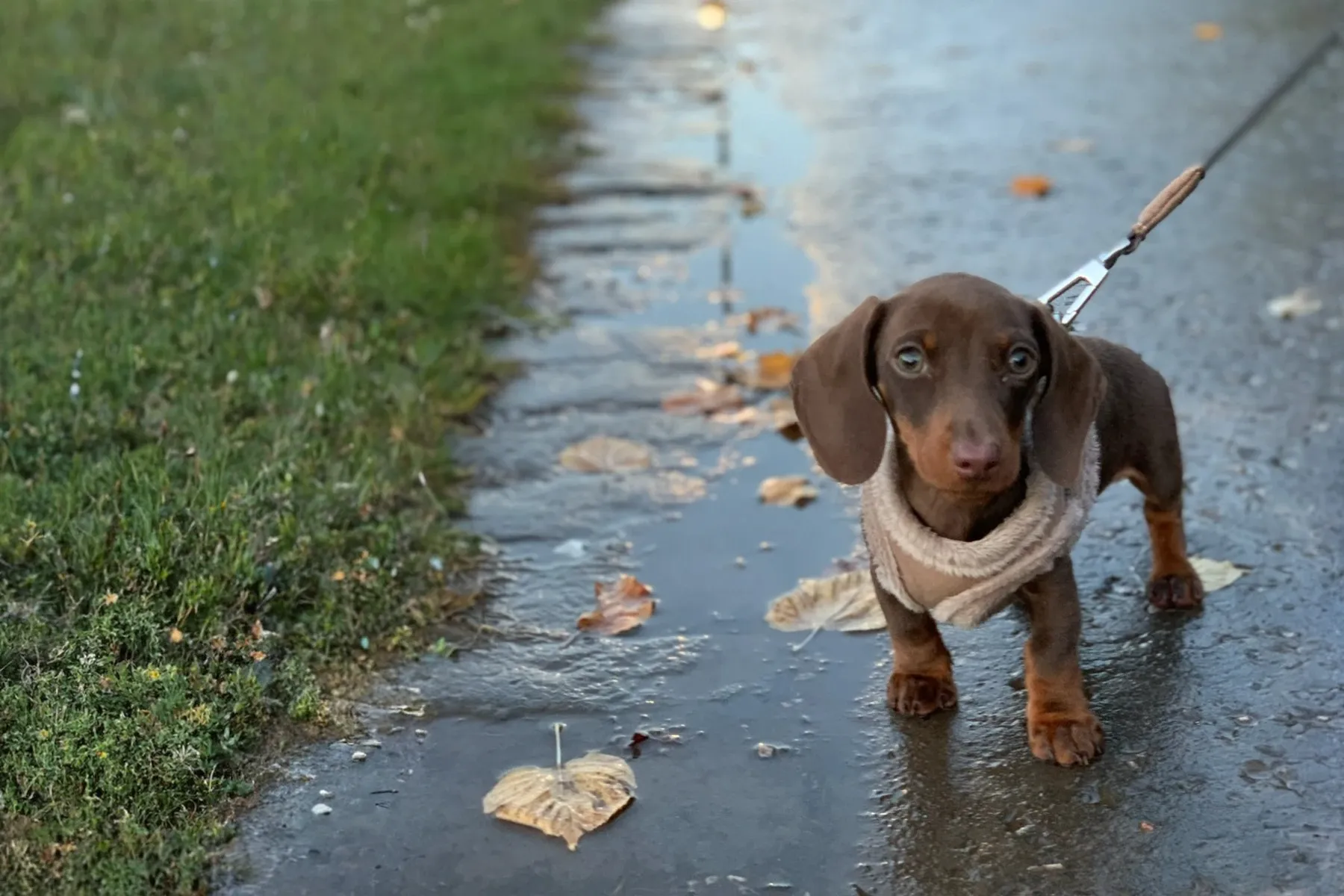
Your dog’s behaviour is much more important. If they begin lifting their paws, shifting from one foot to another, stopping or refusing to continue walking, this may indicate that the ground has become uncomfortable for them [1].
During winter, it is also worth checking the paw pads and spaces between the toes regularly. Ice and snow may form uncomfortable clumps, while salt and de-icing products can irritate the skin. After a walk, rinse or thoroughly wipe the paws and remove any snow or salt [1][4].
Cold paws at home – should you be concerned?
If your dog is lying on a cool floor, their paws may feel colder to the touch than the rest of the body. This does not necessarily indicate a problem. Some dogs actively choose cooler surfaces, particularly when the home itself is warm.
However, if your dog’s paws are constantly cold and they are also shivering, looking for a blanket, reluctant to leave their bed or behaving differently from usual, look at the whole situation. If weakness or other concerning symptoms persist, it is best to contact your veterinary surgeon.
Does a cold nose mean my dog is cold?
No. The temperature of a dog’s nose can change throughout the day and, by itself, is not a reliable indicator of whether the dog as a whole is cold.
As with the ears and paws, do not assess your companion’s thermal comfort based on one part of the body alone. Behaviour, movement, posture and their willingness to continue walking will tell you considerably more.

At what temperature does a dog feel cold?
There is no single temperature at which every dog begins to feel cold. The same temperature may be completely comfortable for a healthy dog with a thick double coat and unpleasant for a small, slim dog without an undercoat.
Cold tolerance is affected by factors including:
- the dog’s size,
- coat thickness and type,
- the presence of an undercoat,
- age,
- body weight,
- health,
- acclimatisation to low temperatures,
- wind,
- damp conditions,
- the amount of time spent outdoors,
- level of activity [1][2].
This is why online charts that assign a particular item of clothing to one exact temperature should only be treated as a very general guide. A wet and windy day a few degrees above freezing can be more uncomfortable for some dogs than a dry walk at a lower temperature.
Can a dog feel cold at home?
Yes, although many healthy dogs are perfectly comfortable in a normally heated home. Very small, slim, older, unwell, hairless or very fine-coated dogs may need more protection.
The location of the resting place also matters. A bed positioned beside a balcony door, in a draught or directly on a cold floor may be less comfortable than a sheltered corner of the living room.
People’s Dispensary for Sick Animals (PDSA) also points out that most dogs do not need clothing in a modern heated home and can quickly become too warm indoors [3].
If you notice that your dog curls up more tightly during winter, looks for soft surfaces or chooses places closer to a source of warmth, it may be worth checking whether their everyday resting space is sufficiently comfortable.
Provide appropriate protection from the cold
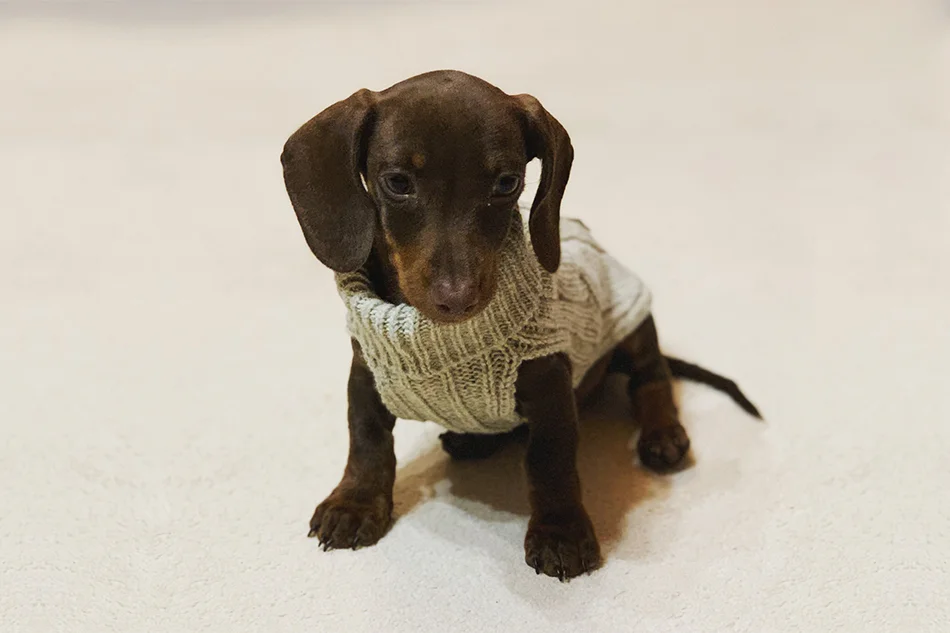
If your dog shows signs that they are cold, you can help by providing appropriate conditions. Properly fitted dog clothes, such as a warm sweater or jacket, may improve comfort during colder walks, particularly for small, short-haired, older or slim dogs [1][3]. Make sure your companion also has a comfortable, draught-free place to sleep.
The Bowl&Bone Republic collection includes, among other options, the charming cream SNOWFLAKE dog sweater with its winter motif. A properly fitted cut allows your dog to maintain freedom of movement, while high-quality workmanship makes the sweater a comfortable choice for autumn and winter walks and a convenient product for the guardian to use every day.

When conditions become more demanding, it is also worth looking at dog jackets. What matters most is not putting the thickest possible layer on your dog, but choosing clothing suited to the weather that does not restrict natural movement. You can read more about preparing a complete winter set in our guide Dog accessories for the winter.
Do all dogs feel the cold?
Most dogs feel cold, although the intensity varies depending on their size, breed, age and individual characteristics. Small breeds, short-haired dogs and dogs without an undercoat, such as Chihuahuas, are more vulnerable to the cold than many larger dogs with thick double coats [1][2].
Older dogs, puppies and dogs with health problems may also experience low temperatures more acutely. Puppies are not yet as effective at regulating body temperature as healthy adult dogs, while senior dogs and companions with certain medical conditions may have greater difficulty maintaining warmth [1].
Although not every dog needs an additional layer, it is important to observe their reaction to the cold so that you can keep them comfortable in low temperatures.
Which dog breeds feel the cold most?
Dogs that tend to be most sensitive to cold are primarily those with short or fine coats, no undercoat, hairless dogs and small dogs that lose heat more quickly.
Groups that may require particularly careful observation include:
- Chihuahua – very small dogs that may begin to feel cold quickly,
- Whippet and Italian Greyhound – slim dogs with fine coats and little body fat,
- Chinese Crested – particularly varieties with large hairless areas,
- short-haired Dachshunds,
- some small dogs with fine coats,
- Boston Terriers and French Bulldogs – their short coats provide less insulation than a thick double coat.
These dogs may require additional protection in colder weather, such as properly fitted clothing or shorter walks [1][3]. This does not mean that breed alone provides a complete answer. Two dogs of the same breed may differ in age, condition, body fat, activity level and acclimatisation to cold weather.
Can a German Shepherd feel cold?
A healthy German Shepherd with a properly developed coat and undercoat will usually tolerate cold better than a small short-haired dog. This does not mean, however, that they can remain in freezing conditions indefinitely.
Every dog is vulnerable to the effects of prolonged exposure to low temperatures [1]. Wind, a wet coat, inactivity, age, health and spending a very long time outdoors can cause even a dog that is well adapted to winter weather to become cold.
If your German Shepherd starts shivering, lifting their paws, slowing down or trying to return home, do not ignore these signs simply because the breed is associated with good cold tolerance.
Is a sweater or jacket always necessary?
No. A healthy, active adult dog with a thick coat may not need additional clothing during an ordinary winter walk. A small, short-haired, very slim, young, older or unwell dog, on the other hand, may benefit clearly from an additional layer [1][3].
The clothing should fit properly. Your dog must be able to walk, run, toilet and assume natural positions freely. A jacket that is too tight or poorly cut will not improve comfort even if it is extremely warm [3].

If your dog wears a harness in winter, remember to check its adjustment again after adding thicker clothing. We discuss this in more detail in Which dog harness for winter? Can a jacket and harness be comfortable together?.
A wet dog gets cold more quickly
Moisture is a very important part of winter comfort. After a walk in rain, wet snow or heavy precipitation, dry your dog thoroughly, particularly if the coat has become soaked [2].
If rain is the main problem, a very thick sweater will not always be the best solution. An outer layer designed to reduce soaking may be far more important. In these conditions, you may want to consider a dog raincoat. After returning home, also wipe the paws and belly, removing snow, salt and substances used to de-ice pavements [1][2].
Does a dog need more calories in winter?
Not every dog does. Older advice sometimes recommends automatically increasing the calorie content of a dog’s diet during winter. In practice, requirements depend primarily on activity level and the amount of time spent outside.
A dog that is very active and spends a great deal of time in cold conditions may use more energy. At the same time, many household dogs exercise less during winter and may need the same amount of calories or even slightly fewer in order to avoid excess weight gain [1]. Do not increase the amount of food simply because winter has begun. The diet should be matched to the individual dog’s condition, activity and needs, and any doubts can be discussed with your veterinary surgeon.
Feeling cold or hypothermia?
This is a very important distinction. A dog beginning to feel cold on a walk may shiver, lift their paws, slow down or try to return home. Usually, the appropriate response is to stop the exposure to cold, move into a dry, warm place and dry the dog thoroughly.
Hypothermia, however, is a condition in which body temperature falls dangerously below normal. It can be life-threatening [4].
| Dog beginning to feel cold | Possible serious hypothermia |
|---|---|
| shivering | severe weakness |
| hunched posture | lethargy or confusion |
| lifting the paws | very slow breathing |
| reluctance to continue walking | slowed heart rate |
| looking for shelter | marked changes in consciousness |
| trying to return home | collapse |
If your dog is clearly weak or confused, has slowed breathing or stops responding normally, do not treat this as ordinary cold discomfort — urgent veterinary advice is required. [4]
What should you do if your dog becomes very cold?
If your dog becomes very cold, move them to a warm, dry place as quickly as possible. Once home, dry them with a towel, particularly if the coat is wet, as moisture can further increase heat loss.
If your dog is only mildly cold, you can wrap them in a dry, warm blanket and allow them to rest calmly.
If you suspect hypothermia, warming should be gradual. The American Animal Hospital Association (AAHA) states that warm, but not hot, water bottles wrapped in a towel and warm blankets can be used [4]. Do not place a very hot hot-water bottle directly against the skin and do not attempt to heat the dog too rapidly.
If frostbite is suspected, do not rub or massage the affected skin. AAHA and the Merck Veterinary Manual recommend gentle warming with warm, never hot, water and prompt veterinary consultation [4][5].
If your dog remains weak, shows unusual symptoms, has difficulty breathing or behaves in a way that may indicate serious hypothermia, contact your veterinary surgeon.
How can you provide your dog with a warm resting place at home?
During winter, many dogs prefer resting in soft and sheltered places. Make sure their bed is not positioned directly in a draught or beside frequently opened balcony or patio doors.
A properly selected dog bed should allow your companion to position their body comfortably and relax peacefully after a walk. For dogs that prefer a more open resting surface, a dog cushion bed can be an alternative.

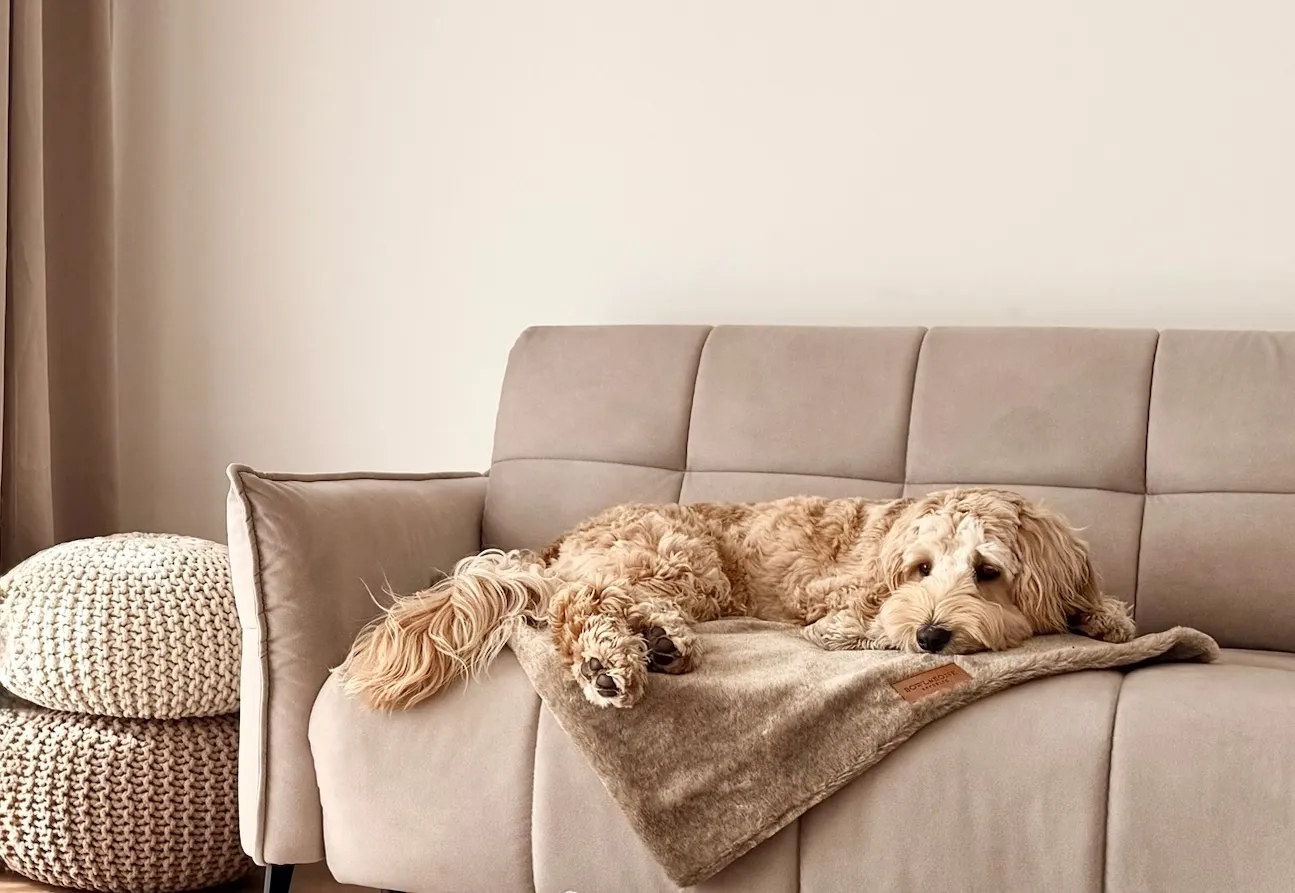
During colder days, a dog blanket can also be a simple addition to the resting area. For example, the soft NAP brown dog blanket allows your dog to decide whether they want to curl up in it, lie on top of it or simply keep it beside them. For the guardian, a high-quality and practical accessory is also an easy way to increase the comfort of the dog’s space without changing the whole interior arrangement.
You can read more about preparing a resting place for the colder months in our article Dog bed for the winter.
Nearly 15 years of designing for dogs has taught us to observe carefully
At Bowl&Bone Republic, we have been designing PREMIUM dog accessories for nearly 15 years. The knowledge used in our guides therefore comes not only from scientific sources and recommendations from veterinary organisations, but is also considered alongside real design experience, hundreds of opinions and suggestions shared with us by dog guardians, and feedback from thousands of satisfied customers using Bowl&Bone Republic products.
Over the years, one thing has become particularly clear to us: there is no single solution that suits every dog. One small companion may begin looking for warmth on a chilly autumn evening, while another will happily enjoy a walk in winter weather. Preferences regarding clothing, resting places and walk duration are equally individual.
For this reason, when designing products we pay particular attention to comfort, fit and freedom of movement. High-quality dog clothing should help your dog on a cold walk without unnecessarily restricting activity, while a comfortable bed or blanket should allow your companion to choose their own resting position. For the guardian, this also means convenient, durable and carefully designed products for everyday use.
How can you walk your dog safely in winter?
It is worth limiting the amount of time spent on cold surfaces such as ice or snow, particularly if your dog begins lifting their paws or slowing down. For dogs with short coats that may become cold more easily, wearing a jacket or sweater can be helpful [1][3].
During a winter walk:
- observe your dog’s behaviour rather than relying only on the temperature,
- avoid spending too long outside in freezing conditions,
- check the paws and spaces between the toes,
- remove salt, ice and snow after returning home,
- dry a wet coat thoroughly,
- keep your dog away from liquids containing antifreeze,
- do not allow your dog to walk on frozen lakes or ponds [1][2][5].
Remember that dogs differ in their tolerance of cold weather, so observing the animal’s behaviour and response is essential. What feels comfortable for one dog may be unsuitable for another.
Keep your dog warm
Providing our dogs with appropriate thermal comfort is one of the important responsibilities of a dog guardian. It is worth understanding that individual dogs respond differently to changing weather conditions. By observing the subtle signals our companion sends, we can better recognise whether they are cold and how we can help.
The most important thing is to understand that our four-legged friend needs our attention particularly during periods when temperatures fall. Being able to recognise behaviour indicating that a dog is cold allows us to provide appropriate protection and end a walk before discomfort becomes more serious.
Do not assess your dog’s comfort solely by the temperature of their nose, ears or paws. Look at the whole dog: their posture, the way they walk, activity level and behaviour.
In summary, recognising the signs of cold and knowing how to respond is key to keeping your dog comfortable, particularly on frosty days. If symptoms become pronounced, your dog becomes weak or you suspect hypothermia or frostbite, do not rely only on home warming methods — contact your veterinary surgeon.
If you would like to prepare your companion better for the colder months, explore the Bowl&Bone Republic dog clothes collection and our other guides to winter walks and rest. Good preparation helps your dog remain comfortable and allows their guardian to enjoy time outdoors together with greater peace of mind throughout the year.
– the Bowl&Bone Republic team
FAQ – frequently asked questions about the article –
How can I tell if my dog is cold?
How can you tell if your dog is cold?
Observe their behaviour first. Shivering, a tucked tail, a hunched posture, lifting the paws, reluctance to walk and attempts to return home are important signs that a dog is struggling with the cold [1].
Do dogs feel the cold?
Yes. All dogs can be affected by low temperatures, although cold tolerance varies significantly. Factors include size, age, health, physical condition, coat type and acclimatisation to cold weather [1][2].
Do cold ears mean my dog is cold?
Not always. The ears are highly exposed to cold air and may feel cool after a walk. Cold ears alone do not confirm that the whole body is becoming hypothermic. Assess your dog’s behaviour and other signs as well.
Why does my dog have cold paws?
The paws come into direct contact with cold ground, snow and ice. Cool paws after a walk can be normal. If your dog lifts them, stops or refuses to walk further, the ground may be too cold or uncomfortable [1].
Are cold paws at home normal for a dog?
They can be, particularly if your dog is resting on a cool floor. However, if your companion is also shivering, weak, behaving unusually or constantly looking for warmth, it is worth considering their overall wellbeing.
Can a dog feel cold at home?
Yes, particularly if they are very small, slim, old, unwell, hairless or have a fine coat. Most healthy dogs do not need clothing in a normally heated home, however, and an overly warm layer can cause overheating [3].
At what temperature does a dog feel cold?
There is no single temperature threshold suitable for every dog. Size, coat type, age, health, humidity, wind, activity level and the length of time spent outdoors all matter [1][2].
Can a German Shepherd feel cold in winter?
German Shepherds generally have better natural insulation than small short-haired dogs, but they can still become cold during prolonged exposure to freezing conditions, particularly if the coat is wet, the dog is inactive, older or has health problems.
Can a dog with an undercoat become cold?
Yes. An undercoat provides greater protection from low temperatures but does not make a dog indefinitely resistant to freezing conditions. Prolonged exposure can lead to hypothermia and frostbite even in dogs that are well adapted to winter weather [1].
Does a dog need clothes in winter?
Not every dog does. An additional layer is more often useful for small, short-haired, slim, older, young or unwell dogs. A healthy, active dog with a thick coat may not need clothing during an ordinary winter walk [1][3].
How can you distinguish ordinary cold discomfort from hypothermia?
A dog beginning to feel cold may shiver, lift their paws and refuse to continue walking. Hypothermia can cause weakness, lethargy, confusion, slowed breathing and a reduced heart rate. Suspected hypothermia requires prompt veterinary advice [4].
What should I do if my dog becomes very cold?
Move your dog to a dry, warm place and dry them thoroughly if they are wet. For mild cold discomfort, they can be wrapped in a blanket. If you suspect hypothermia, warm them gradually and contact your veterinary surgeon [4].
Can you warm a dog with a hot-water bottle?
Do not place a very hot hot-water bottle directly against the skin. When hypothermia is suspected, AAHA recommends a warm, but not hot, heat source such as a warm water bottle thoroughly wrapped in a towel [4].
Does a dog need more food in winter?
Not always. Dogs that spend a lot of time being active in cold weather may have greater energy requirements, but many dogs exercise less during winter and do not need additional calories. Diet should be adjusted to the individual dog’s activity and body condition [1].
Sources and inspiration used to write the article
“How can I tell if my dog is cold?”
- Cornell University College of Veterinary Medicine, “Winter safety tips” – material concerning dogs’ tolerance of cold weather, groups at greater risk of hypothermia, signs of poor cold tolerance, paw care and winter energy requirements.
https://www.vet.cornell.edu/departments-centers-and-institutes/riney-canine-health-center/canine-health-topics/winter-safety-tips - Royal Society for the Prevention of Cruelty to Animals (RSPCA), “How to help dogs in cold weather” – material concerning differences in cold tolerance, the influence of body size and coat type, and protecting dogs during winter walks.
https://www.rspca.org.uk/adviceandwelfare/seasonal/winter/pets/dogs - People’s Dispensary for Sick Animals (PDSA), “Vet Q&A: Does my dog need to wear a coat on winter walks?” – guidance concerning dogs requiring additional protection, the use of clothing indoors and correct fitting of jackets or coats.
https://www.pdsa.org.uk/what-we-do/blog/vet-qa-does-my-dog-need-to-wear-a-coat-on-winter-walks - American Animal Hospital Association (AAHA), “Cold Weather Pet Safety Tips for Dogs and Cats” – veterinary material concerning signs of hypothermia and frostbite, safe warming and paw protection in winter conditions.
https://www.aaha.org/resources/cold-safety-for-pets/ - Merck Veterinary Manual, “Keeping Pets Safe During Cold Winter Months” – material concerning freezing-weather risks, frostbite, gradual warming and winter hazards such as road salt and antifreeze.
https://www.merckvetmanual.com/news/editorial/2025/01/15/15/23/keeping-pets-safe-during-cold-winter-months










 or CANADA
 PLEASE join us at