


There are days when your dog comes home looking like a little hero. There has been a long walk, new scents, a meeting with a dog friend, several very important bushes to inspect, perhaps a car journey, a trip out of town or a family afternoon in the garden. From a human perspective, it is simply a lovely, active day. From a dog’s perspective, it is a whole event filled with stimuli, emotions, effort and scent-based messages that cannot possibly be read in a hurry.

After such a day, many dog guardians expect their dog simply to lie down and fall asleep. Sometimes that is exactly what happens. The dog drinks water, stretches, settles on his bed and drifts into a nap so deep that his paws move as if he were still running through a meadow. But sometimes it looks different. The dog comes home tired, yet still wanders around the house, whines, looks for something to do, brings a toy, cannot find a place for himself or reacts to every sound behind the door. This does not always mean that he has had “too little exercise”.
Sometimes it means that he has had too many emotions and needs help calming down.
A dog’s rest after an active day is just as important as the activity itself. Walking, playing, training, travelling or meeting other dogs engages not only the body, but also the nervous system. A dog works with his muscles, nose, eyes, ears and emotions. That is why, after an intense day, he needs not only a place to lie down, but also a calm transition from “I am doing” mode to “I am resting” mode.
For a conscious dog guardian, this is a very important subject. Good rest affects your dog’s behaviour, comfort, recovery, mood and everyday balance. A dog who knows how to rest often copes better with emotions, returns more easily to calm after excitement and is more willing to cooperate the next day. And a home where the dog can settle is simply more pleasant for everyone — including the guardian, who after an active day may also dream of the sofa, silence and a cup of tea finished before it goes cold.
Why is rest so important for dogs?
Rest is not an addition to activity. It is its natural complement. Just as a person needs sleep after physical effort, a dog needs time for his body to return to balance. During rest, the body regenerates muscles, the nervous system processes stimuli, and emotions gradually settle. This is especially important after a day when a lot has happened: a longer walk, a trip, play with other dogs, learning new commands, training, visiting a new place or travelling by car.
Dogs sleep and rest more than people. Depending on age, health, activity level and temperament, an adult dog may need many hours of sleep and quiet lying down throughout the day. Puppies, senior dogs, dogs after significant effort and dogs recovering from illness or injury usually need even more. This is not laziness. This is physiology.
It is also worth remembering that a dog cannot always “switch off” by himself after an exciting day. Some dogs become more stimulated after intense activity rather than calmer. A little like a child after a birthday party, already very tired but still running around the house because cake, balloons and guests are simply too many attractions to just go to sleep. It works similarly with dogs. Physical tiredness does not always mean immediate calm.
That is why the guardian’s role is to create conditions that help the dog return to balance. It is not about forcing rest, but about gently guiding him: a calm routine after a walk, water, a quiet place, fewer stimuli, a comfortable bed and a clear message: “now you can rest”.
How can you tell that your dog is tired after an active day?
Dog tiredness can look different from one dog to another. Some dogs simply lie on their side and fall asleep. Others become irritable, wander around the house or start behaving as if they cannot find a place for themselves. Others still demand more play, even though their body clearly shows that they need a break. That is why it is worth observing not only whether the dog is moving, but also how he is behaving.
Typical signs of tiredness after an active day may include:
- intense panting after activity has ended,
- looking for a cool place,
- moving more slowly,
- reluctance to continue walking or playing,
- lying down in different places,
- excessive excitement despite tiredness,
- irritability,
- frequent yawning,
- licking the lips,
- difficulty settling down to sleep,
- a greater need to be close to the guardian,
- clear withdrawal and a desire for peace.
In some dogs, tiredness may paradoxically look like “even more energy”. The dog runs around the house, nudges household members, brings a toy, barks at the window or tries to organise his own evening entertainment programme. This is not always a sign that the walk was too short. Sometimes it is a sign that the dog’s nervous system is stimulated and needs help settling down.
It is worth distinguishing ordinary tiredness from symptoms that may require consultation with a specialist. If your dog is limping, does not want to get up, has difficulty moving, seems very weak, vomits, has trouble breathing, does not respond normally or behaves unusually for a long time after activity, it is worth contacting a vet. An active day should end with pleasant rest, not pain or clear discomfort.
After intense activity, a calm routine should be the first step for your dog
After returning from an active day, the first step should be a calm routine. Before we start unpacking bags, talking on the phone, vacuuming sand from the hallway or telling the family how bravely the dog walked the whole route, it is worth taking care of the basics. Water, a few minutes of quiet and the chance to lie down calmly can do more than another game.
After a longer walk, journey or play session, your dog should have access to fresh water. This is especially important in summer, after activity on a warmer day or after spending time in the sun. Some dogs drink a lot straight away, others need a moment. It is worth offering water, but not forcing it. It is also good to observe whether the dog drinks very large amounts greedily at once, especially after intense effort. Calm is the most important thing here.
The second element is lowering the tempo. If your dog comes home excited, you do not need to immediately suggest another game. Many dogs need a gentle transition: taking off the harness, a calm tone of voice, a short moment in the hallway, a slow walk into the room and the possibility of choosing a place by themselves. This is where a fixed resting point plays a very important role.
If your dog has his own well-known dog bed at home, it is easier for him to understand that, after returning, the calming-down stage begins. The bed acts as a clear signal: “this is your place, you can rest here, you do not have to guard anything anymore”. For a dog, this is more important than it may seem. The consistency of place and scent helps build a sense of security.
Create a calm space for your dog’s recovery
After an active day, your dog needs a space that is not the centre of household commotion. Of course, many dogs like to rest close to their guardian. So this is not about sending your dog to a separate room if he prefers to be near the family. It is more about making sure his resting place is not in a passageway, by the front door, right next to a loud television or in a place where someone constantly touches him, moves him or encourages him to play.
A good resting place should be calm, comfortable and predictable. Your dog should be able to lie down without feeling that he has to control the surroundings all the time. Some dogs like to have a view of the household, while others prefer a quieter corner. It is worth observing where your dog most often chooses to rest and planning his space there.
A comfortable bed that supports the dog’s body and allows him to truly relax works beautifully in this role. For dogs after longer walks, active breeds, older dogs or pets who particularly appreciate softness, an orthopaedic dog bed may be a good choice. An orthopaedic construction combining elastic foam and memory foam helps create stable, comfortable support for the body.
This matters not only for older dogs, but also for those who simply need deep, comfortable rest after an active day.
For dogs who prefer a flatter place to lie down or like to stretch out fully, a practical solution may be an orthopaedic dog mattress. Such a mattress gives the dog a large, comfortable surface for rest, while also fitting beautifully into a modern interior. This is especially important for guardians who want their dog’s comfort to be part of the home aesthetic, rather than a random addition left in the corner.
Not every kind of rest has to mean sleep
When we talk about a dog’s rest, we often immediately think of sleep. Yet rest can take many forms. A dog may sleep deeply, nap, lie with his eyes open, calmly observe the household or chew a chew in his own place. It all depends on the dog’s temperament, level of tiredness and what he needs at that moment.
After an active day, some dogs fall asleep instantly. Others first need a calm transition. They may lie down, get up, change position, drink water, walk into another room, come back and only then fall asleep. This is normal. What matters is not adding more stimuli at that moment. If your dog is trying to settle, do not call him every few minutes, offer a toy, start training “just one more command” or check every five minutes whether he is asleep yet.
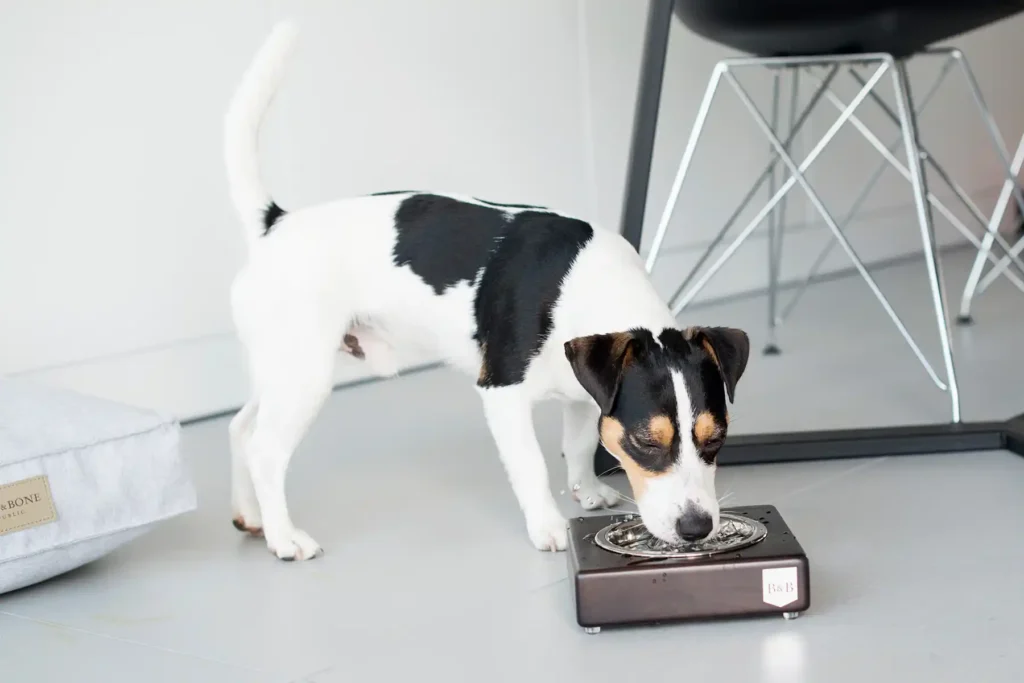
A dog, just like a person, needs the right to peaceful “doing nothing”. It is a beautiful phrase that dogs understand perfectly, although they would probably name it in their own way: “I am lying down, breathing, dinner smells nice, but I am not getting up yet”. Such moments matter because they help the nervous system come down from high alert.
It is also worth distinguishing rest from boredom. A dog who is lying calmly and is relaxed is resting. A dog who is pacing, looking for something to do, starting to destroy objects or clearly not coping with doing nothing may need not another long walk, but learning to settle, a predictable routine and appropriately chosen mental activity.
A sniffing walk as a gentle way to come down from emotions
Sometimes the best way to rest after an active day is… one more walk. But not an intense one. Not a fast one. Not the kind during which we count steps, pace and calories burned. This is about a short, calm sniffing walk that allows the dog to process emotions and gently end the day.
Sniffing is a natural need for dogs. It is a way of discovering the world, gathering information and regulating emotions. After a day full of attractions, a short, slow stroll in a familiar place can help your dog settle. It does not have to last long. Sometimes a few minutes around the block, a calm pace and allowing your dog to stop by the scents that, from his point of view, are absolutely the most important messages of the day, are enough.
In this situation, a comfortable dog lead and a well-fitted dog harness work well, allowing the dog to move freely without tension or rush. A sniffing walk should not be about pulling the dog from point A to point B. It is more about calmly accompanying him as he reads the world in his own dog-like way.
It is worth remembering that this kind of walk is not necessary for every dog. If your pet falls asleep immediately after returning from an active day, there is no need to wake him and organise an additional outing. But if you see that your dog is excited, wandering around the house and unable to find a place for himself, a short sniffing walk can be a good bridge between activity and rest.
Massage, touch and the calm presence of a guardian can soothe your dog after demanding activity
Some dogs rest very well with calm contact from their guardian. Gentle stroking, a slow massage around the neck, soft movements along the back or simply being present near the bed can help them relax. But here one thing matters most: the dog must want it.
Not every dog enjoys touch after an active day. Some need closeness, while others prefer a solitary nap. There are dogs who will gratefully place their head on their guardian’s knees, and others who, after an intense walk, say with their whole body: “I love you, but please, not now”. It is worth respecting that.
If your dog approaches by himself, leans in, relaxes his body, half-closes his eyes and stays near you, gentle touch can be a good part of the evening ritual. If he moves away, turns his head, licks his lips, tenses his body or changes place, it is better to give him space. Rest should be pleasant for the dog, not forced.
Calm presence is often enough. You can sit near your dog, speak in a quiet voice, read a book or simply be nearby. For many dogs, the awareness that their guardian is close, without expecting anything from them, has a very soothing effect.
How can you help your dog settle in the evening?
The best way to build evening calm after an active day is through routine. Dogs understand repetition very well. If, after an intense walk, a similar sequence of events always happens — water, taking off the harness, a calm return home, rest on the bed, a quieter atmosphere — the dog learns more quickly that the day is slowly coming to an end.
It is worth reducing intense stimuli in the evening. Loud music, dynamic play, children running around the house, constantly calling the dog or stimulating training may make rest more difficult. Of course, home is home, and family life does not take place in library mode. Even so, small changes can help: a quieter television, less engaging the dog, a calmer tone of voice, closing the curtains if the dog reacts to movement in the street.
Giving your dog a simple, calm activity can also work well. Some dogs settle through licking a mat, chewing an appropriate chew or calmly searching for a few treats in a sniffing mat. Such activities should, however, be suited to the dog and used sensibly. The aim is to calm down, not to start another round of excitement.
After such a calm ritual, the dog should have the possibility of moving to his place. A soft dog blanket can add an extra sense of security. A blanket is easy to move, place on a bed or sofa, or take on a trip. A familiar texture and scent often help a dog accept rest more quickly, especially after a day full of changes.
When a dog cannot rest — what could be the reason?
Some dogs struggle with resting. Even when they are tired, they are still ready for action. They react to every movement, follow their guardian around, bark at sounds, bring toys or demand attention. The guardian may then think: “he never has enough”. Yet the problem is not always too much energy. Sometimes it is a lack of ability to settle.
Dogs learn to rest in the same way they learn to walk on a lead or stay alone. If every moment of excitement ends with another game, another walk or another reaction from the guardian, the dog may not have the chance to learn that calm is also valuable.
In such a situation, it is worth introducing short, calm rituals. After a walk, we do not start with ball play at home. After returning, we do not emotionally wind the dog up if he has only been outside briefly. We do not reward constant nudging with another portion of activity. Instead, we create predictable conditions: water, a calm tone, a resting place, perhaps a quiet activity and no excess stimuli.
If your dog constantly struggles to rest, is very excited, has sleep problems, reacts fearfully to everyday situations or his behaviour makes normal functioning difficult, it is worth consulting a behaviourist. Such a consultation can help choose the right activity, daily rhythm and ways of calming down for that particular dog.
Can a dog be too tired?
Yes, a dog can be overloaded. Especially if he suddenly gets much more activity than usual, has an intense day in the heat, runs for a long time on hard surfaces, takes part in a trip without breaks, or is a puppy, senior, brachycephalic dog, overweight dog or a dog with health issues. The fact that a dog wants to keep going does not always mean that he should.
Some dogs have enormous motivation to act. They will run, retrieve, sniff and explore even when their body begins to send signs of tiredness. That is why the guardian has to be a guide — and sometimes also a sensible brake. A dog does not always know when to say “that is enough”. Especially if he has just found the most interesting stick of the season 🤩
Signs of overload may include clear reluctance to keep moving, stiffness, limping, excessive panting, weakness, irritability, paw tenderness, a change in movement or difficulty getting up after rest. In warm weather, you also need to be particularly careful about overheating. If your dog’s behaviour is worrying, it is not worth waiting. It is better to consult a vet.
Activity should be suited to the dog. A young border collie after training will need one kind of rest, a cavalier after a walk in the heat another, a French bulldog after a short but exciting outing another still, and a senior dog after a family trip something different again. That is exactly why a conscious dog guardian observes their dog, not only the number of kilometres covered.
A dog’s rest after travelling by car
An active day is not only about walking or playing. For many dogs, the car journey itself is a big experience. Even if the dog lies calmly, his body may be working intensely: reacting to sounds, the movement of the car, changing scents, stops, new places and the emotions of the guardians.
After a journey, your dog may need more rest than we expect. This applies especially to sensitive, young or older dogs, or those that do not travel often. After arriving, it is worth giving him time to calmly sniff the surroundings, drink water and find his place.
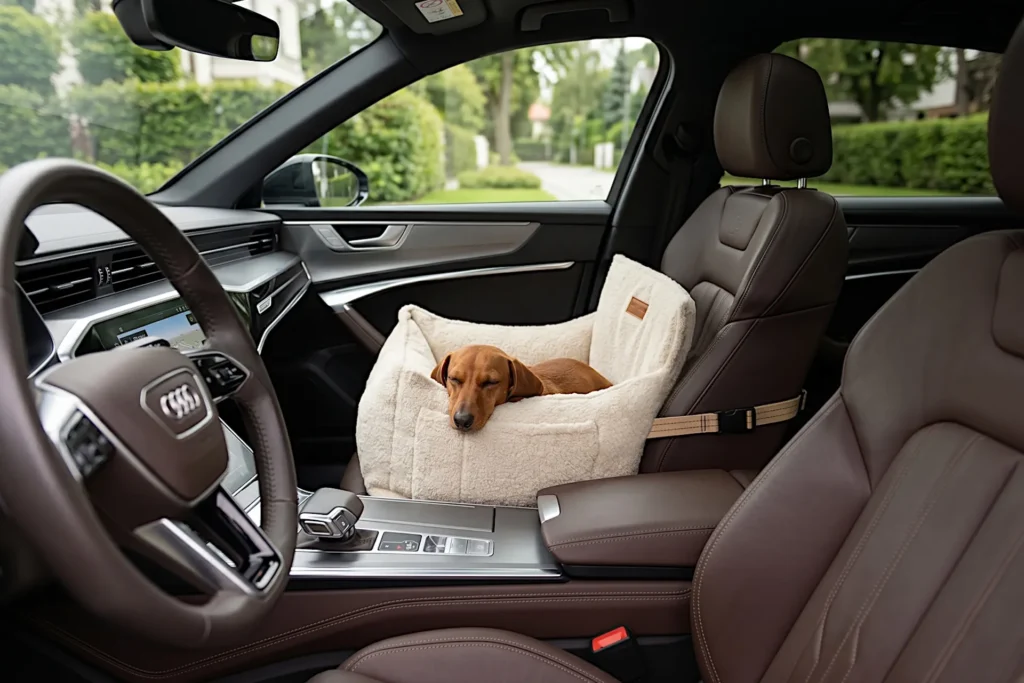
If you take a blanket, a travel or foam dog mat or your pet’s favourite dog bed with you, you can help your dog settle into the new space more quickly. A familiar scent acts as a homely point of reference. This matters not only during holidays, but also during visits to family, hotel stays or weekend trips.
After travelling, do not plan intense activity immediately if you can see that your dog is tired. Sometimes guardians want to “show the dog the area” straight away, while the dog would most like to show everyone how beautifully he can sleep. A short toilet walk, water and a calm place may be the best beginning to the stay.
How to choose a resting place according to your dog’s temperament
Not every dog rests in the same way. Dogs differ in temperament, sensitivity level, need for closeness and way of recovering. That is why it is worth matching the resting place not only to the dog’s size, but also to his character.
A sociable dog who likes being close to the household may rest best in the living room, but in a quieter corner. This way he can see the family, yet he is not lying in the very centre of events. A sensitive dog may need a more secluded place, away from the front door and window. A senior dog may need easy access to the bed, without steps, high edges or slippery flooring around it.
After an active day, a dog may want to stretch his body, so he will appreciate the larger surface of an orthopaedic mattress.
Choosing the right bed matters here. For dogs who like a feeling of being gently enclosed, beds with sides work well. For dogs who stretch out during sleep — mats or mattresses. For older dogs or dogs with higher comfort needs — orthopaedic solutions, such as orthopaedic dog beds or orthopaedic dog mattresses. The most important thing is that the dog willingly uses his place, rather than treating it as a beautiful interior piece that is “more for looking at than sleeping on”.
It is also worth remembering that the resting place should be easy to keep clean. After an active day, your dog brings home not only memories, but sometimes also sand, grass, dust and mysterious traces of adventures. Products that are easy to care for are therefore practical both for the dog and the guardian.
What does a good recovery ritual after an active day look like?
A good recovery ritual does not have to be complicated. It works best when it is simple and repeatable. Dogs like clear rules, and guardians find it easier to maintain a rhythm that does not require much planning.
After returning home, it is worth starting with a calm entrance. Take off your dog’s harness or collar, offer water and let him breathe for a moment. If your dog is very excited, do not add more stimuli straight away. Speak calmly, move more slowly and allow him to go to his resting place by himself.
Then you can offer your dog a short calming activity: a sniffing mat, a chew, licking or simply calm lying down beside the guardian. Not every dog needs this, but for many it is a good way to move from activity to rest.
Then comes the time for proper recovery. A comfortable bed, a quieter atmosphere, less engaging and the possibility of sleep. If your dog falls asleep, let him sleep. Do not wake him without need, invite him to another game or test whether he has “rested enough”. Your dog’s body will do its work if it is given the right conditions.
Small things that make a big difference
In a dog’s rest, the smallest things are often the most important. A fixed place. Soft support. A blanket that smells of home. Silence after an intense walk. Water offered without rush. A guardian who understands that a dog does not always need another attraction — sometimes he simply needs peace and quiet.
It is also worth remembering the rhythm of the whole day. A dog who has regular walks, predictable mealtimes, a calm resting place and well-matched activity usually finds it easier to settle. Too many stimuli, unpredictability and constant excitement can make recovery more difficult.
Rest is not boredom. It is part of caring for a dog. Just as important as a good lead, a comfortable harness, suitable food or regular visits to the vet. It is a daily element of care that often does not look spectacular, but has enormous meaning. Because sometimes the most luxurious gift for a dog is not another attraction. It is a peaceful place where he can safely close his eyes.
Summary — how to help your dog rest after an active day, in a few words
To help your dog rest after an active day, it is worth taking care of a few simple things: water, a calm pace after returning, fewer stimuli, a comfortable place to lie down and a predictable settling routine. A dog after a long walk, journey, play or training needs not only sleep, but also time to process emotions.
Not every dog falls asleep immediately. Some need a sniffing walk, calm contact with their guardian, a chew, a sniffing mat or simply a quiet place. It is worth observing your pet and adjusting rest to his temperament, age, health and activity level.
A well-chosen bed, orthopaedic mattress or blanket can support your dog’s everyday recovery by creating a fixed point of security at home. This is especially important for active, older and sensitive dogs, as well as those who, after a day full of stimuli, need a clear signal: now you can rest.
If your dog does not return to balance for a long time after activity, limps, seems weak, has difficulty breathing, is excessively excited or his behaviour clearly changes, it is worth consulting a vet or behaviourist.
For more inspiration, knowledge and carefully designed accessories for dogs, we invite you to www.bowlandbone.com — a place created for guardians who want to combine their dog’s everyday comfort with timeless style.
The Bowl&Bone Republic team
FAQ — frequently asked questions about a dog’s rest after an active day
How can you help your dog rest after a long walk?
After a long walk, it is worth giving your dog access to fresh water, a calm place, fewer stimuli and the possibility of lying down without being disturbed. A fixed bed or mattress that the dog knows and associates well is a good solution. If the dog is excited, a short sniffing walk or a calm activity, such as chewing an appropriate chew, may help.
Should a dog go to sleep immediately after an active day?
Not always. Some dogs fall asleep straight away, while others need time to calm down. A dog may first drink water, wander around the house, lie down, change place and only then fall asleep. What matters is not adding more intense stimuli.
Why is my dog still excited after a walk?
A dog may be excited after a walk because the activity was full of emotions, scents, meetings and new stimuli. Physical tiredness does not always mean mental calm. In this situation, it is worth helping your dog come down from emotions through a calm routine, sniffing, quiet and a fixed resting place.
How much sleep does a dog need?
The need for sleep depends on the dog’s age, health, temperament and activity level. Many adult dogs need several hours of sleep and rest throughout the day. Puppies, older dogs, dogs after effort and dogs recovering from illness or injury may need even more.
Can an orthopaedic dog bed help a dog rest?
An orthopaedic dog bed can support resting comfort because it provides stable and comfortable support for the dog’s body. It is a particularly good choice for older, active and sensitive dogs, as well as those who need deep recovery after a long day.
What should you do if your dog cannot settle?
It is worth introducing a fixed routine after a walk: water, a calm tone of voice, fewer stimuli, a resting place and possibly a gentle calming activity. If your dog constantly has problems resting, is excessively excited or reacts with fear, it is worth consulting a behaviourist.
Can you play with your dog at home after an intense walk?
If your dog is calm and initiates gentle contact himself, short, calm play may be fine. However, after an intense day, it is better to avoid dynamic games, tugging, running around the house or stimulating training. Settling down is then more important than another dose of activity.
When should a dog’s tiredness worry the guardian?
Worrying signs may include limping, difficulty getting up, severe weakness, breathing problems, vomiting, apathy, very intense panting, a change in behaviour or signs of pain. In such situations, it is worth contacting a vet.
Sources and inspiration
[1] PDSA — Dogs and sleep: Our top tips for your furry friend.
[2] PetMD — Signs Your Dog Is Getting Too Much Exercise.
[3] VCA Hospitals — Sniffing Walks for Dogs.
[4] Dogs Trust — Enrichment activities to keep your dog entertained.
[5] Bowl&Bone Republic — orthopaedic dog beds, orthopaedic dog mattresses, blankets and walking accessories.










 or CANADA
  PLEASE join us at