


You are walking calmly along the pavement. A few metres ahead, someone appears carrying a large bag, a scooter passes nearby, and an unfamiliar dog comes around the corner. Your dog does not bark, growl or try to run away. At first glance, nothing much seems to be happening. But for a moment, he turns his head away, licks his nose, slows his pace and looks at you.
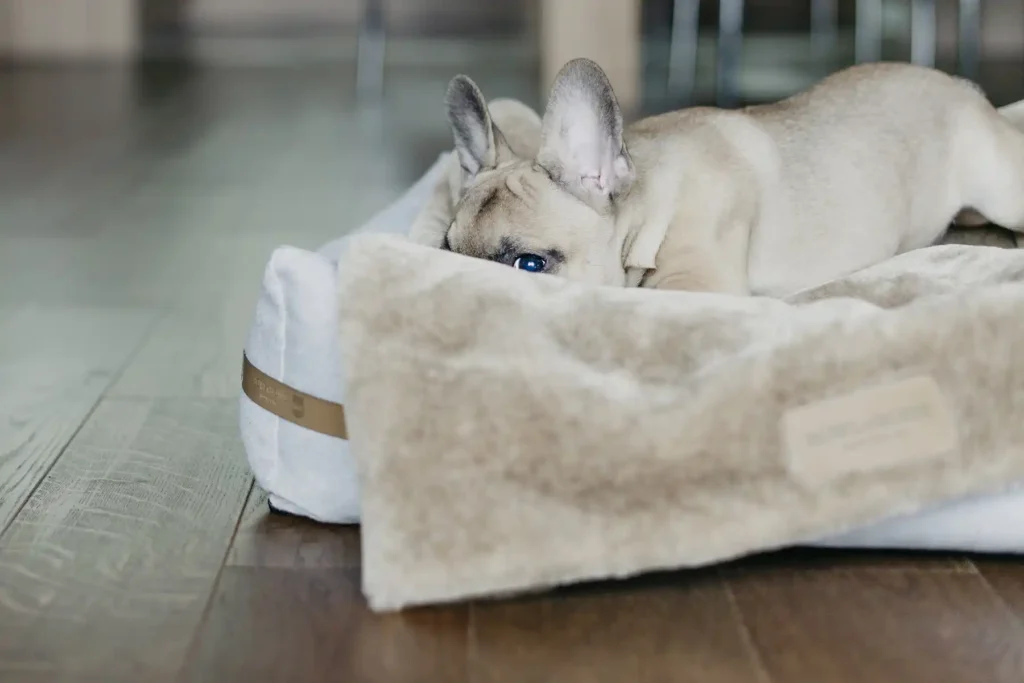
These are exactly the kinds of moments that are very easy to miss. Dogs cannot tell us: “I’m not sure I want to come any closer”, “I need a little more space” or “this situation is becoming difficult for me”. Instead of words, they use their entire body — their gaze, the position of their ears and tail, muscle tension, the way they move and even seemingly insignificant behaviours such as yawning or quickly licking their nose.
Learning to notice these small changes is one of the most important skills we can develop as conscious dog guardians. Not because we need to analyse every movement our dog makes, but because it allows us to recognise the moment when he begins to feel uncomfortable. Uncertainty itself does not mean that a dog has a behavioural problem. Any dog may feel unsure for a moment in a new place, when meeting an unfamiliar person or when encountering something he has never seen before. What matters most is whether we are able to notice his signals and respond to them appropriately.
What will you learn from this article?
• what uncertainty can look like in a dog,
• how a dog shows that he is afraid or uncomfortable,
• which signs of stress in dogs are easy to overlook,
• what it means when a dog licks his nose,
• why a dog may yawn even when he is not tired,
• what turning the head away and avoiding eye contact can mean,
• what “whale eye”, or visible eye white, is,
• what lifting a front paw may mean,
• why a dog may suddenly freeze,
• whether a wagging tail always means happiness,
• what to do when you notice signs of uncertainty in your dog,
• why growling should neither be ignored nor punished,
• when it is worth consulting a veterinary surgeon or behaviourist.
How does a dog show that he feels unsure?
There is no single gesture that always means: “I’m afraid”. A dog communicates his emotional state through a combination of behaviours and changes in body language. This is why looking only at the tail, the ears or one particular yawn can lead to the wrong conclusion. What matters most is:
• the context of the situation,
• the dog’s overall body posture,
• muscle tension,
• the direction of his gaze,
• the way he moves,
• what happened immediately beforehand,
• what is normal behaviour for that particular dog.
If your dog always stretches and yawns after waking up, he has probably simply just woken up. If, however, he starts yawning several times, turns his head away and licks his nose when an unfamiliar person leans over him and tries to stroke him, the context is entirely different. So instead of asking, “what does this one gesture mean?”, it is much more useful to ask: “what is my dog telling me with his whole body, and what is happening around him?”
Subtle signs of uncertainty in dogs
Many dogs try to communicate discomfort in very subtle ways before they begin to clearly avoid a situation. These early signals can be particularly valuable to a dog guardian. If we notice them, we can often simply increase the distance or end the interaction before the dog feels the need to react more strongly.
– dog turns his head or entire body away
Imagine someone wants to say hello to your dog. The person approaches, reaches out a hand and your dog suddenly turns his head to the side. It can be easy to assume that something else has simply caught his attention.
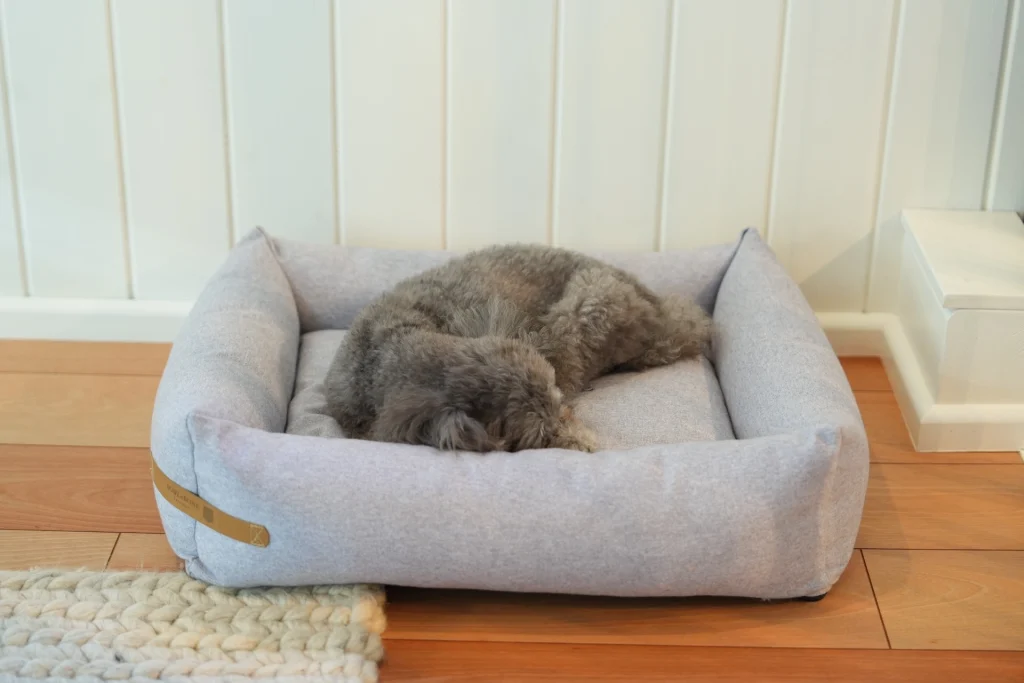
In reality, turning the head or body away can be one way of communicating discomfort and attempting to increase distance. Dogs may also avoid direct eye contact, especially when a situation becomes too intense for them. You should therefore not turn your dog’s head back towards the person or encourage him with words such as “go on, say hello”. Let him decide.
– dog licks his nose or lips
A quick flick of the tongue can be so subtle that it is easy to miss. Of course, dogs also lick their mouths after eating something tasty or when they can smell food. However, when this behaviour appears in a social situation — while being stroked, meeting an unfamiliar person, visiting the vet or interacting with another dog — it may be a sign of tension or uncertainty.
Once again, context is essential. A single nose lick does not tell us exactly how a dog is feeling. But if it appears alongside a turned head, ears held back, a tense body and an attempt to move away, the message becomes much clearer.
– dog yawns even though he is not tired
We associate yawning primarily with sleep, and dogs very often yawn when they are tired too. But not always. A dog may also yawn in a situation that creates tension. This could happen during a visit to the veterinary practice, while being enthusiastically hugged by an unfamiliar person or when he finds himself in a new environment.
If the yawn is accompanied by a relaxed body and the dog is about to fall asleep, he is probably simply tired. If, however, he yawns several times, turns his head away, avoids contact and clearly tries to move away, it is worth paying much closer attention to the situation.
– dog narrows his eyes or shows the whites of his eyes
A dog’s eyes can communicate a great deal. When a dog turns his head away from something that concerns him but continues to watch it from the corner of his eye, we may sometimes see more of the white of the eye than usual. This behaviour is often described using the term “whale eye”. It may appear when a dog is trying to create more distance while continuing to monitor the source of his uncertainty.
On the other hand, seeing the white of a dog’s eye does not automatically mean that he is stressed. Eye anatomy varies between dogs, and your dog may simply be looking to the side. Again, we need to look at the whole body. If visible eye white is accompanied by tense muscles, stillness, a turned head or ears pulled back, it becomes much more meaningful.
– dog lifts a front paw
A raised front paw can look incredibly sweet. In some situations, it really is simply part of the dog’s normal behaviour. In certain breeds, it may also be linked to hunting or pointing behaviour. However, a dog who stands still, watches something from a distance and raises one front paw at the same time may be signalling uncertainty. It is worth paying attention to the other details:
• is his body tense?
• is the dog leaning backwards?
• how are his ears positioned?
• where is his tail?
• is he trying to increase the distance?
The more of these signals appear together, the more likely it is that the dog does not feel comfortable in the situation.
More obvious signs of fear and stress in dogs
If subtle signals are not enough or the dog cannot move away from whatever is worrying him, his communication may gradually become more obvious. You may then notice:
• a lowered or tucked tail,
• a lowered body posture,
• ears pulled back,
• moving away,
• hiding behind the dog guardian or behind an object,
• trembling,
• panting unrelated to physical exertion or high temperatures,
• drooling,
• whining,
• attempts to escape,
• constantly looking around,
• difficulty remaining calmly in one place.
The American Animal Hospital Association lists panting, trembling, nose licking, yawning, freezing, pacing, attempts to hide, turning the head away, lowering the body and lifting a paw among the possible signs of anxiety and stress in dogs. This does not mean that seeing one of these behaviours automatically indicates stress. It is, however, useful information that should encourage us to observe the dog more carefully.
Dog suddenly freezes – why is this an important signal?
One signal that dog guardians can easily mistake for calmness is sudden freezing. The dog stops moving. He does not retreat, bark or growl. He simply stands or lies completely still. It may look as though he is “politely allowing” someone to touch him.
However, stillness does not always mean consent or comfort. If the body becomes stiff, the dog stops making his normal movements, closes his mouth and watches the situation intensely or looks out of the corner of his eye, it is worth reducing the pressure immediately. This is particularly important during interactions between dogs and children.
If a dog is lying down while a child hugs him and he becomes completely still, turns his head away or shows the whites of his eyes, we should not say, “look how good he is being”. It is much better to calmly end the interaction and give the dog some space.
Does a wagging tail mean that a dog is happy?
This is one of the most persistent myths surrounding canine communication. A wagging tail primarily indicates emotional arousal — it does not automatically mean happiness. What matters is:
• the height of the tail,
• the way it moves,
• the amount of tension,
• the speed of the movement,
• the posture of the whole body.
A dog greeting his beloved guardian may wag not only his tail but almost the entire back half of his body. His posture is soft and relaxed. A dog standing stiffly while making short, tense movements with his tail may look very different. Never judge a dog’s emotional state solely by whether or not his tail is wagging.
Can a dog’s ears tell you that he is afraid?
Ears pulled backwards may accompany uncertainty or fear, but once again they cannot be interpreted separately from the rest of the body. A dog may pull his ears back while happily greeting his guardian. Another dog may naturally have floppy ears, making their position more difficult to assess.
The most important thing is to become familiar with what your own dog looks like when he is neutral and relaxed. What does his body look like when he is resting peacefully? Where does he hold his tail? How are his ears positioned? What does his face look like? Only when we know what our dog looks like when relaxed can we more easily notice small changes that appear in more difficult situations.
Why is context more important than a single signal?
A dog yawns.
Is he stressed?
Possibly.
But he may simply be tired.
A dog pants.
Is he afraid?
Possibly.
But perhaps he has just returned from an energetic walk or he is hot.
A dog raises his paw.
Is he unsure?
Possibly.
But he may also be tracking an interesting scent.
This is exactly why one of the most important principles of reading canine communication is this: never interpret a single behaviour without considering the situation and the dog’s entire body. Look for several signals at the same time and notice whether the behaviour changes in response to a particular trigger.
Dog tries to move away – let him
Imagine that during a walk your dog stops when he sees another dog. After a moment, he takes two steps to the side. You want him to “say hello”, so you shorten the lead and guide him closer. From our perspective, this may look like helping him overcome his shyness. From the dog’s perspective, the situation may look very different.
Your dog was trying to increase the distance, but the lead took that option away from him. If the situation is safe, allowing a dog to move away can be one of the best responses to uncertainty. Not every dog has to:
• greet every other dog,
• be stroked by strangers,
• approach children,
• enter a crowded café,
• meet every visitor,
• stand close to something he is afraid of.
Being able to say “I don’t want to” is an important part of feeling safe.
What should you do when your dog feels unsure?
The most important thing is not to immediately “fix” your dog’s emotions, but to help him regain a sense of safety.
– increase the distance
If your dog is concerned about a person, another dog, an object or a place, a few extra metres can make a huge difference. Do not wait until he starts barking or trying to escape. If you notice the first signs of tension, move a little further away and see whether your dog’s body begins to relax.
– do not force your dog to interact
“Let him have a sniff and he’ll see there’s nothing to worry about” is not always a good solution. If the dog wants to approach, he can. If he stops or retreats, respect his decision. This is particularly important when meeting unfamiliar people. Not every dog needs to be stroked when saying hello.
– let your dog observe
Sometimes a dog simply needs a few moments. He may stop several metres away from something unfamiliar, watch it, sniff the air and decide for himself whether he wants to come closer. Do not rush him. The opportunity to observe calmly allows him to gather information about the situation without additional pressure.
– remain calm
This does not mean pretending that nothing is happening. A calm voice, natural movements and avoiding additional tension on the lead are enough. Your dog does not need intense reassurance or a series of commands. He needs a guardian whose presence helps keep the situation predictable.
– give your dog a choice
Having a choice can be incredibly valuable. Does the dog want to approach? Would he rather stay further away? Does he want to continue the walk? Does he need to move away? Of course, not every situation allows complete freedom and safety must always come first. But wherever possible, it is worth giving your dog space to make a decision.
Do not punish your dog for growling
Growling often triggers a strong emotional response in dog guardians. It is common to react with words such as “No!”, “Stop it!” or “What are you doing?”
But growling is communication. The dog is telling us that the situation has become very difficult for him and that he needs more distance. Punishing a dog for growling may suppress the signal, but the emotion behind it does not necessarily disappear. It is much more important to understand what happened immediately beforehand.
Did someone lean over the dog? Did someone try to take something away from him? Was he unable to move away? Did another dog come too close?
Growling should be taken seriously and the situation made safer. If the behaviour is repeated or the dog reacts intensely, it is worth seeking advice from a veterinary surgeon and a suitably qualified behaviourist.
Does a dog look to his guardian for help?
Yes — some dogs move closer to someone they trust when they find themselves in a difficult situation. They may stand behind their guardian’s legs, look at them, lean against them or look for an opportunity to move away together. Other dogs react in the opposite way and need more space. There is therefore no single answer.
If your dog frequently follows you around the house, it is worth remembering that closeness can come both from a normal need for social contact and from a desire for information or a sense of safety. Simply staying close to a guardian does not automatically indicate a problem.
A safe place at home matters
Home should be a place where a dog can genuinely switch off. This does not mean he needs his own room. Often, a well-chosen dog bed placed in a quiet area that household members do not treat as the centre of play is enough. What matters, however, is not only the bed itself but also the rules around it. When the dog is resting:
• do not pull him out of his bed,
• do not wake him unnecessarily,
• do not encourage children to cuddle a dog while he is lying down,
• do not take over his resting place,
• let him move away if he wants to rest somewhere else.
A dog bed does not “treat” stress or solve behavioural problems. It can, however, form part of a predictable, comfortable environment in which the dog knows that he can rest. If you notice that your dog remains highly aroused for a long time after intense situations, you may also like to read the article “How to help your dog relax after an active day?”.
Comfort during walks matters too
In a difficult situation during a walk, the most important things are sufficient distance, the ability to move away and the calm behaviour of the dog guardian. Properly fitted walking equipment also matters. A dog harness should remain stable on the body, allow freedom of movement and be adjusted to the dog’s current measurements.

This is particularly important for a dog who may suddenly retreat or try to move away from the source of uncertainty. Regularly check the fit of the harness and the condition of all fastenings. Walking equipment cannot change a dog’s emotions. It can, however, help the guardian keep the dog safe while calmly increasing the distance from a difficult situation.
What should you avoid doing when your dog is afraid?
When you see that your dog feels unsure, the most important thing is to avoid creating additional pressure. The following do not help:
• pulling the dog towards something he is afraid of,
• forcing interaction with a person or another dog,
• telling the dog off for trying to move away,
• shouting,
• punishing growling,
• holding the dog in place so that he can “see there is nothing to worry about”,
• repeatedly exposing him to a difficult situation without an appropriate plan,
• ignoring increasingly intense signals.
The aim should not be to prove to the dog that “there is nothing to be afraid of”. The emotion is real to him. A much more effective approach is to create conditions in which the dog can gradually discover that the situation is safe.
Can you comfort a frightened dog?
This question comes up very often. You do not need to ignore your dog simply because he is afraid. If your dog chooses to seek your closeness, you can calmly stay with him. You can speak in a gentle voice or allow him to sit beside you. This does not mean intensely stroking him or holding him in your arms, particularly if he is showing that he does not want to be touched.
The most important thing is to observe his response. Does he approach you himself, lean against you and remain there? You can let him stay. Does he turn his head away, tense his body or try to leave? Give him space.
Uncertainty or pain – when should you pay particular attention?
A sudden change in behaviour always deserves careful attention. A dog who previously enjoyed having his neck touched but suddenly begins to move away may not simply be afraid. He may be experiencing pain. The same applies to a dog who suddenly:
• does not want to be touched,
• hides,
• becomes irritable,
• does not want to go for walks,
• growls when being lifted,
• avoids stairs,
• changes the way he moves,
• stops eating,
• clearly changes his daily routine.
In this situation, the first step should be to consult a veterinary surgeon. It is important not to assume that every behavioural change is purely an emotional or training issue.
When should you consult a behaviourist?
Occasional uncertainty in a new situation is very different from fear that begins to affect a dog’s everyday life. It is worth seeking professional help when:
• the dog regularly seems afraid to leave the house,
• he cannot calmly pass people or other dogs,
• he frequently tries to escape,
• it takes him a very long time to recover after a difficult situation,
• he growls or attempts to bite,
• his fear is becoming more intense,
• he stops carrying out normal everyday activities,
• the uncertainty appeared suddenly,
• the guardian does not know how to respond safely.
The first step should be to rule out any health problems with a veterinary surgeon. A suitably qualified behaviourist can then help assess the situation and develop an individual plan.
Learning your dog’s language strengthens your relationship
One of the most beautiful things about observing canine communication is that, over time, you begin to notice more and more. Suddenly you see that your dog stopped half a step earlier than usual. That he turned his head slightly. That he needed a second before approaching an unfamiliar person.
And instead of saying, “come on, there’s nothing wrong”, you stop with him. You give him a moment. Perhaps after a few seconds he will take a step forwards by himself. Or perhaps he will look at you and together you will choose another route. Both responses are perfectly fine.
Building trust is not about making sure your dog is never afraid. It is partly about helping him know that when a situation becomes difficult, his signals will be noticed. And it is in these small, everyday moments that a relationship built on a sense of safety begins to grow.
For more inspiration, knowledge and carefully designed accessories for dogs, visit www.bowlandbone.com — a place created for dog guardians who want to combine their dog’s everyday comfort with timeless style.
– Bowl&Bone Republic team
FAQ – frequently asked questions about the article –
What signals does a dog give when he feels unsure?
How can you tell if a dog feels unsure?
A dog may turn his head away, lick his nose, yawn, pull his ears back, lower his body, avoid eye contact or try to increase the distance. However, you should not assess a dog’s emotions on the basis of one gesture alone. Observe the dog’s whole body and the situation in which the behaviour appears.
How does a dog show that he is afraid?
A frightened dog may tuck his tail, lower his body, tremble, hide, try to escape or remain completely still. Some dogs bark or growl. Others respond much more subtly and mainly try to avoid interaction.
Does licking the nose mean that a dog is stressed?
It can be one sign of tension, particularly when it is unrelated to food and appears alongside other signs of uncertainty. A dog licking his nose after a meal is, of course, not necessarily experiencing stress.
Why does a dog yawn when he is not tired?
Yawning can also occur during moments of tension or uncertainty. If a dog yawns in a difficult situation while also turning his head away, tensing his body or trying to leave, it is worth giving him the opportunity to increase the distance.
What does it mean when a dog turns his head away?
Turning the head away can be an attempt to avoid direct interaction or reduce tension. It may also have nothing to do with stress, which is why the context and the rest of the dog’s body language must always be taken into account.
What is whale eye in dogs?
Whale eye describes a situation in which a larger part of the white of a dog’s eye becomes visible, often because the dog turns his head while continuing to watch something from the corner of his eye. When accompanied by a tense body, it can be a sign of discomfort or uncertainty.
Why does a dog lift one front paw?
Lifting a front paw can accompany uncertainty in some situations. However, the behaviour can also have other meanings — for example, some dogs may do it while tracking a scent. Context remains the most important factor.
Why does a dog suddenly freeze?
Sudden freezing can be a response to intense tension or fear. A motionless dog is not always a calm dog. If his body is stiff, his mouth is closed and his gaze is intense, increase the distance and reduce the pressure.
Does a wagging tail always mean that a dog is happy?
No. Tail movement indicates emotional arousal, and its meaning depends on the way the tail is moving as well as the dog’s overall body posture. A dog may also wag his tail when he feels unsure or is highly aroused.
What should you do when your dog is afraid?
If it is safe to do so, increase the distance from the source of fear and allow your dog to observe the situation from a place where he feels calmer. Do not force him to interact and do not punish him for trying to move away.
Should you comfort a dog who is afraid?
You can calmly remain close to your dog if he chooses to seek your company. Do not, however, force physical contact. Observe whether your dog wants to stay close or is trying to move away.
Can you punish a dog for growling?
No, this is not an appropriate way to respond. Growling is an important form of communication indicating significant discomfort or a need for greater distance. Instead of punishing the dog, identify the cause of the behaviour and make the situation safer.
Why is a dog afraid of strangers?
There can be many reasons, including previous experiences, insufficient exposure to different people during development, individual predispositions or the way a particular person behaves. A dog should never be forced to greet someone.
Why has my dog suddenly become unsure?
A sudden change in behaviour may have a medical cause, so it is worth consulting a veterinary surgeon. Pain and discomfort can affect how a dog responds to touch, people, other dogs and everyday situations.
How can you help an unsure dog during a walk?
Give him sufficient distance, calmly change direction, avoid forced greetings and use well-fitted walking equipment. Allow your dog to observe his surroundings and do not require him to approach something he is afraid of.
Can a dog bed help an unsure dog?
A dog bed alone cannot solve behavioural problems, but having a permanent, quiet place to rest can be an important part of a predictable environment. Household members should respect the dog’s space and avoid disturbing him while he is resting.
When should you take your dog to a behaviourist?
Professional help is worth seeking if the fear is intense, recurrent, becoming worse or interfering with everyday life. If the behaviour has changed suddenly, a veterinary consultation should also be the first step.
Sources and inspiration used to write the article
What signals does a dog give when he feels unsure?
- Dogs Trust, “How to Understand Your Dog’s Body Language” and “Signs of Stress in Dogs”. Resources covering subtle and more obvious signs of tension, fear and uncertainty in dogs.
- American Animal Hospital Association, “Canine and Feline Behavior Management Guidelines”. Guidelines on recognising behaviours associated with fear, stress and discomfort, and the importance of early assessment of changes in a dog’s behaviour.
- Royal Society for the Prevention of Cruelty to Animals, “Understanding a dog’s body language”. A resource on interpreting a dog’s body posture, eyes, ears, tail and behaviour in the context of his emotional state.
- Bowl&Bone Republic, “How to help your dog relax after an active day?”. Advice on helping a dog settle, reducing excess stimulation and creating a comfortable place to rest.
This article is educational and provides general information about canine behaviour and communication. A single gesture cannot determine the emotional state of an individual dog with certainty. Sudden behavioural changes, severe fear, aggression, difficulty with everyday functioning or suspected pain require consultation with a veterinary surgeon and — depending on the situation — a suitably qualified behaviourist.










 or CANADA
  PLEASE join us at