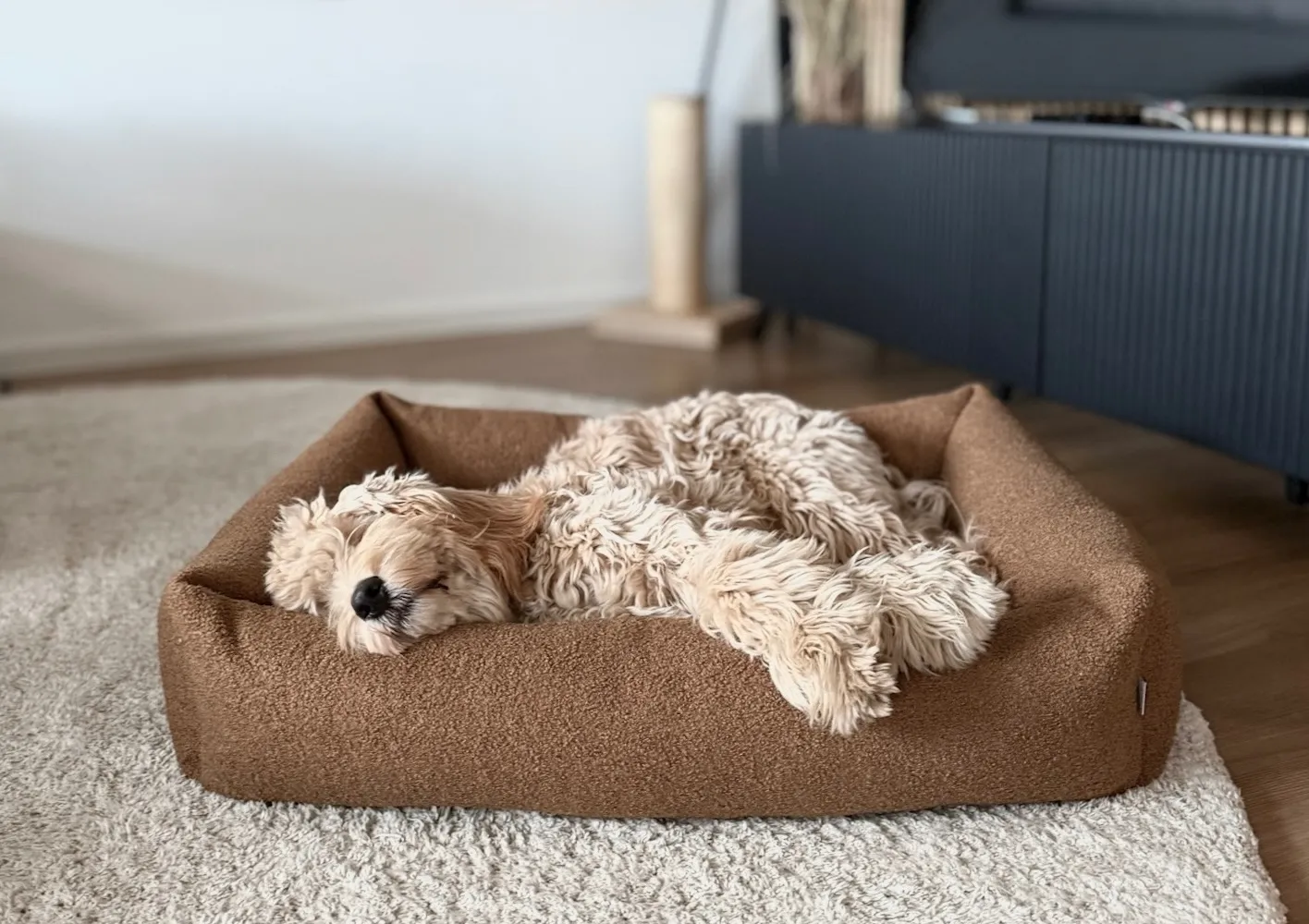
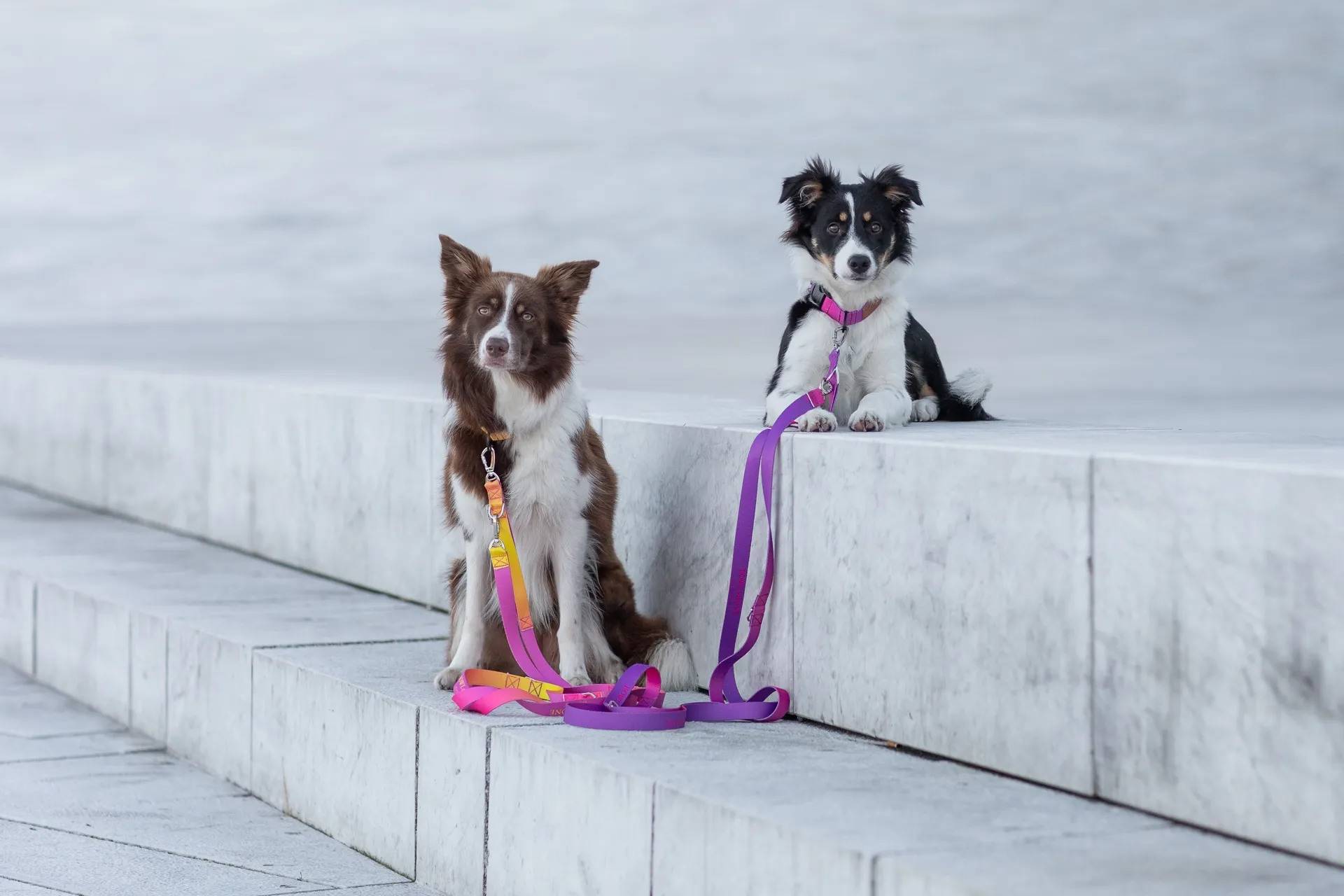
The evening feels completely ordinary. You sit down on the sofa, and after a moment your dog settles a few steps away. They do not demand to be stroked, try to climb onto your lap or watch your every movement. They stretch, let out a deep breath and close their eyes. Perhaps it is in these quiet moments that trust is most visible.
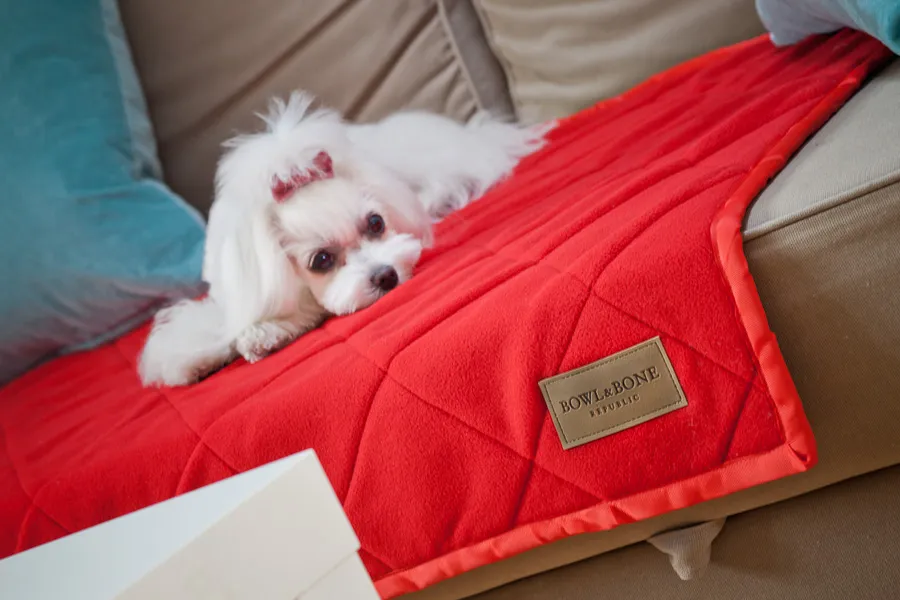
A dog who feels safe with a person does not always show it in a spectacular way. They do not need to follow them everywhere, constantly seek contact or jump with joy during every greeting. Sometimes the strongest sign of a bond is simply being able to rest without continually monitoring the surroundings.
Trust between a dog and their guardian develops through hundreds of everyday experiences. Predictable reactions, respect for the dog’s boundaries, shared walks, calm care and support during more difficult moments can turn a person into a secure point of reference for their companion. It is important to remember, however, that no behaviour should be interpreted in isolation from other signals. Placing a paw on someone, exposing the belly or looking into their eyes can have different meanings depending on body tension, the situation, previous experiences and the dog’s individual personality.
What will you learn from this article?
• what trust between a dog and their guardian means,
• whether trust and attachment mean the same thing,
• how to recognise that your dog feels safe with you,
• why peaceful rest may be a sign of trust,
• what the secure base effect is,
• why a dog looks towards their guardian in an uncertain situation,
• whether bringing a toy indicates a strong bond,
• why a dog does not need to follow you throughout the day,
• which behaviours are sometimes mistakenly interpreted as proof of trust,
• how to build a secure relationship with your dog gradually,
• whether an adopted adult dog can learn to trust,
• when a sudden change in behaviour requires professional advice.
What does trust in a dog’s guardian mean?
Trust can be understood as a dog’s belief that their guardian’s behaviour is reasonably predictable and that their presence does not represent a threat. The dog may expect that the person will not deliberately cause pain, force them into contact or ignore clear signs of discomfort. Trust does not mean, however, that a dog never experiences fear, uncertainty or frustration. Even an animal with an excellent relationship with their guardian may become frightened by a storm, a new place, a loud noise or a visit to the veterinary practice.
What matters is whether the dog can seek support from the person at such moments and whether the guardian’s presence helps them return to a balanced emotional state. Research into the bond between dogs and people suggests that a guardian may act as both a secure base and a safe haven. Their presence may encourage the dog to explore the surroundings, while in a difficult situation the dog may seek closeness and support from them. [1][2][3]
Do trust and attachment mean the same thing?
The two concepts are related, but they are not completely identical. Attachment describes an emotional bond in which the dog distinguishes a particular person, seeks their presence, responds to separation and behaves in a particular way when they are reunited. Trust also relates to the predictability of everyday interactions and whether the dog feels able to communicate their needs without fearing an unpleasant response.
A dog may be strongly attached to their guardian while still feeling anxious in certain situations, such as grooming, putting on a harness or having a found object taken away. For this reason, a relationship should not be judged solely by how intensely the dog responds when the person returns. Trust is best observed in a variety of circumstances: during rest, walks, play, grooming and encounters with unfamiliar surroundings.
How does a dog show trust in their guardian?
Every dog expresses closeness slightly differently. Much depends on their personality, age, breed, health and previous experiences. The following behaviours may indicate a sense of security, but they should always be considered together with the dog’s overall body language and the surrounding situation.
– 1. your dog rests calmly in your presence
Sleep and deep rest require a dog to reduce their level of vigilance. A dog who settles near their guardian, relaxes their muscles, closes their eyes and does not respond to every small movement probably feels safe in that particular place. This does not mean that they have to sleep on your lap or directly beside you. Some dogs enjoy physical contact, while others prefer to rest several metres away.
Freedom and relaxation are more important than distance alone. A relaxed body, calm breathing and the ability to remain in deeper sleep can reveal more than whether the dog is touching their guardian with a paw. It is worth providing your dog with their own quiet place to rest. A well-chosen dog bed allows them to decide whether they wish to stay close to members of the household or need a little more space. You can also read more about factors that may influence the way your companion rests in the article “Dog’s sleeping positions”.
– 2. your dog seeks support from you in an uncertain situation
When something new appears in the environment — an unusual noise, an unfamiliar object or a stranger — a dog may move closer to their guardian, stand behind them, touch them or look in their direction several times. This behaviour may indicate that the person is acting as a safe haven. The dog does not necessarily expect the guardian to remove every problem. The presence of a familiar person alone may help them assess the situation and regain a sense of security.
In research, dogs behaved differently in the presence of their guardian than in the presence of a stranger, and they sought support from the familiar person during stressful situations. [2][3] The dog should not, however, be forced to approach something they fear. Trust is built when the guardian notices tension and allows the dog to increase the distance.
– 3. your dog explores the world more freely when you are nearby
Trust does not always appear as remaining close to the guardian. Sometimes it becomes most visible when the dog moves away, sniffs calmly and investigates the surroundings. When your companion knows that they can return to you, exploring a new place may become easier. The guardian’s presence can act as a secure base from which the dog sets off to investigate scents, objects and unfamiliar spaces. [1]
A dog who moves a safe distance away during a walk and then returns voluntarily or checks where you are is not necessarily less attached than a companion walking directly beside your leg. A healthy bond can give a dog both a feeling of closeness and the confidence to explore the world independently.
– 4. your dog looks at you when they do not know what to do
In an ambiguous situation, a dog may look at their guardian’s face and then direct their attention back towards the object that interests them. This alternating gaze can be part of social referencing towards a person. Your companion may be seeking information: is the situation safe, is it appropriate to approach or would it be better to keep their distance?
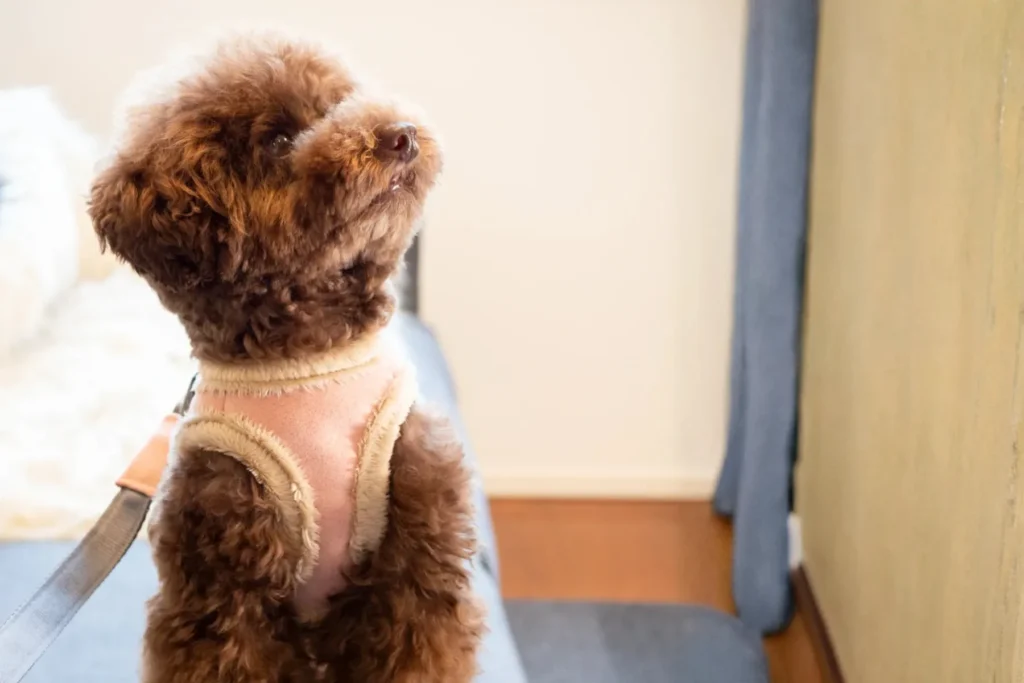
Research has shown that dogs can observe their guardian’s emotional signals and use them when making decisions about an unfamiliar object. This does not mean that they always understand human emotions precisely or that they are waiting for a specific instruction. [4] At such moments, it is worth remaining calm and not rushing the interaction. The dog should be allowed to decide independently whether they wish to approach.
– 5. your dog initiates physical contact
A dog may approach you, lean their side against your leg, place their head on your lap or gently touch you with their nose. If they do this voluntarily, have a relaxed body and can move away at any moment, the contact is probably pleasant for them. Trust is visible not only when a dog approaches. It is equally important that they can end the interaction without being restrained, embraced or pulled back.
Not every dog enjoys long periods of stroking or cuddling. One may sleep pressed against a person, while another returns to their own place after only a few seconds of touch. Both may trust their guardian equally strongly. It is a good habit to pause briefly while stroking your dog. If they move closer again, touch your hand or position their body for more contact, they probably wish the interaction to continue.
– 6. your dog maintains gentle eye contact
A calm, brief look can be part of communication and a close relationship. In research, mutual gazing between dogs and their guardians was associated with changes in oxytocin levels, a hormone involved, among other functions, in processes connected with social bonding. [5] This does not mean, however, that you should stare into a dog’s eyes for an extended period. An intense, fixed gaze may feel uncomfortable or threatening to some animals.
Gentle eye contact usually looks different: relaxed facial muscles, natural blinking, a calm posture and the freedom to turn the head away. If a dog avoids eye contact, this does not necessarily indicate a lack of trust. They may be tired, occupied with sniffing or simply uncomfortable with direct gazing.
– 7. your dog regularly checks where you are
During a walk, a dog may briefly turn their head, slow down, move closer or stop and wait. These short checks may show that the dog takes their guardian into account while making decisions.
This behaviour should not, however, be confused with constantly monitoring a person because of anxiety. If the dog is unable to move even a few steps away, becomes anxious whenever the guardian moves or cannot rest when the person leaves the room, the entire context should be considered. You can read more about the differences between closeness, habit and possible tension in the article “Why does your dog follow you everywhere?”.
– 8. your dog invites you to take part in a shared activity
Bringing a ball, soft toy or tug toy may be an invitation to play. The dog chooses the person as their interaction partner and expects a predictable, enjoyable response. Not every dog brings objects. Some companions suggest a shared activity in a different way: they perform a play bow, run towards you and then away, head towards the door before a walk or wait beside the place where training usually begins.
Bringing a toy alone is not a definitive test of trust. It may also result from excitement or a learnt method of gaining attention. When combined with relaxed body language and voluntarily remaining nearby, however, it can be one element of a positive relationship.
– 9. your dog can communicate that they do not want something
It may seem that the most trusting dog is one who allows a person to do anything to them. In reality, a lack of response does not always mean comfort. Some dogs freeze because they feel unable to leave. Trust may be visible when the dog freely turns their head away, withdraws a paw, moves away from a hand or ends the interaction while expecting their signal to be noticed.
When the guardian regularly respects these communications, the dog does not need to move immediately towards growling or defensive behaviour. They learn that subtle signals are enough. A dog should not be punished for growling. It communicates discomfort and provides a warning that allows the situation to end before it escalates. If a dog regularly defends themselves against touch, grooming or someone approaching their belongings, it is worth consulting a veterinary surgeon and a canine behaviourist.
– 10. your dog finds it easier to regain calmness with you nearby
Trust does not prevent a dog from responding to stressful events. It may, however, influence how quickly they return to a more balanced state. After a sudden noise, your companion may approach their guardian, shake themselves, begin sniffing and then return to their previous activity. Sometimes they need a gentle voice, more distance or the opportunity to hide in a quiet place.
Do not force physical affection on a dog who is clearly avoiding touch. Support should match the needs of the individual dog. For one companion, it may mean closeness. For another, it may mean the guardian remaining calmly a few steps away.
What should not be treated as definite proof of trust?
There is no single gesture that always means: “I trust you completely.” Many popular interpretations of canine behaviour are overly simplistic.
– exposing the belly
A dog lying on their back may be asking to be stroked, but they may also be attempting to calm the situation or increase the distance. Pay attention to muscle tension and the position of the ears, tail and mouth.
– licking a person’s face or hands
Licking may be associated with affection, seeking attention, excitement, an appealing smell, tension or an attempt to calm the situation.
– following a person throughout the day
This may result from a close relationship, but also from habit, expecting food, boredom or difficulty resting independently.
– allowing someone to cuddle them
A dog may tolerate being held even when they do not enjoy it. A closed mouth, turning the head away, licking the nose and a tense body may indicate discomfort.
– following every instruction
Obedience may result from training, the expectation of a reward or fear of consequences. It is not automatically the same as trust.
How can you build your dog’s trust?
Trust does not develop during one extraordinary event. It is built through small, repeated situations in which the dog learns that the person’s response can be predicted.
– be predictable
Similar signals should lead to similar consequences. If you allow your dog onto the sofa one day and tell them off for doing the same thing the next, it will be difficult for them to understand the rules.
Predictability does not mean planning every minute rigidly. It primarily means communicating calmly and maintaining clear rules.
– allow your dog to make safe choices
During a walk, allow your dog to choose the direction in which they sniff, move away from an unsettling object or decide whether they wish to greet a stranger.
Having a choice can help the dog regain a sense of control. Naturally, this freedom should remain within safe boundaries.
– respect signs of discomfort
Turning the head away, moving aside, yawning, licking the nose or stiffening the body may indicate tension. Not every one of these signals always means stress, so the entire situation should be observed.
If the dog attempts to move away, allow them to increase the distance. This teaches them that they do not need to use increasingly intense communication.
– use reward-based methods
Rewarding desired behaviours helps the dog understand what is expected without causing pain or fear. The American Veterinary Society of Animal Behavior recommends reward-based methods and advises against aversive techniques that may negatively affect welfare and the relationship between a person and their dog. [7]
– do not force interaction
Do not hold a dog still so that a stranger can stroke them. Do not pull them out of a hiding place or draw them towards you when they are attempting to leave.
Voluntary interaction has far greater value for the relationship than closeness forced by a person.
– create a space for peaceful rest
A dog should have a place where they are not disturbed by members of the household. It is particularly important for children to understand that a sleeping dog should not be woken, cuddled or have objects taken away.
– keep the promises hidden within everyday signals
If you call your dog only to end every enjoyable activity, they may gradually become less willing to return. Recall should also lead to a reward, play or another opportunity to explore. If you hold out your hand and the dog approaches, do not use every such moment to perform a procedure they dislike. You can find more ideas for building a positive relationship in the article “How to show your dog love”.
Can a dog lose trust in their guardian?
Yes. Negative experiences can change the way a dog responds to a person. Particularly difficult experiences may include:
• causing pain or using physical punishment,
• shouting and intimidation,
• taking objects by force,
• punishing the dog for growling,
• forcing interaction,
• ignoring signs of fear,
• unpredictable reactions from the guardian,
• repeatedly exposing the dog to situations that exceed their ability to cope.
This does not mean that a single mistake cannot be repaired. The relationship may gradually be rebuilt if the person changes their behaviour, observes the dog more carefully and provides more predictable conditions. In cases of intense fear, defensive behaviour or previous trauma, it is worth seeking help from a canine behaviourist who uses reward-based methods.
Can an adopted dog learn to trust a new guardian?
Yes. Adult dogs, including animals that have spent time in a shelter, can form secure bonds with new guardians. The pace of this process depends on the dog’s history, temperament, health and the conditions in the new home. Research suggests that dogs adopted from shelters can display the secure base effect in their relationship with a new guardian, although some remain more cautious or anxious.

Immediate closeness should not be expected. At the beginning, the most important things may be consistency, a calm space, an opportunity to observe members of the household and the absence of pressure to interact. For one dog, the breakthrough may be their first peaceful sleep in the living room. For another, it may be approaching independently for a treat or allowing the collar to be touched briefly.
When should a change in behaviour become a cause for concern?
If a dog previously rested willingly near their guardian but suddenly begins avoiding contact, hiding, growling when touched or reacting anxiously to ordinary activities, it should not automatically be assumed that they have stopped trusting the person. A sudden change may be caused by:
• pain,
• declining hearing or eyesight,
• a neurological problem,
• an infection,
• a stressful experience,
• changes in the surroundings,
• conflict with another animal,
• progressive age-related difficulties.
In such a situation, the first step should be a consultation with a veterinary surgeon. Once medical causes have been ruled out, a qualified canine behaviourist may be able to help.
Trust is visible in everyday calmness
The strongest signs of trust are not always the most spectacular ones. A dog does not need to look continuously into their guardian’s eyes, bring gifts or sleep pressed against their side. Sometimes trust looks like calmly walking away to rest on their own bed. Like freely sniffing during a walk. Like a brief look during an uncertain situation and the belief that the person will help when support is genuinely needed.
A positive relationship allows the dog to remain close but also gives them permission to leave. It enables them to seek support while encouraging them to explore the world independently. Trust develops when the guardian does not expect unconditional obedience but tries to listen to the dog. They notice subtle signals, respect boundaries and remain a predictable companion during shared play as well as during an entirely ordinary, peaceful evening.
For more inspiration, knowledge and thoughtfully designed dog accessories, visit www.bowlandbone.com — a place created for dog guardians who wish to combine their companion’s everyday comfort with timeless style.
the Bowl&Bone Republic team
FAQ, meaning the most frequently asked questions from the article –
How does a dog show trust in their guardian?
How can you tell that a dog trusts their guardian?
A dog may rest calmly in the guardian’s presence, seek support from them, explore the surroundings freely and initiate contact voluntarily. No individual signal provides definite proof, however — the dog’s overall behaviour should be observed.
Does a dog show trust by sleeping beside a person?
Sleeping calmly near the guardian may indicate a sense of security. The dog does not need to sleep directly beside the person, however. Some companions choose their own bed several metres away.
Does looking into a dog’s eyes strengthen the bond?
Gentle, brief eye contact may be part of a close relationship. Prolonged and intense staring may cause discomfort, so the dog should be free to look away.
Does a dog who exposes their belly always trust the person?
No. Exposing the belly may indicate relaxation and a request for contact, but it may also be a sign of uncertainty or an attempt to calm the situation. The tension of the entire body should be observed.
Is following the guardian a sign of trust?
It may be associated with a close bond, but it can also result from habit, expecting a reward, boredom or anxiety. What matters is whether the dog can also rest independently.
Does a dog trust a person whose instructions they follow?
Following instructions does not necessarily indicate trust. The dog may respond because of a learnt reward or fear of consequences. The relationship should be assessed across many everyday situations.
Can a dog trust several people?
Yes. A dog can form close and secure relationships with several members of the family. The bond with each individual may have a different character depending on their shared experiences.
How long does it take a dog to develop trust?
There is no single set period. Some dogs begin opening up within a few days, while others need weeks or months. Animals with difficult previous experiences may be particularly cautious.
How can you gain the trust of an adopted dog?
Provide calm surroundings, a predictable daily routine, opportunities to make choices and no pressure to interact. Voluntary approaches should be rewarded, and the dog’s need for distance should be respected.
Can a dog’s lost trust be rebuilt?
In many cases, yes. It requires a change in the person’s behaviour, patience and the consistent creation of positive experiences. In cases of intense fear or defensive behaviour, professional help is advisable.
Why has my dog suddenly stopped seeking contact?
The cause may be stress, a change in the environment, pain or another health problem. A sudden and significant change in behaviour should be discussed with a veterinary surgeon.
Does bringing a toy indicate trust?
It may be an invitation to play and can form part of a positive relationship. Not every dog brings toys, however, so the absence of this behaviour does not indicate a lack of trust.
Should a dog allow their guardian to do anything to them?
No. A dog has the right to experience discomfort and communicate that they do not want contact. Trust does not mean passively tolerating every action. It means feeling that the guardian will notice and respect the dog’s signals.
Which behaviours damage a dog’s trust most?
Physical punishment, intimidation, shouting, taking objects by force, punishing growling and forcing interaction despite clear fear can be particularly harmful.
Sources and inspiration used to create the article
How does a dog show trust in their guardian?
- Topál J., Miklósi Á., Csányi V., Dóka A., “Attachment behavior in dogs (Canis familiaris): A new application of Ainsworth’s Strange Situation Test”, Journal of Comparative Psychology, 1998. A study concerning dogs’ attachment behaviours towards their guardians.
- Horn L., Huber L., Range F., “The Importance of the Secure Base Effect for Domestic Dogs – Evidence from a Manipulative Problem-Solving Task”, PLOS ONE, 2013. A study concerning the influence of the guardian’s presence on a dog’s behaviour and activity while completing a task.
- Gácsi M. et al., “Human Analogue Safe Haven Effect of the Owner: Behavioural and Heart Rate Response to Stressful Social Stimuli in Dogs”, PLOS ONE, 2013. A study analysing the guardian’s role as a safe haven during a stressful situation.
- Merola I., Prato-Previde E., Marshall-Pescini S., “Dogs’ Social Referencing towards Owners and Strangers”, PLOS ONE, 2012. A study concerning dogs’ observation of human responses in ambiguous situations.
- Nagasawa M. et al., “Oxytocin-gaze positive loop and the coevolution of human-dog bonds”, Science, 2015. A study concerning mutual gazing and mechanisms associated with the bond between dogs and people.
- Solomon J. et al., “Attachment security in companion dogs: adaptation of Ainsworth’s Strange Situation and classification procedures to dogs and their human caregivers”, Attachment & Human Development, 2019. A paper concerning different patterns of dogs’ attachment to their guardians.
- American Veterinary Society of Animal Behavior, “Humane Dog Training Position Statement”, 2021. Recommendations concerning reward-based methods and the effects of aversive methods on welfare and the relationship between dogs and people.
This article is educational in nature and provides general information about canine behaviour and the relationship between a dog and their guardian. It is not a substitute for an individual consultation with a veterinary surgeon or qualified canine behaviourist.