


Several months have passed since the adoption. Your dog already knows the rhythm of their new home. They know where their bowl is, what time you usually go for a walk and where it is best to settle down in the evening while still keeping an eye on everyone in the household. They come to you for a stroke more and more often. They sleep peacefully. They are happy when you return. They have become part of your life. But sometimes a question arises that is not so easy to put aside: do they still remember the person they used to live with?
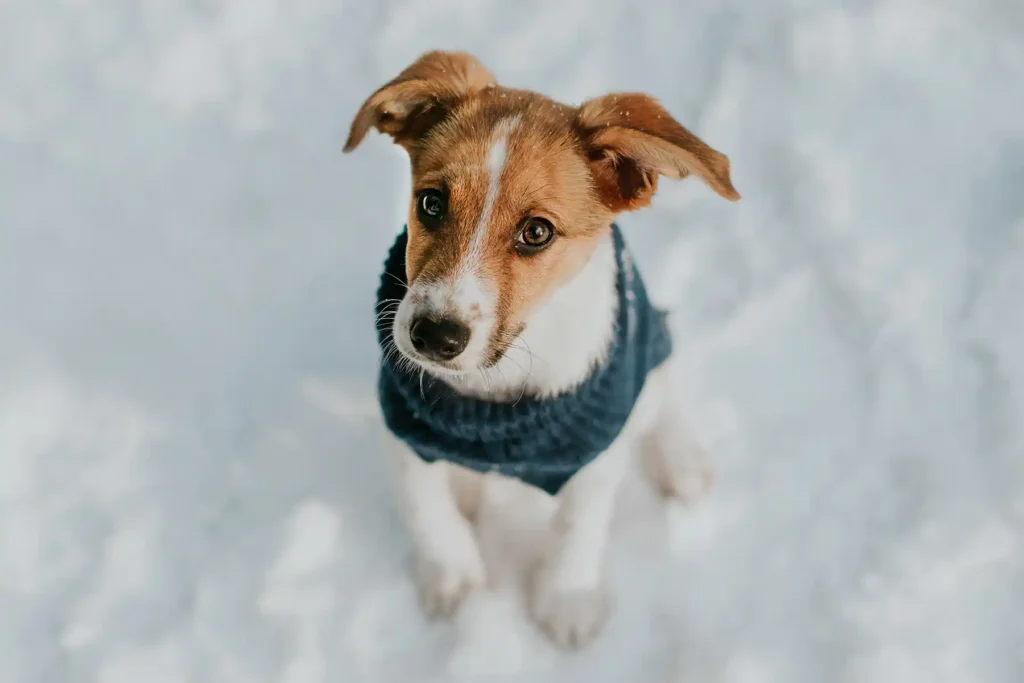
If they met their previous guardian again after a year or even several years, would they recognise their scent, face or voice? Do they ever miss them? Or do old memories simply disappear as the dog builds a bond with their new family? It is a particularly emotional subject for guardians of adopted dogs, dogs taken over from previous owners or dogs that, for various reasons, have had to change homes.
Science does not allow us to look directly into a dog’s memories. We cannot ask a dog whether, in the evening, they think about the person they lived with five years ago. Research does, however, reveal something very interesting. There are strong grounds for believing that a dog may remember a previous guardian, particularly if they shared a long-lasting and important relationship.
Dogs can recognise familiar people through scent, voice and visual information. Their memory abilities are also more complex than we believed only a few decades ago. At the same time, remembering a previous person does not mean that a dog cannot form an equally important bond with a new guardian. And perhaps that is the most beautiful part of this entire subject.
What will you learn from this article? From this guide, you will learn:
- whether a dog remembers their previous guardian,
- how a dog may recognise someone after a long separation,
- how important a particular person’s scent is to a dog,
- whether a dog recognises the voice of a previous guardian,
- whether dogs can recognise human faces,
- how a dog’s memory works and how it differs from ours,
- how long a dog may remember a person,
- whether a dog can miss their previous guardian,
- whether an adopted dog can remember their previous family while also loving their new one,
- why a dog’s behaviour when meeting a previous guardian again can vary so greatly,
- how to help a dog settle peacefully into a new home.
Does a dog remember their previous guardian?
The shortest answer is: yes, it is very possible. Particularly if the dog lived with that person for a long time, had regular contact with them and formed an important relationship. This does not, however, mean that we can describe a dog’s memories in exactly the same way as human memories.
A person can recall a particular day from years ago. We may remember the place, a conversation, what the other person was wearing, the weather or what happened afterwards. With dogs, we do not know whether their experience of memory takes a similar form. What we do know is that dogs can retain and use information about people they know. Research has shown, among other things, that a dog may:
- respond differently to the scent of a familiar person than to that of a stranger,
- recognise their guardian’s voice,
- distinguish familiar human faces,
- form expectations about a particular person on the basis of their scent,
- remember events and behaviours they had not previously been deliberately taught to remember.
All of this suggests that the world of familiar people does not simply disappear from a dog’s mind when the door of their previous home closes behind them.
A dog may remember a person primarily through scent
For us, meeting someone again after many years usually begins with a glance: ‘I know that face.’ For a dog, the order may be different. Their nose plays an enormous role in the way they experience and understand the world. In a study using functional magnetic resonance imaging (fMRI), researchers presented dogs with different scents originating from people and other dogs.
A particularly interesting response appeared when the dogs were exposed to the scent of a familiar person who was not actually present in the room at the time. The scent of a familiar person was associated with a clear response in an area of the brain linked with positive expectations. This is a very important part of the answer to the question of whether a dog remembers a previous guardian.
A person’s scent can provide a dog with extremely powerful information about their identity – a scent may create an expectation of a particular person
An even more interesting study investigated how dogs followed the scent trail of their guardian. The dogs did not behave as though the trail was simply an interesting smell. The results suggested that the scent of the owner could lead the dog to expect that this particular person would appear. This means that scent does not necessarily have to be anonymous information to a dog along the lines of: ‘I know this smell.’
It may instead be connected with a representation of a particular person: ‘this is that person’s scent’. If you would like to understand just how important scent is in a dog’s everyday life, take a look at our article ‘What does the world smell like to a dog? Everything you need to know about the extraordinary canine sense of smell’.
Does a dog remember the voice of their previous guardian?
Scent is not the only clue. A dog can also recognise a person by their voice. In a study published in the journal Animal Cognition, dogs listened to recordings of their guardian’s voice as well as the voices of other people. The results showed that dogs were able to identify their owner’s voice without being able to see or smell them. Researchers also investigated which acoustic characteristics of a voice help dogs distinguish one person from another.
Imagine, then, a dog who for several years heard the same phrases every day: ‘Shall we go for a walk?’, ‘come here’, or their own name always spoken in a characteristic way. Then, for a long time, they no longer hear that voice. We have no grounds to guarantee that every dog will immediately recognise it after any length of separation. But we do know that dogs can encode information that allows them to distinguish one particular person’s voice from other voices. A familiar tone heard after a long time may therefore be another very important element of recognition.
And does a dog remember a person’s face?
Vision also plays a role in recognising people. Although a dog’s world is largely a world of scents, this does not mean that a person’s face is irrelevant to them.
Studies have shown that dogs are able to distinguish people using visual information from their faces. In experiments examining face processing, dogs were able to distinguish familiar people from other humans. There is another particularly interesting element as well.
Earlier experiments showed that, after hearing their owner’s voice, a dog may form an expectation of seeing the corresponding face. In other words, information coming from different senses can combine to form a representation of a particular person. It is a little as though, for a dog, a familiar person consists of many different elements: scent + voice + appearance + the way they move + shared experiences.
That is why, when meeting again after a long period apart, one signal may trigger the next. First the scent. Then the voice. A look. The way the person moves. And perhaps suddenly the human who seemed unfamiliar for a moment becomes someone familiar again.
Do dogs have memories similar to human memories?
This is one of the most fascinating questions. For a long time, research into animal memory focused mainly on simple learning: the dog performs a behaviour → receives a reward → remembers the association.
But memory is much more complex. In 2016, Claudia Fugazza, Ádám Miklósi and their colleagues conducted an experiment showing that dogs can recall actions previously performed by a person even when, at the time they observed them, they had no reason to expect that they would later be asked to reproduce those actions.
The researchers described this mechanism as episodic-like memory. This distinction is important. It does not mean that we can say: ‘a dog remembers a holiday from three years ago exactly as I do.’ We have no grounds for making such a claim. It does, however, show that canine memory is not limited to learnt commands and simple associations.
A dog can retain information about events they previously observed. Further studies have also suggested that dogs may be able to recall their own spontaneous actions. This is another reason why we should not think of a former guardian as information that is simply ‘deleted’.
How long can a dog remember a person?
This is where things become more difficult. On the internet, you can find very specific answers: ‘a dog remembers a person for five years’, ‘a dog never forgets their owner’, ‘after a few months, a dog forgets their previous home’. The problem is that science does not give us one universal figure.
There is no reliable clock telling us: after 742 days, the memory of a guardian disappears. Whether a particular person remains recognisable to a dog after a long period apart probably depends on many factors.
– the length of the previous relationship
We may look differently at someone the dog spent a few days with compared with a person who was present every day throughout the first five years of their life.
– the importance of that relationship
Someone who feeds the dog, walks with them, rests beside them and provides a sense of security may become an important social figure. Research into the human–dog relationship shows that a guardian can function as a secure base, in a similar way to an important attachment figure.
– the number of associations
Scent. Voice. Touch. Everyday rituals. The car. A familiar walking route. A particular room. The way the harness is put on. The more elements that repeatedly occurred together with a particular person, the richer the network of experiences associated with that individual becomes.
– the individual characteristics of the dog
Dogs differ in temperament, history, experiences, age and the way they respond to people. Not every dog will therefore react to a reunion in the same way. We cannot honestly say exactly how long every dog remembers a previous guardian. We can, however, say that dogs have sufficiently developed mechanisms for recognising familiar people to make long-term memory of a particular person entirely plausible.
Does a dog remember a previous guardian after several years?
They may. And such reunions can indeed lead to a very intense reaction. We should, however, be cautious when interpreting videos showing dogs ‘recognising their owner after ten years’. A recording may be beautiful and genuine, but it is not in itself a controlled scientific experiment.

We do not know which cues the dog used. Scent? Voice? Appearance? The way the person walks? A combination of all of them? Nor do we know whether the first few seconds of the reunion were shown.
So rather than saying: ‘every dog remembers their owner for life’, it is safer to say: dogs have several independent mechanisms that allow them to recognise familiar people, which means that recognising a former guardian even after a long period of time is biologically and cognitively very plausible. It is a less dramatic sentence. But it is much more honest.
Does a dog miss their previous guardian?
Here, the answer requires even greater caution. The word ‘missing’ carries a very human meaning. When we miss somebody, we may consciously think: ‘I would like to see that person again.’ We can recall shared situations, wonder where someone is now and imagine meeting them again in the future.
We do not know whether a dog experiences a person’s absence in exactly this way. We do know, however, that dogs form attachment relationships with humans and that a guardian’s presence can affect their sense of security and behaviour. Losing an important person and experiencing a sudden change of environment may therefore matter to a dog. A dog may:
- look for familiar people,
- behave differently in a new place,
- initially be more withdrawn,
- need time to learn new routines,
- respond to familiar scents or voices,
- gradually build a sense of security with a new person.
But we should not immediately describe every such response as ‘missing the previous owner’. Much more has changed, after all. The home. Scents. Daily routine. Walking routes. People. Sounds. Resting place. The entire world the dog knew until that point.
Can a dog remember a previous guardian and still love a new one?
Yes — and this is very important. Memory is not a place with room for only one person. If you adopt a dog and find yourself wondering: ‘What if they still remember their previous guardian?’ you do not need to treat this as competition.
Studies involving shelter dogs show that adult dogs can form relationships with new people relatively quickly. Earlier experiments already suggested that dogs living in shelters may display behaviours associated with forming bonds after relatively short, repeated interactions with a person.
Even more interesting are studies involving dogs that had previously lived in shelters and later found families. In research examining the so-called secure base effect, former shelter dogs clearly distinguished their current guardians from unfamiliar people. The results showed that previous life in a shelter did not prevent them from forming a meaningful relationship with a new person. This is an extremely important finding.
A new bond does not require forgetting the old one. A dog may have previous experiences and, at the same time, learn: ‘I am safe here’, ‘I go for walks with this person’, ‘I know this voice’, ‘I rest here’, ‘this is my home now’. You can read more about the subtle signs of building such a relationship in our article ‘How does a dog show trust in their guardian? 10 subtle signs’.
Can a dog have two important guardians?
Of course. Many dogs live in households with several people and form relationships with more than one human. There does not have to be one exclusive ‘owner’ stored in the dog’s mind. The relationship may look different with each member of the household. The dog may most enjoy walking with one person. Fall asleep beside another. Bring toys most often to a third.
In the case of a dog who has changed homes, their social history does not have to be erased either. A previous guardian may remain a familiar person, while the new human becomes the most important part of their current everyday life. If you are interested in how dogs develop preferences for particular people, read our article ‘How does a dog choose his guardian?’.
What happens if a dog meets their previous guardian again?
There is no single correct reaction. One dog may run straight towards the person. Another may stop several metres away and begin sniffing intensely. A third may need several seconds. A fourth may behave relatively calmly. The fact that a dog does not jump with excitement does not automatically mean that they have failed to recognise the person.
Likewise, very intense excitement does not necessarily mean exactly the same thing as the human thought: ‘I missed you so much!’ It is worth looking at the dog’s complete body language:
- the way they approach,
- muscle tension,
- the position of the ears and tail,
- whether they voluntarily seek contact,
- sniffing,
- the way they move,
- their behaviour after the first few seconds of the reunion.
Every dog may process such a situation a little differently.
What if the dog’s previous experiences were negative?
This is another important part of the subject. Remembering a person does not automatically mean having a positive memory of them. If previous experiences were difficult, certain aspects of a situation may become associated with unpleasant experiences for the dog. This may relate not only to a specific person, but also to:
- tone of voice,
- the way they are touched,
- sudden movements,
- particular places,
- objects,
- sounds,
- the way someone approaches the dog.
At the same time, we should be careful not to create stories about a past we do not know. If an adopted dog is afraid of men, it does not automatically mean that ‘their previous owner definitely used to hit them’. If they are afraid of a broom, we cannot conclude from this alone that someone previously struck them with one. Behaviour can result from many different experiences, the level of socialisation and individual predispositions. Observe the dog, but do not write their biography without evidence.
How can you help a dog after a change of guardian?
A new home can be an enormous change for a dog. Even if they have arrived somewhere wonderful. At first, they do not yet know the everyday rules. They do not know whether someone is about to leave. They do not know where they will sleep. They do not recognise the sound of the lift. They do not know which route you take in the morning. They do not yet understand that the sound of keys means a walk or that the lights being switched off in the evening signals time to rest.
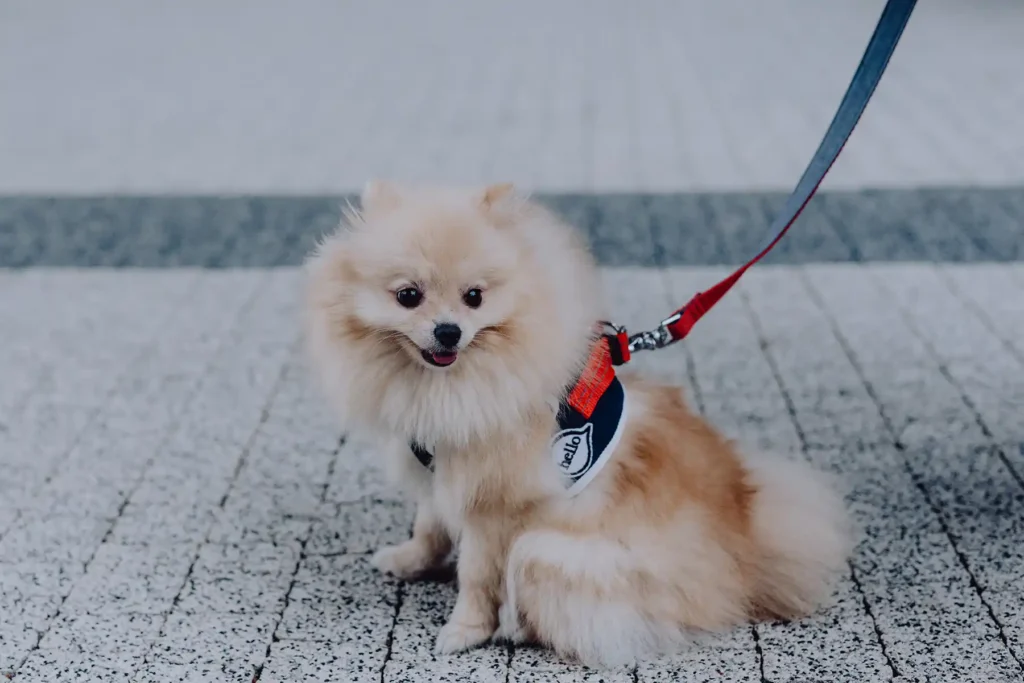
That is why the first goal should not be: ‘I need to make them love me as quickly as possible.’ A much better goal is: ‘I will show them that their new world is predictable and safe.’
– let them observe
Not every dog wants intense contact from the very first day. Some need to approach several times, sniff the person, move away and come back. Give them that opportunity.
– build a predictable daily routine
Regular walks, rest, feeding and calm routines help a dog learn the rules of their new environment.
– do not force closeness
If your dog wants to lie two metres away from you rather than beside you on the sofa — let them. Resting peacefully in your presence can be a very important stage in building trust.
– observe subtle signals
The first sign of a bond does not have to be an enthusiastic leap onto your lap. Sometimes it is the dog falling deeply asleep beside you for the first time. Or no longer lifting their head every time you move. Or beginning to follow you spontaneously from one room to another. You can read more about this behaviour in our article ‘Why does your dog follow you everywhere? What does this behaviour mean?’.
Should a dog be allowed to meet their previous guardian?
There is no single rule suitable for every dog. If the separation was peaceful, the relationship was good and contact with the former guardian is possible, a reunion does not necessarily have to be a bad thing. But neither is it something the dog is obliged to do. There is no need to arrange a meeting simply to ‘see whether they remember’. Particularly if the dog is only just adapting to their new situation, providing a calm and predictable daily life may be more important.
If the previous environment involved difficult experiences or the dog’s history is unknown, the situation should be considered individually. The most important question is not: ‘Will this reunion be moving for the people?’ but: ‘Will it be good for the dog?’
Can a dog look for their previous guardian?
After changing homes, some dogs may watch the door more frequently, react to sounds outside the flat, seem unsettled or look for a way out. This does not automatically mean that they are consciously ‘waiting for their previous owner’. The dog has found themselves in a completely new environment and may simply be trying to understand what has happened.
Over time, they learn new points of reference. Your scent. Your voice. Your footsteps outside the door. The sound of your key. The route of the morning walk. The place where their bowl stands. Their comfortable dog bed. And it is from these repeated experiences that a new everyday life gradually begins to form.

Does a dog forget their previous guardian when they bond with a new one?
There is no reason to assume that this has to happen. New memories do not have to erase old ones. The fact that your dog begins to be happy to see you, comes to you for support, falls asleep beside you and chooses you as an important person says nothing negative about their previous relationship. And the reverse is also true.
If, years later, they respond very emotionally to seeing a previous guardian, this does not mean that their present bond with you is weaker. It is not a competition. Perhaps this is precisely where our human way of looking at relationships gets in the way most. We want to know: ‘Who do they love more?’ A dog does not have to make that choice. There can be people in their life who were important in the past, and people who are their world today.
Memory does not have to stand in the way of a new beginning
Perhaps you are adopting a dog who already had an entire life before you. They knew someone. Walked with someone. Fell asleep beside someone. Someone said their name hundreds of times. You do not need to compete with that. You do not have to make them forget. You can simply add another safe chapter.
First, the dog recognises your scent. Later, they know which footsteps outside belong to you. They begin lifting their head when they hear your voice. They know where you go together in the morning. They know the time for evening rest. More and more often, they fall asleep without remaining alert. And one day you realise that they are no longer wondering what is about to happen. They are simply at home.
Do they still remember the person they lived with before? Perhaps they do. And that takes nothing away from your relationship. Because one of the most beautiful things research into dogs after a change of home shows us is very simple: a dog can form a new, genuine bond. Not because they have erased the past. But because they have learnt that here, too, there is someone they can trust.
For more inspiration, knowledge and carefully designed accessories for dogs, visit www.bowlandbone.com — a place created for guardians who want to combine their dog’s everyday comfort with timeless style.
– the Bowl&Bone Republic team
Frequently Asked Questions (FAQ), meaning the most frequently asked questions about the article –
Does a dog remember their previous guardian? How long can a dog remember a person?
Does a dog remember their previous guardian?
Yes, it is very possible, particularly if the dog lived with that person for a long time and they shared an important relationship. Dogs can recognise familiar people through, among other things, scent, voice and visual information. We cannot, however, determine exactly what a subjective memory of a particular person looks like in a dog’s mind.
How long does a dog remember a previous owner?
There is no scientifically established universal period after which a dog forgets a person. The length and nature of the previous relationship, the number of shared experiences and the individual characteristics of the dog may all play a role. Claims that every dog remembers a person for a specific number of months or years should therefore be treated with caution.
Can a dog recognise an owner after several years?
It is possible. Dogs have several mechanisms for recognising familiar people — they can use scent, voice and visual information. We cannot, however, guarantee that every dog will recognise every person after any length of separation.
How does a dog recognise their previous guardian?
Important clues may include scent, voice, appearance, the way the person moves and the entire set of associations formed during their life together. Research shows that dogs can use information from different senses to recognise particular people.
Does a dog remember a person’s scent?
Scent is a very important source of information for a dog. Studies examining dogs’ brain responses to smells have found a distinct response to the scent of a familiar person, even when that person was not nearby.
Does a dog remember their owner’s voice?
Research shows that dogs can recognise their guardian’s voice without being able to see or smell them at the same time. This suggests that characteristics of a voice can provide a dog with information about the identity of a particular person.
Does a dog miss their previous owner?
A dog may be affected by the loss of an important person and environment, but we cannot say that they experience missing someone in exactly the same way as a human. Dogs form attachment relationships with people, so separation from an important guardian may influence their behaviour and sense of security.
Does an adopted dog forget their previous guardian?
There are no grounds for assuming that adoption automatically causes a dog to forget a person from their previous life. At the same time, dogs are capable of forming strong bonds with new guardians. Studies involving former shelter dogs show that they can treat their new guardians as important attachment figures and as a secure base.
Can a dog love a new guardian if they remember the previous one?
Yes. There is no reason to treat the previous and current bonds as competing with one another. The ability to recognise a person from the past does not prevent a dog from forming a new and important social relationship.
Does a dog remember someone who hurt them?
A dog can form long-lasting associations with unpleasant experiences, but based on behaviour alone we cannot always determine exactly what happened in their past. We should therefore not automatically attribute every fear to a specific previous event.
Is it worth allowing a dog to meet their previous guardian?
It depends on the individual dog’s history, the nature of the previous relationship and their current situation. A reunion is not necessary simply to check whether the dog remembers the person. The animal’s safety and comfort should always come first.
How can you tell that an adopted dog is beginning to trust their new guardian?
Signs may include resting more freely in their presence, voluntarily seeking contact, calmly following the guardian, initiating shared activities or turning to them in new or more difficult situations. Not every dog expresses a bond in the same way.
Sources and inspiration used to create the article
Does a dog remember their previous guardian? How long can a dog remember a person?
- Berns G.S., Brooks A.M., Spivak M. – ‘Scent of the familiar: An fMRI study of canine brain responses to familiar and unfamiliar human and dog odors’, Behavioural Processes – a study examining dogs’ brain responses to the scent of a familiar person.
https://pubmed.ncbi.nlm.nih.gov/24607363/
Digital Object Identifier (DOI): 10.1016/j.beproc.2014.02.011 - Bräuer J., Belger J. – ‘Dogs display owner-specific expectations based on olfaction’, Scientific Reports – a study examining whether a guardian’s scent leads a dog to expect the appearance of that particular person.
https://pmc.ncbi.nlm.nih.gov/articles/PMC7870809/ - Gábor A., Kaszás N., Faragó T. et al. – ‘The acoustic bases of human voice identity processing in dogs’, Animal Cognition – a study demonstrating dogs’ ability to recognise their guardian’s voice.
https://pmc.ncbi.nlm.nih.gov/articles/PMC9334438/
Digital Object Identifier (DOI): 10.1007/s10071-022-01601-z - Huber L., Racca A., Scaf B. et al. – ‘Discrimination of familiar human faces in dogs (Canis familiaris)’ – a study examining dogs’ ability to distinguish familiar people using visual information.
https://pmc.ncbi.nlm.nih.gov/articles/PMC3807667/ - Fugazza C., Pogány Á., Miklósi Á. – ‘Recall of Others’ Actions after Incidental Encoding Reveals Episodic-like Memory in Dogs’, Current Biology – a study concerning episodic-like memory in dogs.
https://pubmed.ncbi.nlm.nih.gov/27889264/ - Fugazza C. et al. – ‘Mental representation and episodic-like memory of own actions in dogs’, Scientific Reports – a study examining dogs’ ability to recall their own previous actions.
https://pmc.ncbi.nlm.nih.gov/articles/PMC7320188/ - Gácsi M., Topál J., Miklósi Á., Dóka A., Csányi V. – ‘Attachment behavior of adult dogs living at rescue centers: Forming new bonds’, Journal of Comparative Psychology – a study examining the formation of new bonds by adult dogs living in rescue centres.
https://pubmed.ncbi.nlm.nih.gov/11824906/ - Cimarelli G., Schindlbauer J., Pegger T., Wesian V., Virányi Z. – ‘Secure base effect in former shelter dogs and other family dogs: Strangers do not provide security in a problem-solving task’, PLOS ONE – a study examining the relationships between dogs adopted from shelters and their current guardians.
https://journals.plos.org/plosone/article?id=10.1371/journal.pone.0261790
Digital Object Identifier (DOI): 10.1371/journal.pone.0261790 - Bowl&Bone Republic – ‘What does the world smell like to a dog? Everything you need to know about the extraordinary canine sense of smell’ – material concerning the importance of scent in the way dogs experience the world.
https://www.bowlandbone.com/what-does-the-world-smell-like-to-a-dog-everything-you-need-to-know-about-the-extraordinary-canine-sense-of-smell/ - Bowl&Bone Republic – ‘How does a dog show trust in their guardian? 10 subtle signs’ – an article about building a sense of security and a bond between a dog and their guardian.
https://www.bowlandbone.com/how-does-a-dog-show-trust-in-their-guardian/ - Bowl&Bone Republic – ‘How does a dog choose his guardian?’ – material concerning a dog’s relationship with particular people.
https://www.bowlandbone.com/how-does-dog-choose-his-guardian/ - Bowl&Bone Republic – the team’s experience in observing dogs’ needs and the relationships built between dogs and their guardians.









 or CANADA
  PLEASE join us at