


During winter, many dogs are more likely to look for a cosy and comfortable place for a night’s sleep or an afternoon nap. As the seasons change, it is therefore worth taking a closer look at your dog’s bedding: washing its cover, checking where it is positioned in the home and, if your dog enjoys extra cosiness, adding a soft dog blanket.
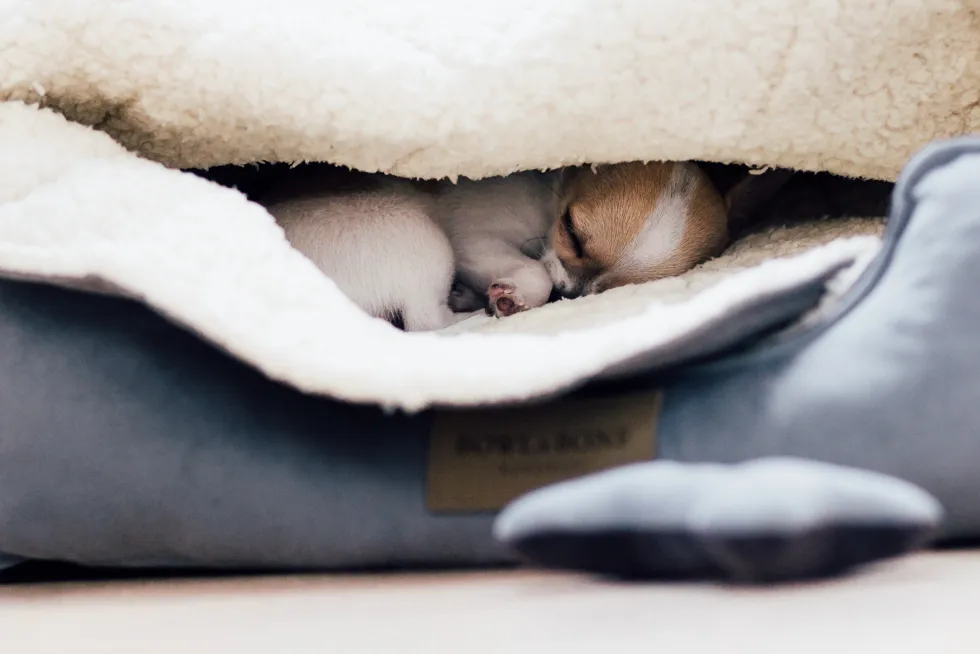
This does not mean, however, that every dog needs completely new bedding as soon as winter arrives. Sometimes it is enough to prepare the bedding they already use properly. In other cases, a classic dog bed, a soft cushion bed or a sleeping bag that your dog can climb into on their own may be a better solution.
During winter, your four-legged companion may spend more of their free time relaxing on their bedding. For this reason, it is worth making sure they feel comfortable there. Choosing the right position for their resting space and matching its form to the way your dog actually likes to sleep can make a real difference.
What will you learn from this article? In this guide, you will find out:
- what type of dog bedding may work well during winter,
- how a classic dog bed, cushion bed, sleeping bag and blanket differ,
- whether your dog needs more warmth at home during winter,
- how to prepare their existing bedding for the colder months,
- where to position your dog’s resting space in winter,
- whether it is worth adding a blanket to their bed,
- which dogs may benefit from a sleeping bag,
- how to keep dog bedding clean during autumn and winter,
- how to recognise whether your dog is too cold or too warm,
- what mistakes we most often make when trying to create a very warm resting place for a dog.
Winter dog bedding – the short answer
Good winter dog bedding should above all be comfortable, dry, positioned away from draughts and suited to the way a particular dog likes to rest. There is no single type of bedding that will be best for every dog.
A dog that enjoys soft sides and a stable resting space may happily choose a classic dog bed. A dog that stretches out fully while sleeping may feel more comfortable on a dog cushion bed. A dog that loves burrowing underneath fabric may, in turn, appreciate a dog sleeping bag.
A blanket is best treated as an additional option rather than an essential part of winter bedding. The most important thing is to give your dog a choice and observe which resting places they actually use.
Winter dog bedding
During winter, my four-legged companion definitely appreciates relaxing together at home more than spending long periods playing outdoors. Although I still try to spend plenty of time outside with my dog, I also make sure that our home has a pleasant and comfortable atmosphere.
Wanting my dog to feel comfortable during their favourite afternoon naps on winter days, I make sure their bedding feels cosy and comfortable. Does this mean that whenever winter arrives, I always buy my dog a new bed? Not necessarily.
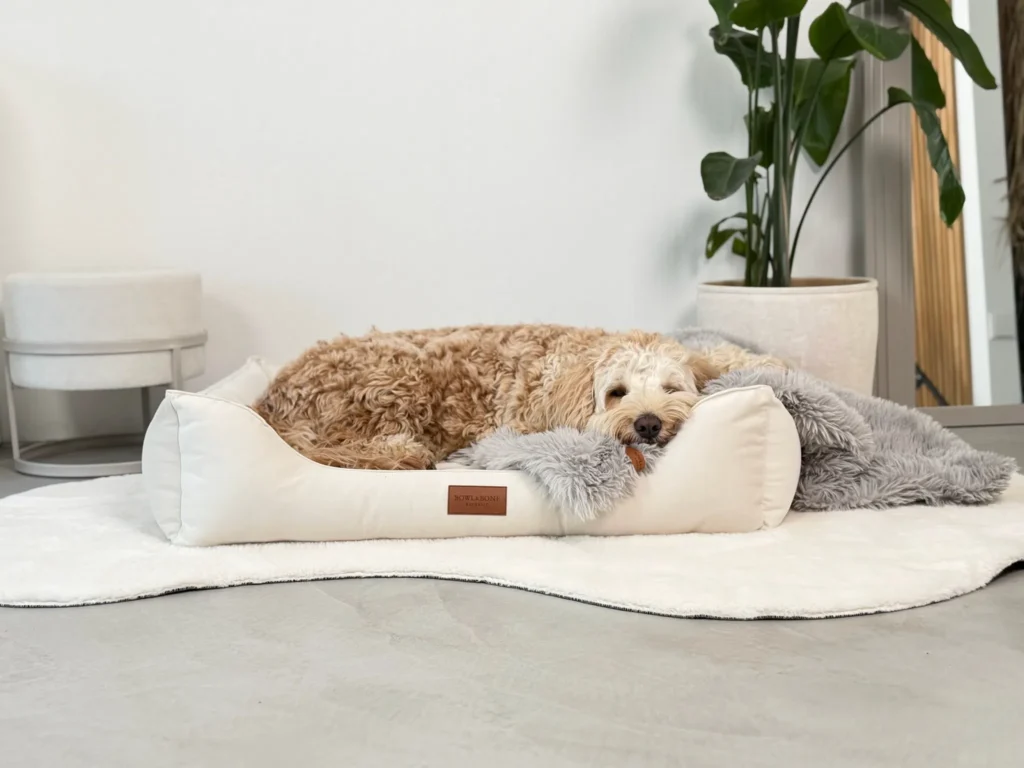
<span style=”color:#d00000″>🔴 IMAGE PRODUCT LINK: https://www.bowlandbone.com/orthopeadic-dog-bed-classic-cream/</span>
That is why I would like to share with you what type of winter dog bedding you can choose and how to better prepare the bedding your dog already has for the colder season. A well-prepared resting space can make your dog more willing to use their own comfortable area during long winter days.
It is worth remembering that the term “bedding” does not have to mean only a classic dog bed with raised sides. It can also be a cushion bed, mattress, sleeping bag or another comfortable space designed for rest. During winter, you can also complement your dog’s main bedding with a soft blanket.
Does a dog need more warmth at home during winter?
As a dog guardian, you certainly know that some dogs need additional protection from the cold in the form of clothing during winter. Not all dogs tolerate truly frosty days equally well, so in certain situations an extra layer during a walk may be helpful. You can read more about this in our guide to dog accessories for winter.
But what about frosty days when your dog is at home? Can they also need additional support and warmth indoors?
This question cannot be answered solely on the basis of breed. Factors such as the dog’s size, age, condition, health, coat type and individual habits may all play a role. Dogs Trust points out that some short-haired dogs, puppies and older dogs may need additional support during cold weather [1].
A dog with a dense coat, such as a Husky or Malamute, may respond to temperature differently from a small Maltese or French Bulldog. Even so, the breed name alone should never be treated as a complete answer.
That is why I cannot say unequivocally whether your dog will need additional support during winter or not. Your own observation and knowledge of your four-legged companion’s needs are especially important here.
If you feel that your dog may need a little more comfort during long winter evenings, I will explain how you can take care of their resting space.
My own dog belongs to the group for whom relaxing and napping on their bedding is every bit as important as playing outdoors. This is why I know how much difference a properly prepared resting space can make during the colder months.
What type of dog bedding may work well during winter?
The choice depends primarily on how your dog likes to rest. Do not choose a product simply because it looks exceptionally soft or “wintery”. Observe your dog first.
– classic dog bed
A classic dog bed with a soft sleeping surface and raised sides may work particularly well for a dog that likes to curl up, rest their head on the edge or press their body against the soft side of their bedding. The RSPCA – Royal Society for the Prevention of Cruelty to Animals – points out that beds with sides may suit dogs that enjoy more enclosed resting places and can provide some protection from draughts [2].
This does not mean, however, that you should always choose the most enclosed dog bed during winter. Your dog should have enough room to change position and, if they want to, fully stretch out.
A detailed guide devoted exclusively to choosing a dog bed for the colder months is best treated as a separate topic. In this article, a dog bed is just one of several types of winter bedding.
– dog cushion bed
Some dogs prefer a large, open surface much more than enclosing sides. In that case, a dog cushion bed may be a comfortable solution.

It gives your dog plenty of freedom to change position while also creating a clearly defined resting space. It may be particularly practical for a dog that likes to stretch both their front and back legs fully while sleeping.
For the guardian, its simple form also means easy access to the entire sleeping surface and the flexibility to place it in different areas of the home.
– dog sleeping bag
A sleeping bag is a completely different type of dog bedding. It is particularly suitable for dogs that love feeling wrapped up and naturally try to burrow underneath blankets, duvets or cushions. A dog can lie on top of the sleeping bag or climb underneath its upper layer. In practice, it therefore combines the characteristics of soft bedding with a space where the dog can cover themselves.
If you are not sure which model to choose at first, take a look at the complete range of Bowl&Bone Republic dog sleeping bags. It includes, among others, the DREAMY and BLISS lines, which differ in construction. This allows you to match the bedding not only to the look of your interior but, above all, to the way your individual dog likes to rest.

We have also discussed this subject in more detail in our guide “How to choose the right dog sleeping bag”.
– a blanket as an addition to dog bedding
A blanket does not need to replace your dog’s main resting space. It can, however, change its character very easily. Your dog can lie on it, curl up beside it, use it as an extra soft layer or partially cover themselves with it. The best solution is to leave the blanket in a way that allows your dog to decide whether they want to use it.
Warm dog bedding – does it always mean “as warm as possible”?
No. This is a very important distinction. The goal is not to create the warmest possible place, but a space where your dog can rest comfortably and regulate their own needs. If your dog leaves a soft sleeping bag after several minutes and lies down on a cool floor, this does not necessarily mean that their bedding is unsuitable. They may simply have become too warm.
In our guide “Why does a dog change sleeping spots at night?”, we explained that temperature is one of the reasons a dog may move between a soft bed, a rug and a cooler floor during the same night.
It is therefore worth giving your dog a choice instead of trying to persuade them that during winter they should rest only in the most enveloping and cosy place.
How should you prepare your dog’s bedding for winter?
Does my dog have separate bedding for summer and winter? Of course not. This does not mean, however, that their bed looks exactly the same on hot and cold days. As soon as the temperature outside becomes less pleasant, I make sure my dog feels comfortable while sleeping.
There is no need for a major revolution. A few simple changes may be enough to make their existing resting space better suited to winter conditions.
– change the position of your dog’s bedding
One of the things I do at the beginning of winter or summer is reconsider where my dog’s bedding is positioned. When the days are warm, many dogs willingly choose places that are slightly cooler. During winter, the situation may be the opposite.
During winter, I make sure that the bedding is not positioned in a draught or close to a window or balcony door that we regularly open. The RSPCA recommends placing a dog’s sleeping space in a warm, quiet and draught-free area [2].
If you have a fireplace, radiator or another strong source of heat in your home, do not place the bedding directly beside it. Your dog should be able to move to a cooler area. The PDSA – People’s Dispensary for Sick Animals – points out that the temperature of the space in which a dog stays should meet their needs, while during colder periods some dogs may appreciate additional blankets or a comfortably heated room [3][4].
In winter, I therefore position my four-legged companion’s bedding somewhere protected from cold air, but I do not try to create an excessively hot zone around it. I know that my dog enjoys being able to choose between their soft resting place and a cooler part of the room.
– wash the outer layer of the bedding
I do not know about you, but I find that entering a new season with a good clean gives me a lot of energy. This also applies to my dog’s accessories. Of course, I take care of their hygiene every day, but the change of season gives me an additional reason to look after the cleanliness of the space around me.
That is why, when winter begins, I recommend washing the cover of your four-legged companion’s bedding. During autumn and winter, your dog may bring much more moisture, sand and mud indoors after walks, so regularly cleaning their resting area becomes particularly practical. If you are unsure how to clean your dog’s accessories, take a look at our article “How to wash and clean your dog’s accessories properly”.
Personally, one of the first things I check when buying a dog bed is whether its cover can be removed and washed easily. For the guardian, this means a much more convenient way of keeping the resting space clean, while the dog can regularly return to fresh, well-maintained bedding.
At Bowl&Bone Republic, this is exactly why we place so much emphasis on the everyday functionality of our products. Exceptionally high-quality craftsmanship is intended not only to look beautiful, but also to make everyday use comfortable for both the dog and their guardian.
– dog bed with a blanket – when does this combination make sense?
One of the simplest ways I prepare my dog’s bed for winter is by adding a blanket. This gives my four-legged companion another option when deciding how they want to settle down.
A good example is the Bowl&Bone Republic NAP brown dog blanket. It is soft and pleasant to the touch, so it can provide an additional layer on top of the bedding or work as a separate surface for your dog to lie on.

For the dog, the benefit is the freedom to choose a more enveloping surface independently. For the guardian, a blanket is a simple way of preparing existing bedding for colder days without having to replace the entire dog bed.
I love watching my dog lie on their bedding, cuddle up with their blanket and fall asleep. If you have never placed a blanket on your four-legged companion’s bedding before, you can simply see whether they enjoy this solution.
Do not assume, however, that every dog wants to be covered. A blanket should remain an optional addition that your dog can freely use or ignore. The PDSA notes that extra blankets may help animals remain comfortable during winter, but once again it is worth observing the individual dog [3].
Winter bedding – when should you choose a dog sleeping bag?
During winter, I also recommend considering a dog sleeping bag. This type of bedding is particularly suited to dogs that love the feeling of being wrapped up.
Your dog can climb inside the sleeping bag or lie on its soft surface. It is something of a combination between a classic resting place and the opportunity to hide underneath an additional layer of fabric.
If you are unsure which sleeping bag to choose at first, you can take a look at the DREAMY Bowl&Bone Republic line. Its design, resembling a soft cushion with a pocket, allows the dog to decide whether they want to rest on top or slide more deeply underneath the fabric.
For the dog, this provides plenty of freedom to choose their position and the option of wrapping themselves up according to their own needs. For the guardian, it provides bedding made from high-quality materials that is easy to move and, according to the current product care instructions, can also be washed by hand or in a washing machine on a delicate cycle at up to 30°C [5].
Not every dog will love a sleeping bag, however. If your dog primarily sleeps fully stretched out and avoids being covered, a classic bed or cushion bed may suit their habits far better.
Almost 15 years of designing dog accessories has taught us to look first and foremost at the individual dog
At Bowl&Bone Republic, we have been designing PREMIUM dog accessories for almost 15 years. The information provided in this guide is supported not only by external sources, but also by real experience gained while designing products and by hundreds of opinions, stories and practical observations shared with us by dog guardians.
Feedback from thousands of satisfied customers using our products has allowed us to see just how different individual dogs’ preferences can be. One dog is happiest falling asleep pressed against the sides of a dog bed, another stretches their entire body across a cushion bed, while a third immediately tries to climb underneath a blanket or hide inside a sleeping bag.
That is why, when designing dog bedding, we do not want to create one solution and present it as ideal for every dog. We focus on comfort, material quality, careful craftsmanship, convenient care and different ways in which the product can be used.
For the dog, this means a comfortable place they can happily return to after a walk and during quiet moments at home. For their guardian, high-quality craftsmanship, easier everyday use and considered design make it possible to combine the dog’s needs with the aesthetics of the home.
Our experience does not replace observing your own dog, however. Their behaviour is the best guide to whether they prefer a classic dog bed, a more open cushion bed, a sleeping bag or bedding complemented by a blanket.
How can you tell whether your dog is too cold or too warm in their bedding?
Instead of relying solely on how you perceive the temperature yourself, observe your dog’s behaviour. A dog that willingly chooses more enclosed spaces, crawls underneath a blanket or curls up in soft bedding may simply prefer greater cosiness. A dog that leaves their bed after a while and lies down on a cool floor may, in turn, be looking for a place that helps them regulate their thermal comfort.

Do not try to keep your dog in their bedding at all costs. The RSPCA recommends providing a dog with a suitable sleeping space and the opportunity to choose between different comfortable areas [2].
If, however, your dog is clearly shivering, lethargic, weak or their behaviour concerns you, do not treat this solely as a question of choosing the right bedding. If there are symptoms that may indicate hypothermia, you should contact a veterinary surgeon.
The most common mistakes when preparing winter dog bedding
The first mistake is assuming that every dog needs the warmest and most enclosed possible resting place during winter. Bedding should suit the individual dog, and the dog should be able to move to a cooler surface.
The second is placing bedding directly beside a radiator, fireplace or another very strong source of heat. A draught-free location that allows the dog freedom of choice is much more important.
The third mistake is buying completely new bedding simply because winter has started. If the existing resting place is the right size, comfortable and willingly used by your dog, it is often enough to reposition it, wash the cover or add a blanket.
The fourth is choosing the type of bedding exclusively on the basis of breed. Breed may provide one clue, but it cannot replace observing the size, age, build, coat and habits of the individual dog.
The fifth mistake is overlooking hygiene. During winter, damp paws and dirt from walks may reach the dog’s resting space much more frequently. The ability to wash and dry the material easily therefore has a genuine impact on everyday comfort.
Winter days on warm dog bedding
Nothing is quite as relaxing as quiet, peaceful moments spent in the comfort of home. Your dog needs moments like these too. Comfort and having a space of their own are important during rest regardless of whether your dog chooses a classic bed, cushion bed, sleeping bag or soft blanket.
You do not therefore have to completely change your dog’s resting space as soon as winter arrives. Start with the place they already know and enjoy. Check its position, keep it clean and observe whether your dog needs additional cosiness.
If you are currently looking for new bedding, explore Bowl&Bone Republic dog beds, dog cushion beds, dog sleeping bags and dog blankets. Different constructions allow you to choose a solution not simply for a particular season, but above all for the way your dog likes to rest.
It is precisely this combination of your dog’s comfort, a high level of everyday convenience for the guardian, exceptionally high-quality craftsmanship and timeless design that matters most to us when creating each new product.
– the Bowl&Bone Republic team
FAQ – frequently asked questions about the article –
Winter Dog Bedding – What to Choose and How to Prepare It?
What type of dog bedding should you choose for winter?
There is no single type of bedding suitable for every dog. A dog that likes enclosing sides may prefer a classic dog bed, a dog that sleeps fully stretched out may prefer a cushion bed, while a dog that loves burrowing underneath fabric may enjoy a sleeping bag. Comfort, the right location and the individual dog’s preferences are the most important factors.
Does a dog need different bedding in winter than in summer?
Not always. If your dog happily uses their existing resting space, it may be enough to move it away from draughts for winter, wash the cover and perhaps add a blanket. Separate winter bedding is not essential.
Does a dog need a blanket in winter?
Not every dog does. Some dogs happily use an additional blanket, while others quickly move to a cooler surface. It is best to leave the blanket in the resting space and allow your dog to decide whether they want to use it [3].
Is a dog bed with a blanket a good idea?
Yes, if your dog enjoys additional cosiness. A blanket can complement a classic dog bed without requiring you to replace the entire bedding. It should, however, be positioned so that your dog can move away from it or push the material aside freely.
Where should you place your dog’s bedding in winter?
Choose a quiet, dry and draught-free place. It is worth avoiding areas directly beside frequently opened doors or windows and very strong sources of heat. Your dog should be able to rest peacefully and move freely to another area if they wish [2].
Can a dog’s bedding be placed beside a radiator?
It is better not to place it directly beside a radiator. Excessive heat may be uncomfortable for your dog. A place with a pleasant temperature that still allows them to move independently into a cooler area is a better option.
Is a dog sleeping bag good for winter?
It can be an excellent solution for a dog that actively seeks cosiness, burrows underneath blankets or enjoys resting under soft fabric. Not every dog will prefer this type of construction, however. A sleeping bag designed for indoor use should also not be treated as specialist equipment for sleeping outdoors in freezing temperatures.
Can a sleeping bag replace a classic dog bed?
For some dogs, yes. If the sleeping bag is the right size and your dog happily rests on or inside it, it can serve as their main bedding. In other homes, it may work better as an additional resting place alongside a classic dog bed.
Which is better in winter – a dog bed or a dog cushion bed?
It depends on the way your dog likes to rest. A dog bed with raised sides may suit dogs that enjoy curling up and resting their head on an edge. A cushion bed provides a larger open surface and may be more comfortable for a dog that likes to stretch out fully while sleeping.
Can a dog sleep on the floor in winter?
If your dog chooses the floor for part of their rest, they may simply be looking for a cooler or firmer surface. It is still worth providing them with comfortable bedding of their own, but a healthy dog resting peacefully on a surface they have chosen usually does not need to be moved by force.
How often should you wash dog bedding in winter?
There is no single frequency suitable for every dog. It depends on the type of bedding, how it is used and the amount of moisture, hair and dirt brought home after walks. Always follow the care instructions for the individual product.
How can you tell if your dog is cold at home?
Pay attention to their behaviour. Your dog may seek soft and sheltered spaces more often, curl up or choose to use a blanket. If persistent shivering, lethargy, weakness or other concerning symptoms appear, you should consult a veterinary surgeon.
Does every small dog need very warm bedding in winter?
No. Smaller dogs may be more prone to losing heat, but their needs still depend on the individual dog, their coat, age, health and the temperature inside the home. Instead of relying solely on size or breed, observe your dog’s behaviour.
Is it worth giving a dog more than one resting place during winter?
It can be very practical. One space may be softer and more enclosing, while another may be more open or cooler. This allows your dog to choose the surface that best suits their needs at a particular moment.
Sources and inspiration used to update the article
“Winter Dog Bedding – What to Choose and How to Prepare It?”
- Dogs Trust, “How to keep your dog safe and warm in cold weather” – information about differences in cold tolerance between dogs and the needs of short-haired dogs, puppies and other dogs that may require additional support during winter.
https://www.dogstrust.org.uk/dog-advice/life-with-your-dog/seasonal/cold-weather-advice - RSPCA – Royal Society for the Prevention of Cruelty to Animals, “Choosing the Perfect Dog Bed” – information about bedding size and type, beds with raised sides, ease of washing and choosing a warm, draught-free location.
https://www.rspca.org.uk/adviceandwelfare/pets/dogs/environment/dogbeds - PDSA – People’s Dispensary for Sick Animals, “Pet care advice for winter” – guidance on preparing comfortable resting places for pets and providing additional blankets during colder months.
https://www.pdsa.org.uk/what-we-do/blog/pet-care-advice-for-winter - PDSA – People’s Dispensary for Sick Animals, “Making your home dog friendly” – information about providing a quiet resting place, allowing the dog to stretch out or curl up freely and maintaining an appropriate temperature in their space.
https://www.pdsa.org.uk/pet-help-and-advice/looking-after-your-pet/puppies-dogs/making-your-home-dog-friendly - Bowl&Bone Republic, “Dog sleeping bag BLISS cream” – current information about the construction, materials, care, sizes and ways in which the BLISS sleeping bag can be used.
https://www.bowlandbone.com/dog-sleeping-bag-bliss-cream/ - Bowl&Bone Republic, “Dog sleeping bag” – information about the current DREAMY and BLISS sleeping bag ranges and differences in their construction.
https://www.bowlandbone.com/dog-sleeping-bag/ - Bowl&Bone Republic, “Dog blanket” – information about the current dog blankets and their use as an additional element of a dog’s resting space.
https://www.bowlandbone.com/dog-blanket/











 or CANADA
 PLEASE join us at